
Abortion at the ballot box
Voters in four states are considering abortion-related ballot items
A mother and son wear "I Voted" stickers on Tuesday in Cumming, Iowa. Associated Press / Photo by Ellen Schmidt
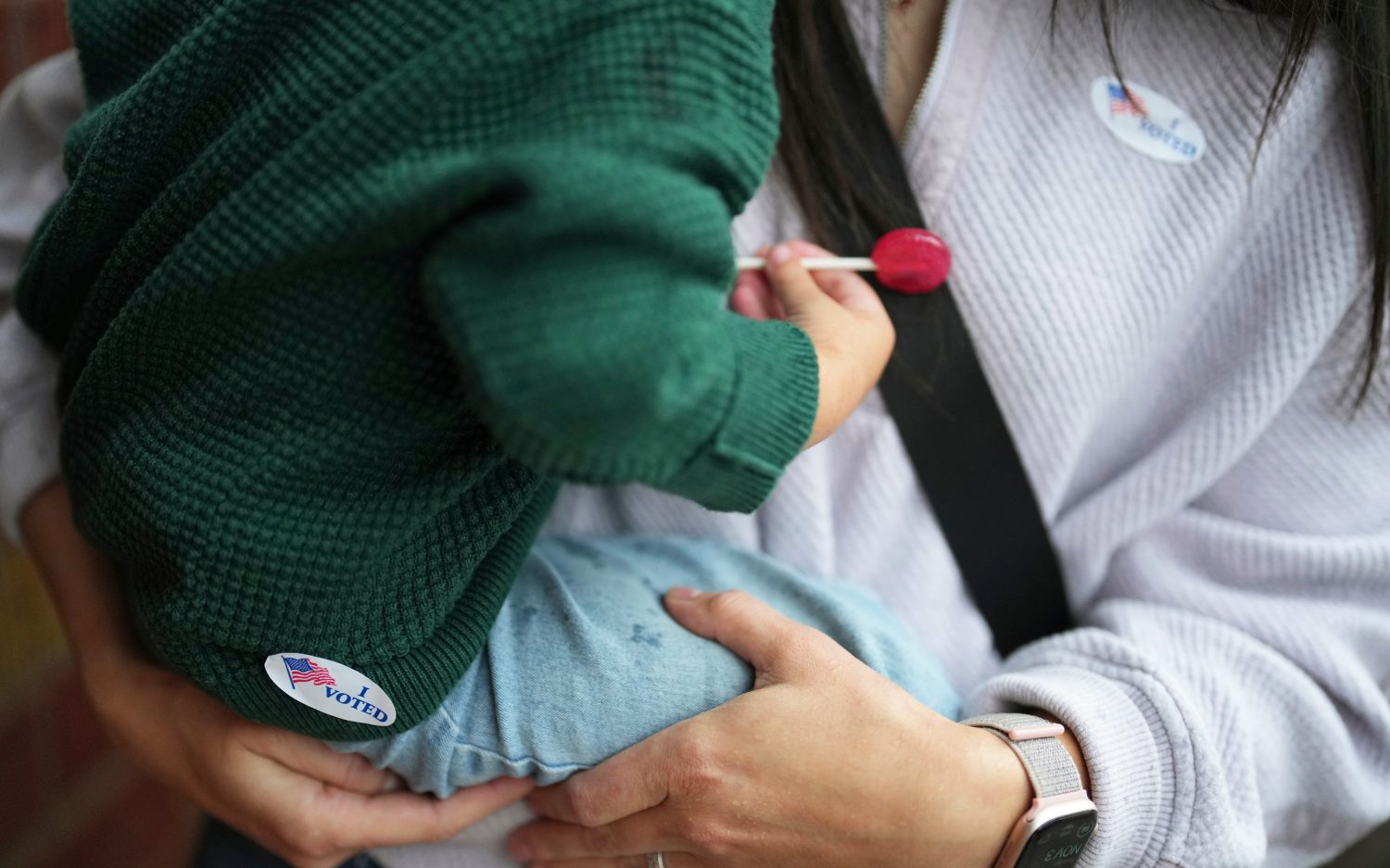
On Tuesday, voters in four states will decide on abortion-related ballot items. While three would end protections for unborn babies, one aims to reinstate pro-life laws that a court order rolled back earlier this year. And even in states that do not have a question about abortion on their ballot, the issue looms large as Democrats seek to flip Congress. Here is a breakdown of what to know ahead of Election Day.
Idaho
Idaho Proposition 1: Reproductive Freedom and Privacy Act Initiative
Current law: Idaho law protects unborn babies from conception to birth except in cases of rape or incest. Statutes also differentiate treatments for ectopic pregnancies and miscarriages from elective abortions.
The ballot language: The proposition would create a right to reproductive freedom and privacy and prohibit the state from regulating abortion before fetal viability. But the ballot language redefines “viability” from its earlier definition, when a baby could potentially survive outside the womb with medical support, to when a baby could likely survive without extraordinary measures.
The pro-life position: Several political action committees, including Too Extreme for Idaho and Save Idaho, have campaigned against the proposal and brought together pastors and other religious leaders to urge their congregants to vote against the measure. They say that, in a state where more than 60% of residents identify as Christian, Roman Catholic, or Mormon, it is critical that religious communities get out and vote. Advocates in the state also warn that the proposition could override current protections that require parental consent for a minor to receive an abortion.
Other recent updates: A federal judge ruled in August to allow abortions when a doctor said pregnancy could cause serious, lasting harm to the mother, or when doctors determined a mother might die by suicide if she could not kill her unborn baby. Initially the judge applied the ruling broadly before narrowing it to apply only to one maternal-fetal medicine specialist in Boise. The ruling did not address at what gestational age a baby might still be protected, and pro-lifers argue the decision could allow abortionists to kill babies up to birth.
The polling: A poll from the group VoteNexus last month found that 54% of likely voters opposed the pro-abortion amendment.
Missouri
Missouri Amendment 3: Prohibit Abortion and Gender Transition Procedures for Minors Amendment
Current law: Voters in 2024 passed a constitutional amendment that enshrined a right to abortion and removed protections from babies before about 24 weeks of pregnancy. Shortly after that vote, pro-abortion groups filed a lawsuit challenging many of the state’s pro-life laws. In June, a Missouri circuit judge struck down many of those laws.
The ballot language: Amendment 3 would directly repeal the amendment approved in 2024 and would protect unborn babies from abortion except in cases of medical emergencies, rape, incest, or fetal anomalies. It would also prohibit transgender medical interventions for minors, including both cross-sex hormones and surgeries.
The pro-life position: Proponents of the new amendment argue that it aims to restore commonsense protections that courts have stripped away under the pro-abortion amendment over the last two years. Some say the 2024 measure also threatens protections for minors from transgender interventions. Now, even some staunch Democrats have joined pro-lifers in supporting the new amendment as a means to enshrine safeguards from such interventions for children.
Other recent updates: Missouri Gov. Mike Kehoe in August signed the Born Alive Infant Survivor’s Act that protects babies who survive abortion attempts. Meanwhile, Sen. Josh Hawley, R-Mo., in March introduced a federal bill to ban the abortifacient mifepristone.
Polls: The most recent poll conducted by Remington Research Group earlier this month found that 43% of respondents support the amendment, 43% oppose it, and 14% are unsure of how they will vote.
Nevada
Nevada Question 6: Right to Abortion Initiative
Current law: Nevada only protects babies from abortion after 24 weeks of pregnancy, but a doctor can still perform an abortion later if he or she determines it is necessary to preserve the life or health of the mother. The state does not currently require parental consent for minors to receive an abortion after the state Supreme Court in May blocked a 1985 law that had established the protection.
The ballot language: The ballot item being considered this year would create a constitutional right to abortion and prohibit the state from protecting babies before viability. Voters in 2024 previously passed the amendment, but Nevada law requires two rounds of approval before an amendment takes effect.
The pro-life position: Groups like Protect Our Girls have been campaigning against the ballot item and say it could pave the way for abortions up to birth. Like the proposal in Idaho, the amendment defines fetal viability as the point when a baby could likely survive outside the womb without extraordinary medical measures. Pro-lifers also argue the measure could allow individuals who are not licensed physicians to perform abortions because it does not specify who is qualified to do so.
Virginia
Virginia Question 1: Right to Reproductive Freedom Amendment
Current law: Virginia only protects unborn babies after they reach 27 weeks of pregnancy or after the second trimester. And babies can still be killed later if three physicians agree that the mother’s physical or mental health is at risk. Without any waiting periods for women to have an abortion and no required ultrasounds, Virginia is one of the least protective states for babies in the Southeast and has become an abortion tourism hub.
The ballot language: Question 1 would create a constitutional right to abortion, contraception, and prenatal care. The measure would allow the state to regulate abortion in the third trimester, though any protections could be overruled if a baby was declared nonviable or if one physician said a mother needed to kill her baby for her mental or physical health.
The pro-life position: According to pro-life Virginians, the measure would give an abortionist sole decision-making authority to perform a late-term abortion when a baby could likely survive outside the womb. The amendment may also endanger minors by removing the parental notification requirement for girls under age 18 to have an abortion. Some municipalities have taken proactive steps to stop abortion facilities from setting up shop if the amendment passes, and pro-life groups have urged pastors to speak to their congregations about the amendment. In April, the Founding Freedoms Law Center launched a legal battle against the amendment after the center claimed the text on the ballot does not fully inform voters about how far-reaching the measure could be.
Other recent updates: The amendment has divided doctors, with many arguing it goes too far and puts women and babies at risk while others say it is critical to protect so-called reproductive health. More than 200 Virginia pastors signed a letter calling on voters to reject the amendment.
Congress
This year, all U.S. House of Representatives seats and one-third of Senate seats are up for election. Republicans hope to maintain control of Congress, though polls indicate it will be a tight race and many predict Democrats are likely to flip both houses. Republicans currently hold all six Senate seats that the Cook Political Report currently lists as toss-ups. In the House, 14 of the 18 toss-up seats are currently held by Republicans.
Pro-lifers worry that, if Democrats retake control of Congress, they could push through radical pro-abortion legislation at the federal level as part of their ambitious policy plan. In September, members of the House Cost-of-Living Healthcare Working Group sent a memo to Minority Leader Hakeem Jeffries, D-N.Y., outlining their demands for what they want the 120th Congress to accomplish in its first 100 hours, 100 days, and year. Their priorities include two healthcare bills that would strip away state-level pro-life protections and force the government to pay for abortions. Kelsey Pritchard, communications director for Susan B. Anthony Pro-Life America, told me that the Democrats’ plans are why the organization has invested $80 million into the midterm elections.


I so appreciate the fly-over picture, and the reminder of God’s faithful sovereignty. —Celina
Sign up to receive Vitals, WORLD’s free weekly email newsletter on the pro-life movement.
Please wait while we load the latest comments...
Comments