
SCOTUS tosses Louisiana redistricting map for race gerrymander
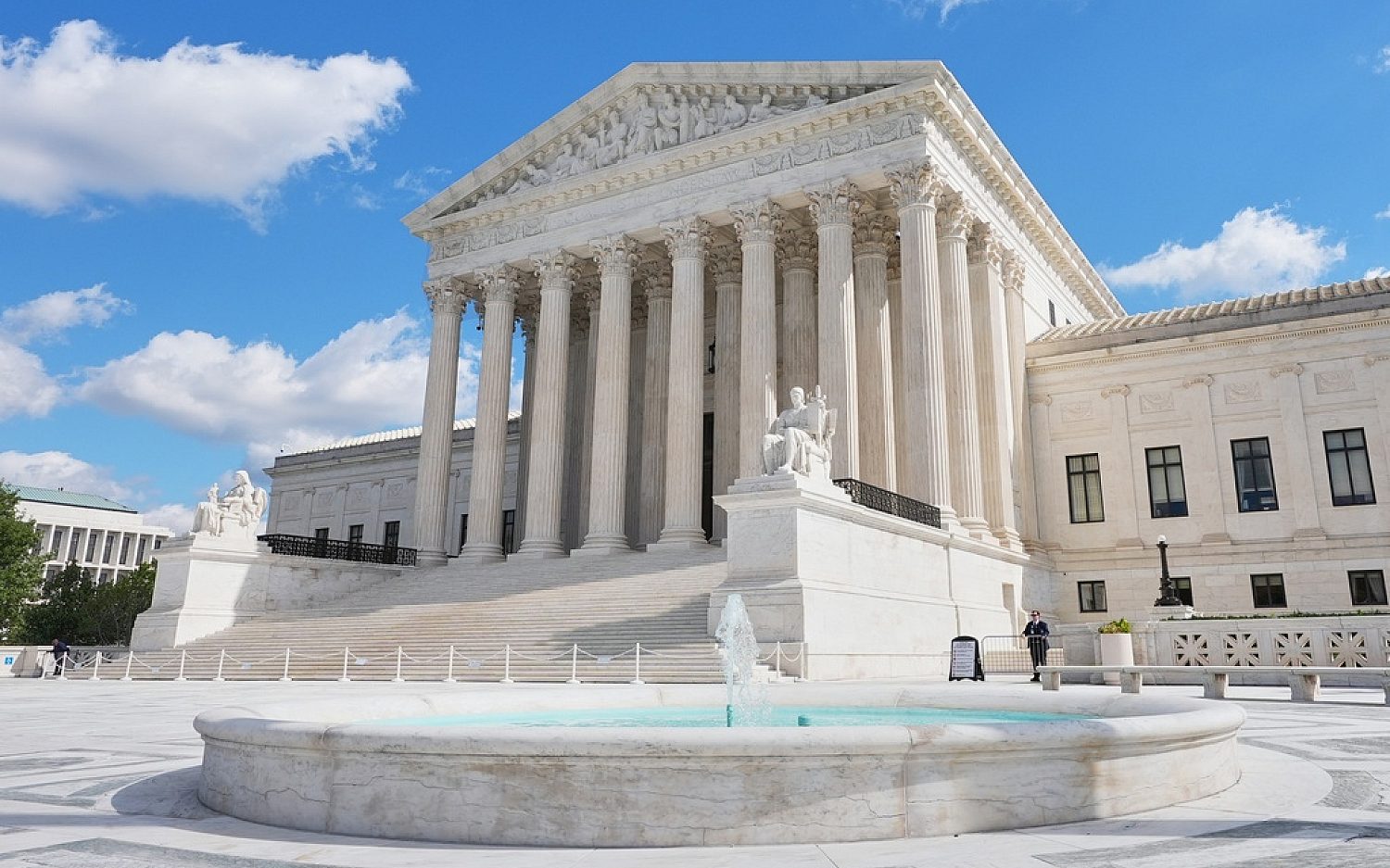
The nation’s highest court ruled Wednesday that Louisiana’s current congressional map included unconstitutional race-based gerrymandering, or drawing districts for unfair political advantage. The court’s six-justice conservative majority struck down the map two weeks before Louisiana’s primary elections in an opinion written by Justice Samuel Alito.
The Wednesday ruling narrowed the interpretation of the Voting Rights Act of 1965, opening the door for potential future lawsuits over race-based gerrymandering—and possibly clearing the way for more politically driven gerrymandering efforts such as those in Texas, California, and Virginia.
Alito wrote that the Voting Rights Act guarantees all voters, including racial minorities, the opportunity to cast a vote for their preferred candidate. However, the passage, known as Section 2, doesn’t guarantee a certain outcome, he said. He wrote that the section is mostly limited to prohibiting intentional racial discrimination in elections. Politically motivated redistricting sometimes has had apparent links to racial blocs, but those appearances didn’t automatically prove that racial discrimination was at work, he wrote.
What did the court’s dissenting justices say about the ruling? Justice Elena Kagan wrote a lengthy dissenting opinion, joined by Justices Sonia Sotomayor and Ketanji Brown Jackson. Kagan said that the court’s majority eviscerated Section 2’s protections against vote dilution. Anyone could feasibly claim a political rather than racial motive for redrawing districts, she wrote. She also argued that the ruling nullified Congress’ 1982 amendment of Section 2, which she said prohibited discriminatory outcomes as well as discriminatory motives.
What’s the background of the case? Louisiana redrew its congressional districts in 2022, but a federal judge later ruled that the map likely violated Section 2 because it didn’t include more than one black-majority district. The state’s next version of the map, finished in 2024, included a second black-majority district. But a group of nonblack voters legally challenged that map, asserting that it was an unconstitutional race-based gerrymander. The added black-majority district stretched diagonally across the state for 250 miles, connecting parts of Shreveport in the northwest with Baton Rouge and Lafayette in south-central Louisiana.
Alito wrote that alternative maps presented in previous litigation over the districts offered other options for a second black-majority district. The state adopted the long diagonal district because it protected several Republican incumbents, including House Speaker Mike Johnson, he said. Regardless, a lower federal court erred in finding that Section 2 of the Voting Rights Act likely required the creation of a second black-majority district, he said.
Dig deeper: Read my report on the Supreme Court’s decision to approve Texas’ recently redrawn districts.


An actual newsletter worth subscribing to instead of just a collection of links. —Adam
Sign up to receive The Sift email newsletter each weekday morning for the latest headlines from WORLD’s breaking news team.

Please wait while we load the latest comments...
Comments
Please register, subscribe, or log in to comment on this article.