
Canada raises tariffs on U.S. goods amid ongoing tensions
Prime Minister Mark Carney speaks in Thunder Bay, Ontario, Canada, Sept. 3, 2026. Associated Press / The Canadian Press / Photo by David Jackson
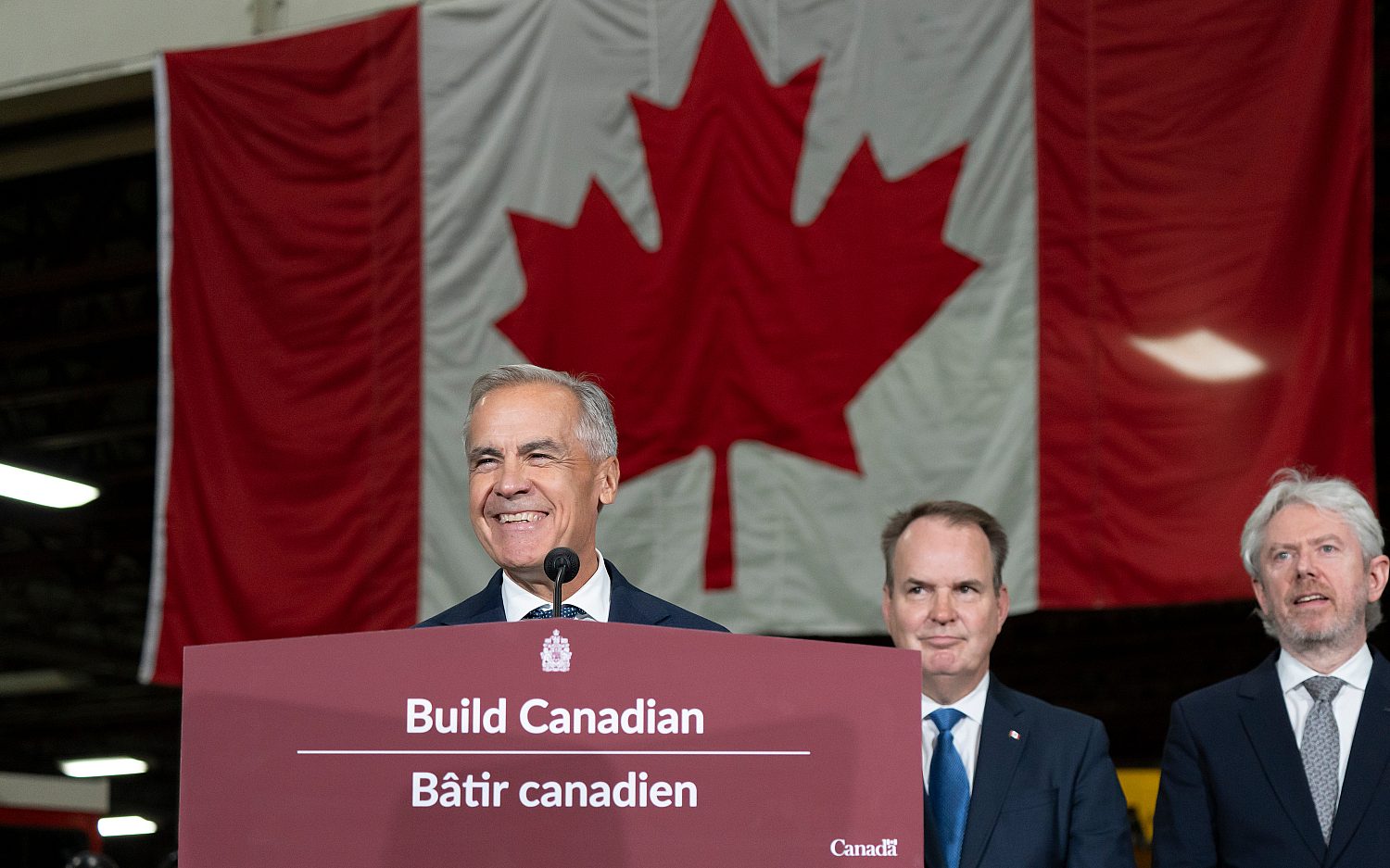
Canada’s new, higher tariffs on roughly $20 billion in U.S. goods took effect Tuesday, according to the Canadian government. The move was a response to the U.S. government’s decision in late August to impose 50% tariffs on $20 billion in Canadian goods, after trade negotiations broke down. The new Canadian tariffs focus on sectors including steel and aluminum, pulp and paper, dairy, appliances, agricultural equipment, plastics, and electronics. Previous counter-tariffs, such as those against U.S. automobiles, also remain in place.
Most of the tariffs were raised to 25% or 50% to match U.S. rates, according to the Canadian government. Canada would match the U.S. tariff burden dollar for dollar, Prime Minister Mark Carney said.
U.S. President Donald Trump said Sunday that the exchange rate between Canadian and U.S. dollars was imbalanced. Trump said the imbalance would end, without giving further details. Trump also threatened to ban Canada-based aviation company Bombardier from the U.S. market. Bombardier mostly makes business jets for commercial purposes, but the U.S. military has purchased a few for airborne communications support.
As of Tuesday morning, the Canadian dollar was worth about 72 U.S. cents, according to Google Finance.
Finally, Trump posted an image of himself referring to Carney as a governor of a U.S. state, along with a map labeling all of North America, including Central America and Greenland, as the United States.
U.S. Trade Representative Jamieson Greer didn’t release a public statement on Tuesday as Canadian tariffs took effect. But he recently said that the United States’ trade deficit decreased 20% from January to July, compared with the same time period last year. A trade deficit occurs when a country imports a higher monetary value of goods than it exports.
Dig deeper: Read my report on the breakdown of U.S.-Canada trade negotiations for more details.


An actual newsletter worth subscribing to instead of just a collection of links. —Adam
Sign up to receive The Sift email newsletter each weekday morning for the latest headlines from WORLD’s breaking news team.


Please wait while we load the latest comments...
Comments
Please register, subscribe, or log in to comment on this article.