
Catholic shrine case pits religious rights against zoning laws
The Supreme Court will evaluate religious land use protections in a Kentucky-based dispute
U.S. Supreme Court building Fintan Trimble / iStock / Getty Images Plus via Getty Images
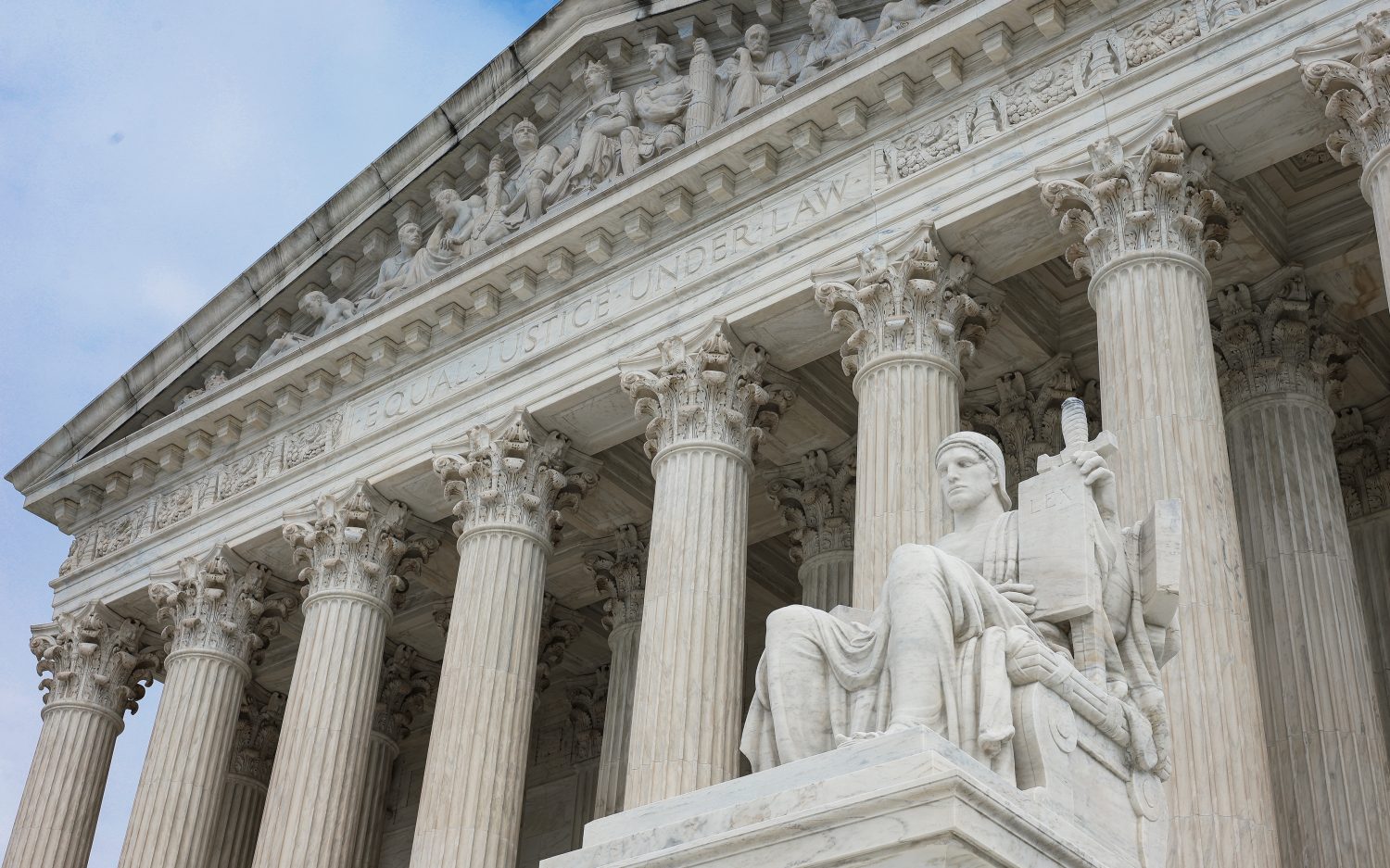
A neighborhood Roman Catholic church in northern Kentucky thought it only needed a permit to build a shrine for prayer on its property. But after two neighbors sued to block the project, the church’s proposed construction project spiraled into a yearslong legal dispute over zoning laws and religious rights.
On Thursday, the stakes of the Missionaries of St. John the Baptist case rose as the Supreme Court agreed to weigh in. The Catholic ministry, which owns the land where a historic Catholic church is located, contends that blocking the project violates rights protected by the Religious Land Use and Institutionalized Persons Act, or RLUIPA. Experts say the case could address how zoning laws affect religious groups across the country.
“What the court holds in this case is going to have an effect on all [religious organizations],” said Ryan Gardner, an attorney for First Liberty Institute, which represents the church. “Religious liberty in this country doesn’t mean a lot if you can’t gather with other people to do it, be it at a house of worship or if you want to do some kind of ministry.”
Congress enacted RLUIPA in 2000 to protect religious organizations from discrimination in land-use decisions. Under the law, officials can’t treat these organizations differently than secular ones when it comes to zoning laws. The measure also requires authorities to provide substantial justification before imposing land-use restrictions that burden religious exercise.
RLUIPA isn’t a new law, but this will be the first time the Supreme Court interprets the extent of its protections, Gardner noted.
The Missionaries of St. John the Baptist’s case started in 2021 after the ministry applied for a permit to construct a grotto to the Virgin Mary behind the sanctuary of Our Lady of Lourdes Catholic Church in Park Hills, Ky.
Church leaders planned for the shrine to be 16 feet by 39 feet—roughly the size of a backyard swimming pool—and to include a surrounding plaza and walking path. The nonprofit said the space would act as a quiet location for prayer, reflection, and devotion.
“They want to build a place that’s beautiful and where anybody can come. … They want it to be open to anyone in the community who wants to come for a quiet place for prayer and reflection,” Gardner said.
The church, located in a neighborhood zoned for residential buildings, needed the city’s approval to build the space. The church’s building was grandfathered into local zoning laws since it’s been on the property for nearly 100 years. The Park Hills Board of Adjustment approved the grotto permit request in late 2021, stating that the space would “contribute to the general well-being of the neighborhood or the community.”
But Park Hill residents Joel and Elizabeth Frederic opposed the construction plans, stating the shrine would create additional traffic. The church’s building wasn’t located on a public thoroughfare that could support the increased traffic, the couple said. They took their case to a state trial court, arguing the local board misapplied zoning ordinances and shouldn’t have granted the permit.
While the trial court initially sided with the Catholic ministry, an intermediate state appeals court later reversed that decision. The appeals court rejected the church’s defense that its religious practice trumped zoning laws. The Missionaries of St. John the Baptist appealed the ruling, urging that the denial clearly violated the ministry’s rights under RLUIPA.
But in 2025, the Kentucky Supreme Court upheld the ruling in favor of the Frederics, denying the ministry permission to build the grotto. The state’s high court said the denial did not discriminate against the ministry, as officials equally applied local laws to religious and secular organizations. If the ministry wanted to build a grotto, it could build a smaller shrine on a different part of its property, the court said.
The court also noted that the church was aware of the prohibitory zoning ordinance before applying for the permit. It called the nonprofit’s burden “self-imposed.”
The Missionaries of St. John the Baptist appealed to the U.S. Supreme Court earlier this year, urging that it must erect the shrine adjacent to its building to follow religious traditions that say Mary requested chapels and grottos to be beside one another.
The church also pointed out that local golf courses and country clubs have received exceptions to the city’s zoning laws, which means that officials must grant similar exceptions to the church under RLUIPA.
According to Gardner, the ruling from the Kentucky Supreme Court “waters down” RLUIPA’s protections, allowing neighbors to stop the project even after city approval.
“Just think about the risk that we run into if hostile neighbors can always come in with zoning laws and use them as a heckler’s veto to shut down any sort of religious exercise that they don’t want on someone else’s property,” Gardner said. “RLUIPA is not being used to address the very concerns that Congress passed it for in the first place.”
He added that, because the Supreme Court has never ruled on RLUIPA, the lower courts are in “absolute disarray” over how to apply its protections. Right now, the strength of a ministry’s religious rights depends on the state they are in. Some states, like Pennsylvania, offer broader protection, while others, like New York, limit them, Gardner noted.
People with a broad array of religious beliefs are watching to see if the Supreme Court will rule in favor of the Missionaries of St. John the Baptist, he said. Muslim, Jewish, evangelical Christian, and Sikh organizations have all filed briefs in support of the church’s initial petition. Gardner added that zoning laws can also affect a religion’s ability to host house churches or ministries that feed the homeless.
But in the Frederics’ response to the ministry’s petition to the Supreme Court, they contend lower courts have only “minor variations” in how they interpret and apply RLUIPA. There is no reason to believe that these variations would have led the ministry to a different result in another court, the Frederics said. They also pointed out that the church has never shown it couldn’t build a “slightly smaller grotto” elsewhere.
WORLD reached out to the Frederics’ attorney for additional comment but did not hear back prior to publication.
The Kentucky Supreme Court wrongly determined that building the grotto elsewhere was not a substantial burden to Missionaries of St. John the Baptist’s religious exercise, said John Ketcham, an attorney with the Manhattan Institute, which filed a brief in support of the church. “Courts shouldn’t be in the business of deciding whether a religious organization could make do with some lesser form of worship,” he said.
Many religious organizations have similar setups, with older buildings that have been “grandfathered into their local zoning codes,” Ketcham explained. But sooner or later, these ministries need to adapt or update their buildings, and they will run into zoning laws.
“Under the Kentucky courts’ rule, local government can block such projects far more easily than under the rule applied in multiple federal circuits,” Ketcham said. “The Supreme Court has an opportunity to set a single national rule.”


I value your concise, accessible reporting. —Mary Lee
Sign up to receive Liberties, WORLD’s free weekly email newsletter on First Amendment freedoms.
Please wait while we load the latest comments...
Comments
Please register, subscribe, or log in to comment on this article.