
A beacon for homeschooling freedoms
America 250: How homeschooling rights in the United States stack up to those abroad
adamkaz / E+ via Getty Images
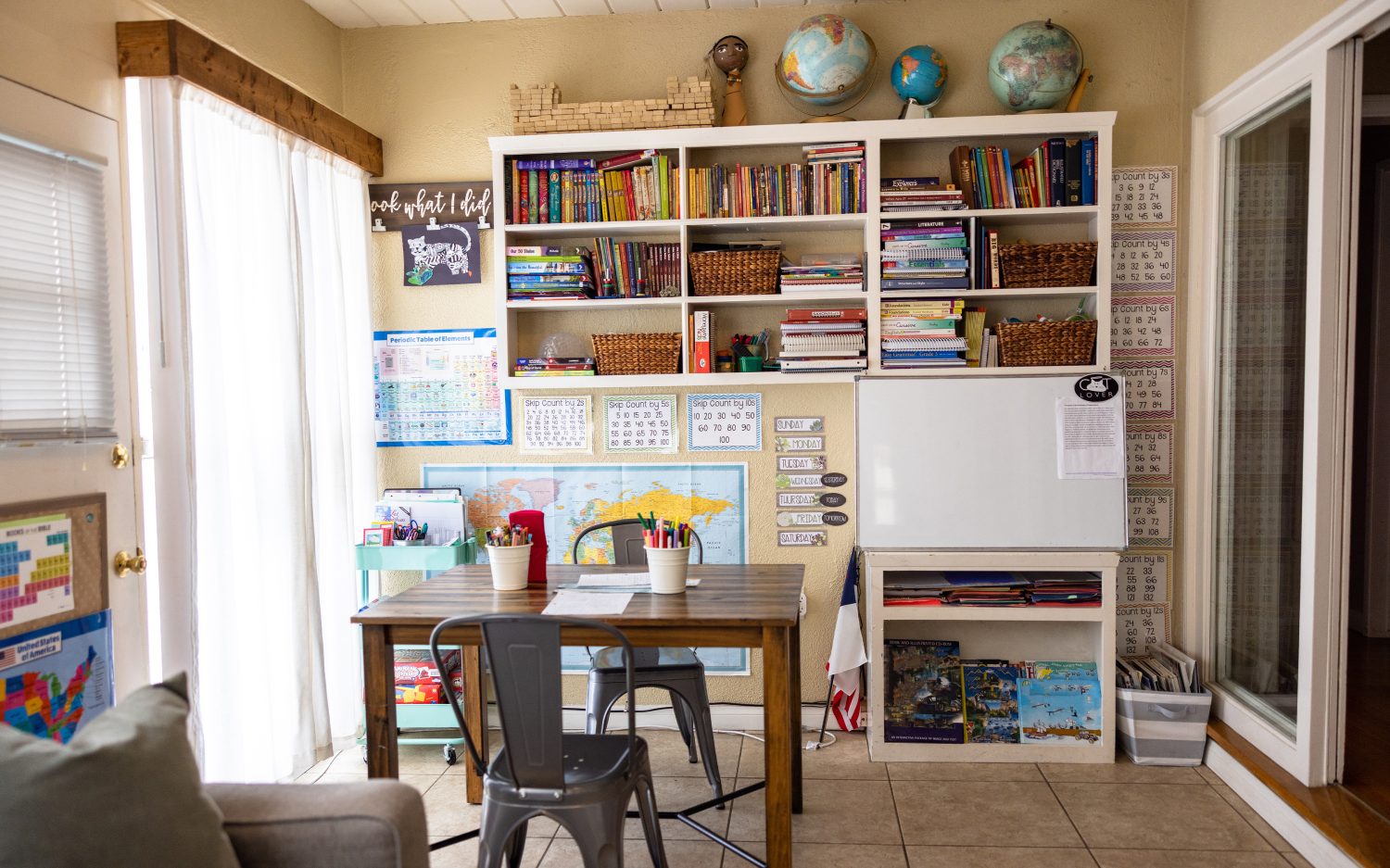
U.S. citizens Debbie and Pete Lee thought officials in Barneveld, Netherlands, would allow them to homeschool their two children after the family moved there as missionaries in 2023. The Trans World Radio missionaries had begun homeschooling in North Carolina, hoping to continue the schooling in Europe to make the move easier. But soon after they arrived, a Dutch official denied their homeschooling request.
Attorneys and friends told the Lees they only had two options: move elsewhere or homeschool in secret.
As WORLD reflects on 250 years of American history, the right of U.S. citizens to homeschool stands in stark contrast to laws in other places around the world. Americans enjoy vast freedom to choose where and how to educate their children, an ability not all nations offer. While some countries have few regulations restricting home education, others ban it outright or require families like the Lees to meet stringent requirements.
In Barneveld, after the area’s local education officer denied the Lees’ homeschooling request, the family asked locals who homeschooled their children to help them navigate the tedious application. The form, written in Dutch, asked the family to list why each school within a certain radius of their new residence was an inadequate option for education for their kids, Debbie Lee said.
She said she thoroughly researched each school—many of which were Christian—and stated why the schools didn’t line up with the Lees’ beliefs. “It was time-consuming, and a little bit nerve-racking,” Debbie Lee recalled. The family waited, only to receive another denial.
When Debbie and Pete asked a lawyer for advice, he encouraged them to ignore the denial and homeschool anyway. A court fight would likely end in their favor, he reasoned, but the process wouldn’t play out until after their planned 18-month stay ended. Once the Lees enrolled their kids in a local school, they would give up their right to homeschool under Dutch law, Debbie Lee told me.
“But we really didn’t want to go against the legal system and be creating waves where we were trying to make a positive impact for the gospel,” she said. So the parents enrolled their two children, then 13 and 7, in local schools, where the children daily dealt with exhaustion from learning mostly or fully in Dutch.
When the Lees moved back to North Carolina, they resumed homeschooling. There, they simply needed to declare their intentions to homeschool, though they also have to complete a nationally standardized achievement test each year.
“We think about that sometimes, maybe we would have been able to go under the radar [in the Netherlands] if we never said anything,” Debbie Lee said. “Maybe we would have been fine, and nobody would have said anything about it. But we also had a sense that we don’t want to be doing something that we feel like we have to hide.”
No countries come close to the United States’ level of freedom for homeschooling, said Kevin Boden, the director of Home School Legal Defense Association International. A landmark 1925 Supreme Court decision in Pierce v. Society of Sisters cemented those rights. There, the high court ruled that “the child is not the mere creature of the State; those who nurture him and direct his destiny have the right, coupled with the high duty, to recognize and prepare him for additional obligations.”
While the Home School Legal Defense Association holds that homeschooling regulations are too strict in some states—such as New York, which requires homeschooling parents to submit multiple compliance documents each year to their local school district—Boden said America remains an example for the rest of the globe.
“What we have here really, I think, stands as a bit of a beacon and lighthouse for homeschool freedom in countries around the world,” said Boden, who is based in the United States. “None of them come anywhere close currently to the level of freedom that we have in this country.”
A 2025 UNESCO report shows that homeschooling is a growing phenomenon around the world, but the United States leads the way with the most families involved in the practice.
Boden explained that homeschooling freedoms vary widely from country to country. Some governments, such as China, ban the practice. But next door, Japan allows homeschooling, though not until age 14. Some areas that allow homeschooling require parents to notify officials of their decision to homeschool, while others require them to first obtain government permission, Boden said.
Also, some governments allow homeschooling but then narrow parents’ rights by also instituting standardized testing or curriculum requirements, according to Boden. Sometimes curriculum requirements force parents to teach in a particular way, potentially undercutting their very purpose for homeschooling.
Earlier this year, a judge sentenced parents in Brazil to prison time for not including particular programs while homeschooling their kids. The judge ruled that the parents were guilty of “intellectual neglect” because their home education programs didn’t include lessons on “gender and sex education” and “tolerance and diversity.”
“[It] is a global battle for this idea of parental rights and home education freedoms,” Boden said. “We live in such a time and place in world history that what happens in one country could very well, at some point in the future, come and impact us.”
Meanwhile, a small percentage of European parents homeschool their children, according to Ignasi Grau, the general director at the International Organization for the Right to Education and Freedom of Teaching. While the numbers might be small, it’s important to pay attention to what homeschooling regulations countries offer, he said. “Homeschooling is a really good indicator of how states trust citizens,” Grau said.
In France, officials previously offered broad homeschooling rights. But then legislators passed a 2021 law that severely limited parents’ rights to practice homeschooling, allowing it only in certain limited situations. By contrast, in the U.K., parents must merely inform the school before taking their children out for home education. In Spain, where Grau is based, a growing number of families are interested in the practice, he said. While the government hasn’t banned home education, the country offers sparse legal recognition, complicating parents’ attempts to practice it.
Grau added that Europe faces a growing polarization on homeschooling and regulation, with many labeling those in favor of home education as “right-wing.”
In the United States, on the other hand, homeschooling enjoys widespread acceptance, and the number of U.S. homeschoolers has grown to about 6% of all school-aged children. Homeschooling freedoms remain strong overall—so strong, in fact, that some critics argue the practice needs more government oversight.
“In the United States, homeschooling is relatively deregulated and relatively centered on the parent’s right to homeschool ... rather than sort of the children’s rights framing, which we see more prevalent in other countries,” said Tess Ulrey, the executive director at the U.S.-based Coalition for Responsible Home Education, which advocates for stricter homeschool requirements.
Ulrey noted that several states don’t require parents to inform authorities before homeschooling—a situation she believes could lead to worst-case scenarios like child abuse. CRHE supported a recently enacted state law in Connecticut mandating homeschooler notification and other regulations after two high-profile abuse cases occurred in the state.
“The impact of centering parents and centering their voice and their experience, it really presents a barrier for vulnerable children who don’t have those good parents to support them,” Ulrey said.
Meanwhile, some countries don’t offer any sort of legal guidance on homeschooling one way or the other. When Mike and Wendy Lambert moved from the United States to Eswatini as missionaries with Trans World Radio, they didn’t have to notify officials of their educational plans. Not every child goes to school in Eswatini, the couple explained. They homeschooled their three boys because attending a public or private school in the country would have meant going into a completely different schooling system—including different terms and different ages for grades.
Prior to that, they had homeschooled in Illinois, where, while they said regulations made it easy to homeschool, they had to inform local officials before pulling their kids out of the school system.
During their nearly five years in Eswatini, the hardest part of homeschooling abroad was logistics, not a lack of freedom. Due to limited resources within Eswatini, the family shipped books and curriculum materials ahead of time in an expensive shipping container. They also dealt with finicky internet.
The couple later moved to Guam, which, as a U.S. territory, offered no roadblocks for them to continue home education.
Still, Mike joked that the challenging part of homeschooling “wasn’t any government or even the internet. It was homeschooling boys.”


I enjoy them immensely and share them every week. —Joel
Sign up to receive Schooled, WORLD’s free weekly email newsletter on education.
Please wait while we load the latest comments...
Comments
Please register, subscribe, or log in to comment on this article.