
Playing dirty to get elected
Blatant corruption takes center stage in midterm races
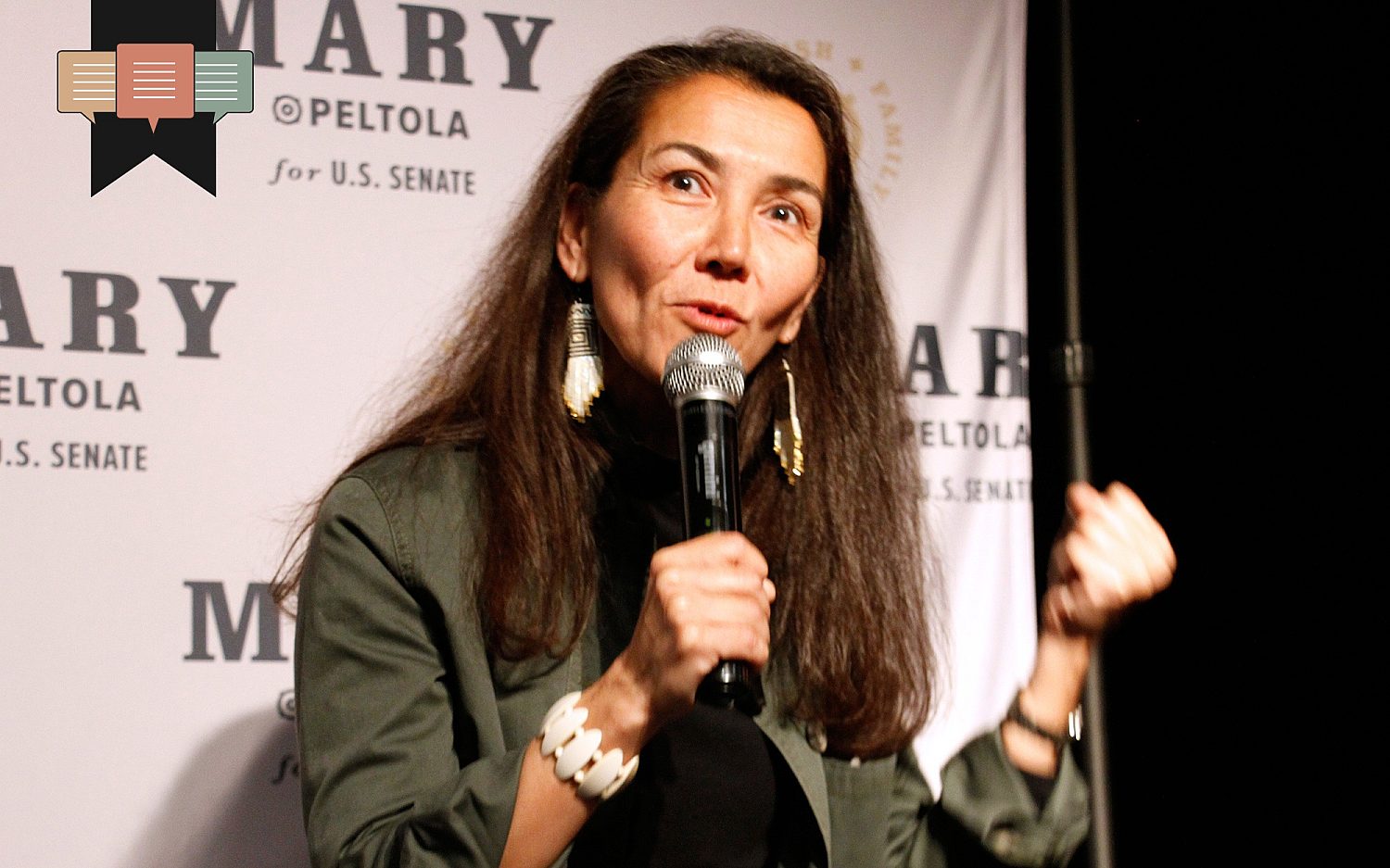
Mary Peltola, a Democrat running for the U.S. Senate in Alaska Associated Press / Photo by Mark Thiessen, file
Full access isn’t far.
We can’t release more of our sound journalism without a subscription, but we can make it easy for you to come aboard.
Get started for as low as $3.99 per month.
Current WORLD subscribers can log in to access content. Just go to "SIGN IN" at the top right.
LET'S GOAlready a member? Sign in.
In the week approaching Halloween, Americans learned of a dirty trick that had been carried out in Alaska. The Democratic Party and the campaign of its standard bearer, Mary Peltola, sought to confuse Republican voters by recruiting a candidate of the same name as the state’s current senator. Dan Sullivan, meet Dan Sullivan. Based on Alaska’s ranked choice system of elections, it was possible to see both Dan Sullivans make it to the general election ballot.
In a close race, the failure of even a small number of voters to choose the incumbent over his namesake could easily tilt the result and possibly even the balance of power in what was once called “the greatest deliberative body in the world.” To its credit, the New York Times broke the story nearly a week before election day. We can hope that word will spread among the state’s small population.
In the same month, voters in the state of Ohio witnessed another nasty bit of business in action. When Vivek Ramaswamy arrived on the scene in the 2024 primaries, it was obvious he intended no real challenge to Donald Trump. Instead, it was an audition. With his bold, energetic, and strategic participation in the debates, Ramaswamy established himself as a potential player in the near future of GOP politics.
The fruit has been his run for the governor’s office of the consequential state of Ohio. But what are we talking about as the contest reaches its apex? Ramaswamy’s decision to recruit his opponent’s mother hoping no one could vote for a person estranged from that bond. Though the relationship is strained for good reason, Ramaswamy (and J.D. Vance) have simply chosen to double down.
The third item in my electoral haunted house is Donald Trump’s irresponsible and frankly manipulative promise in a strange midterm party convention to provide each voter with $5,000 in the event of a Republican win. His immediate predecessor, President Biden, made a similarly transactional offer, but at least did so with the fig leaf of public policy with his unconstitutional attempt to unilaterally forgive a half a trillion dollars or so of student loan debt. During the same period, he shamelessly drew down the strategic petroleum reserve to knock down prices for the midterm.
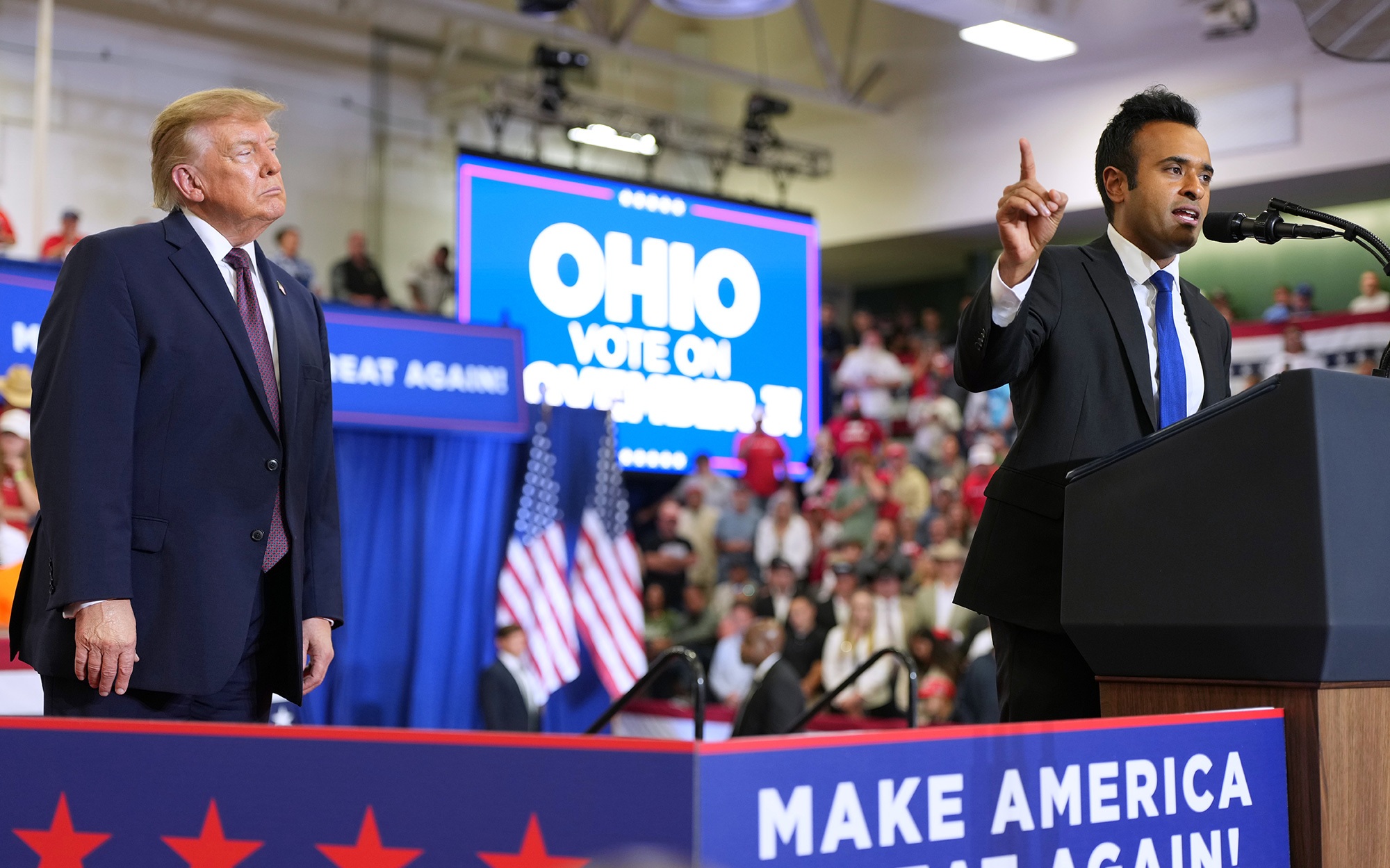
President Trump listens as Vivek Ramaswamy speaks at a campaign rally in Chillicothe, Ohio, on Oct. 28. Associated Press / Photo by Mark Schiefelbein
Finally, I draw attention to the umbrella offense which has become a set piece of reporting about the election without really occasioning careful thought by the public. That offense is cynical redistricting based on the blunt use of power and aided by technology to produce districts aimed at producing maximum electoral advantage to the side wielding the boundary marker and the gavel. While redistricting typically occurs after the national census every ten years, President Trump strongly encouraged Republican governors to engage in unusual mid-decade redrawing of lines to maximize advantage. Some Democrats, such as California’s Gavin Newsom, reciprocated and thereby countered the attack.
I have found in teaching American government for decades that one of the few concepts that really sticks with students is gerrymandering. It seems to me the reason they remember it is that it fulfills their expectations of politics as a corrupt business where anything that works is fair game. But the simple reality is that it distorts representation and leaves many voters in states dominated by the other party with little representation when they might otherwise have it. More diverse Congressional delegations in the states would probably aid manners and the ability to cooperate.
The reason for this ghoulish review apropos to the season is to draw attention to something I think almost all of us realize if we take a moment to reflect. American political culture is in freefall. The dream of citizenship is that voters will seek out information and rational argument as they attempt to formulate wise opinions. That dream appears ever more fantastical and naïve as our elections increasingly function as party contests to outdo the other side in inspiring fear and anger in the voting public.
We should hope that we don’t find ourselves becoming more like Venezuela, where the winning party and candidates were unable to take office, or like Brazil, where the losing candidate has fled for fear of retribution. But if we are not careful and if we do not tend to the habits necessary to true citizenship, then we are likely to further descend. Dirty tricks, unscrupulous choices, nakedly transactional appeals, and processes that are anything but neutral do not speak well of the state of American politics.
It is important that our policy debates are honest ones and that they expose the information and stakes voters really need to understand. But we won’t have those debates if we continue to encourage our political class to whip up a confusing miasma of spectacle and outrage. Citizens must refuse to continue to ingest the diet of political candy that is sickening us all.


These daily articles have become part of my steady diet. —Barbara
Sign up to receive the WORLD Opinions email newsletter each weekday for sound commentary from trusted voices.Read the Latest from WORLD Opinions
Ray Hacke | Kallie Keeler’s case is the ultimate argument against allowing boys in girls’ sports

Daniel R. Suhr | Higher education became much worse after William F. Buckley’s critique, but is it beginning to turn a corner?

Randall E. King | Does the reporting of a fake poll reflect bias or bad journalism?
Ted Kluck | AI and the Christian university, a faculty hand-wringing barometer
Please wait while we load the latest comments...
Comments