
A glimpse into the mind of Justice Alito
The Supreme Court justice’s new book provides insight on his judicial philosophy
Associate Justice Samuel Alito Associated Press / Photo by J. Scott Applewhite

Full access isn’t far.
We can’t release more of our sound journalism without a subscription, but we can make it easy for you to come aboard.
Get started for as low as $3.99 per month.
Current WORLD subscribers can log in to access content. Just go to "SIGN IN" at the top right.
LET'S GOAlready a member? Sign in.
I’ve spent much of my adult life studying the United States Supreme Court. So I always take note when a sitting justice publishes a book, reading with interest to glean helpful insights into his or her thinking.
Most recently, Justice Samuel A. Alito, Jr., published So Ordered, a book largely based on speeches he gave from 2007 to 2025 on an eclectic mix of topics. In it, he explores how to interpret laws, the proper role of judges, and various historical developments. Amid all the great content, two themes stood out.
One is Justice Alito’s clear-eyed defense of religious liberty. It’s a recurring topic, arising in multiple speeches—one outlining mankind’s desire for meaning, a second exploring the threats to our Constitution, and another focusing on the views of Pope John Paul II.
In the chapter on John Paul II, Justice Alito notes that religious freedom—once overwhelmingly supported in our country—has fallen out of favor. One cause of this decline is the fear that “religious liberty had become a zero-sum game.” Sadly, as Justice Alito remarked, many people believe that religious freedom helps believers “only at the cost of hurting others.”
But the justice firmly rejects this charge. To illustrate his points, he discusses Masterpiece Cakeshop v. Colorado Civil Rights Commission, a Supreme Court case that my organization, Alliance Defending Freedom, successfully litigated in 2018. There, our client—Jack Phillips, a cake artist in Colorado—declined to create a custom cake celebrating a same-sex marriage. His opponents claimed that Jack’s decision to live according to his conscience inflicted harm on same-sex couples. But, as Justice Alito explains, “there was zero evidence that these claims would prevent anyone from receiving the goods and services they sought.” Dozens of Denver-area cake artists would gladly design cakes for same-sex weddings.
Still, many argued that Jack’s decision imposed “dignity harm” on customers—“the distress that comes from moral clashes over deeply personal matters.” But, as Justice Alito put it, even if we accept the concept of dignity harm, it “cut[s] both ways.” The government itself “inflicted dignitary harm” on Jack by punishing him for living out his faith and “by acting as if he was a bigot.” “If the tension of dealing with those who hold religious beliefs that one finds objectionable is a threat to human dignity,” it is hard “to see how anyone can live with dignity in a pluralistic society.”
Justice Alito then explains that, far from imposing harm on some, religious freedom “serves the interest of all, not just the believer.” It is the “ultimate reminder of man’s inherent dignity and of the state’s inherent limits.” On one hand, religious liberty enables us to live with integrity on the things that matter most—ensuring we’re free to do what God requires of us. And, on the other hand, it demands that the government stay within its lane—forbidding Caesar from claiming supremacy on matters belonging to God.
More tangibly, religious freedom “reinforces other rights and liberties”; as Justice Alito writes, “religious liberty and other civil liberties rise and fall together.” This is particularly true of expressive freedom. Protect the right to speak disfavored religious views, and you protect the right to speak disfavored views on other topics. But allow people’s offense to suppress religious exercise, and you allow them to override expressive freedom too.
This brings us to Justice Alito’s second major theme: Judges must interpret the law according to its original public understanding—with boldness and without regard for public favor. Judges must not be “crowd-pleasers,” Justice Alito emphasizes. “Let judges be judges, for if they are not, our legal system, as we know it, will fade away.”
When judges interpret the law according to its plain meaning, that upholds the “rule of law”—an oft-overused phrase capturing the key principle that we are governed by written laws, not the whims of government officials. But when judges distort or ignore the law’s meaning, the rule of law evaporates, as does the people’s power to govern themselves. Each judge becomes a law unto himself.
Justice Alito’s bravery—and commitment to the rule of law—is perhaps best seen in his opinion overruling Roe v. Wade. In that 2022 decision, Dobbs v. Jackson Women’s Health Organization, Justice Alito interpreted the Constitution according to its text and historical understanding, finding no constitutional right to abortion. In so doing, the justice—and the colleagues who joined his opinion—freed the American people to protect life. And those justices did so at a great personal cost, enduring threats to their very lives. This is a picture of ruling rightly and boldly—without fear or favor.
Like all good books by Supreme Court justices, So Ordered gives a glimpse into Justice Alito’s judicial philosophy, revealing religious liberty as a bedrock and courage as non-negotiable. Then again, none of this is surprising. Anyone paying attention to the justice’s opinions over the past few decades already knows his commitment to these principles. Still, it’s a great reminder to each of us to steward our freedom to live out our faith.


These daily articles have become part of my steady diet. —Barbara
Sign up to receive the WORLD Opinions email newsletter each weekday for sound commentary from trusted voices.Read the Latest from WORLD Opinions
Daniel R. Suhr | A U.S. House race raises questions about whether a background in pornography should disqualify a candidate

Adam M. Carrington | Many horror movies acknowledge the supernatural, but they rarely get it right

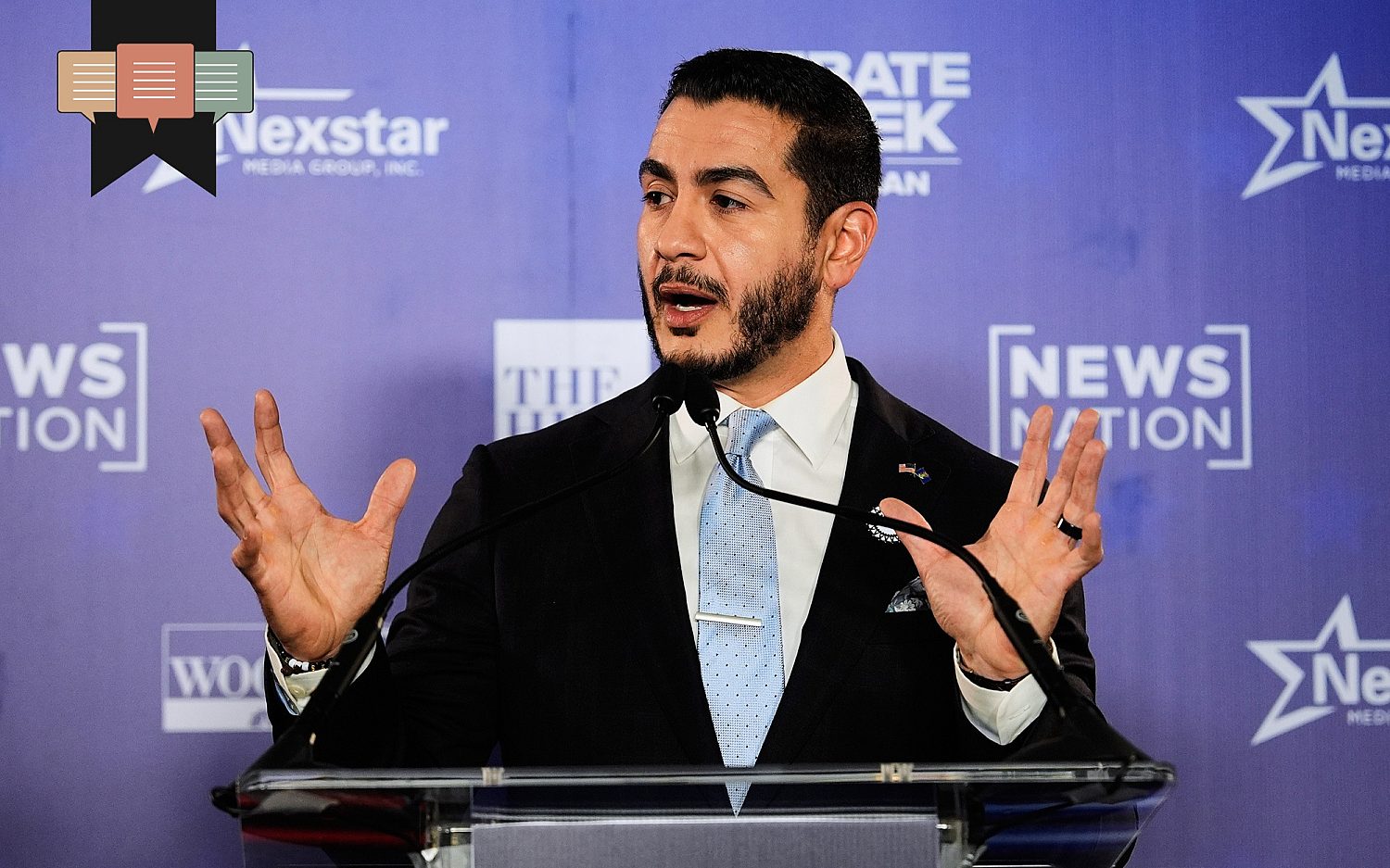
A.S. Ibrahim | Questions for the candidate about ties to the Muslim Brotherhood are legitimate—no matter how much he tries to deflect attention elsewhere
Bethel McGrew | A case in Massachusetts shows how easy it can be for the state, driven by LGBTQ ideology, to take children from parents

Please wait while we load the latest comments...
Comments
Please register, subscribe, or log in to comment on this article.