
Never expect an honest confession from Abdul El-Sayed
The candidate’s clear ties to the Muslim Brotherhood are a legitimate concern—no matter how much he tries to deflect attention elsewhere
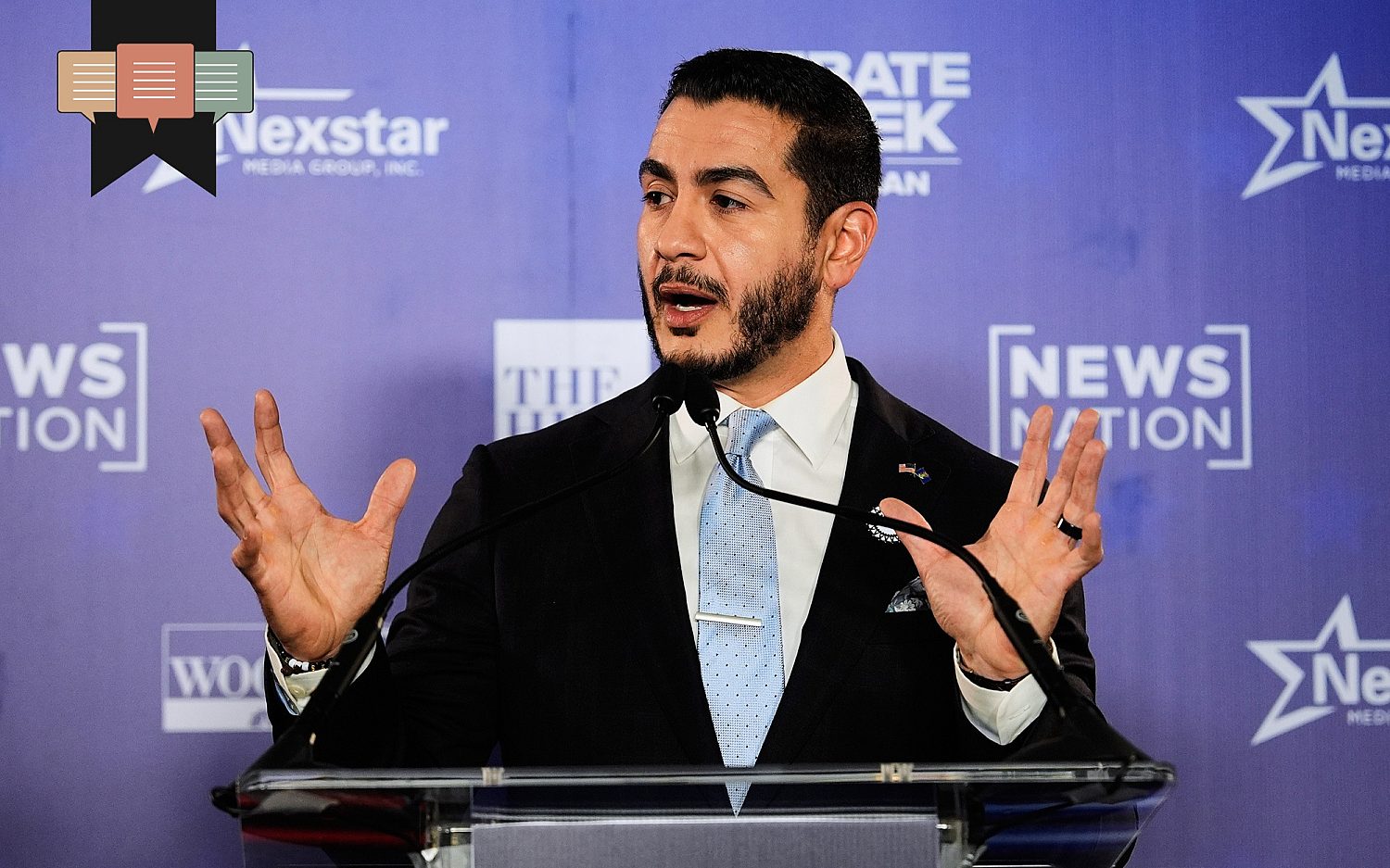
Abdul El-Sayed Associated Press / Photo by Paul Sancya
Full access isn’t far.
We can’t release more of our sound journalism without a subscription, but we can make it easy for you to come aboard.
Get started for as low as $3.99 per month.
Current WORLD subscribers can log in to access content. Just go to "SIGN IN" at the top right.
LET'S GOAlready a member? Sign in.
Abdulrahman Mohamed El-Sayed—the Michigan Democrat running to become the first Muslim United States senator—has spent the final weeks of his campaign performing a classic maneuver. Never expect an Islamist or a Muslim politician seeking high office to admit the religio-political ties that would cost him the race. Open confession is for amateurs. Smoking guns, family admissions, donor networks, student-group leadership, and celebratory praise from the Muslim Brotherhood’s own media reflect realities far more clearly than polished denials on TV. If it walks like a duck, talks like a duck, takes money from the duck’s friends, and has relatives who proudly call the family “longtime MB,” you know what you are looking at.
Asked directly whether he or his family had ties to the Muslim Brotherhood, he answered “No.” Pressed again, “No.” Confronted with his half-sister’s own words, he dismissed them as hearsay and pivoted to his Michigan birth certificate, his Rhodes Scholarship, and the supposed bigotry of the questioner. When a voter in Caro, Mich., finally forced a disavowal of the Muslim Brotherhood, El-Sayed offered a quick “Sure, yeah, absolutely”—then immediately accused the man of implying dual loyalty because he is Muslim.
The denial is much needed for victory, but the candidate’s performance is just strategy.
In 2012 and 2013, El-Sayed’s half-sister, University of Chicago professor Eman Abdelhadi, posted without shame: “My family has long been MB.” She described “an amazing talk with my mom about her activism in the Muslim Brotherhood during the early 70s while she was in college #respect.” She noted that family members had been jailed for membership and urged relatives still supporting the Brotherhood in Egypt to “lie low, stay safe.”
Their mother, Fatten Elkomy, was active in the movement at the very moment Alexandria University in Egypt was a Muslim Brotherhood stronghold. El-Sayed insists he was raised by his father and stepmother after a divorce at age three and never discussed these matters with his mother. That may be true, but it is also irrelevant. Family connections in Brotherhood culture are not casual; they are the transmission belt.
The connections do not stop at the bloodline. El-Sayed’s father-in-law, Tayeb Jukaku, a major campaign donor, sat for years on the Islamic Society of North America’s Founders Committee—the same ISNA named as an unindicted co-conspirator in the Holy Land Foundation terrorism-financing trial, the largest of its kind in American history. Jukaku previously served as president of CAIR-Michigan. Counterterrorism analyst Kyle Shideler told a Senate subcommittee that these ties, combined with El-Sayed’s links to the CAIR-adjacent voter group Emgage, raise genuine security concerns. Campaign finance records show six-figure sums flowing from current and former CAIR officials. Mohamed Soltan—an Egyptian-American sentenced to life in prison in Egypt for supporting the Brotherhood—personally donated and directed organizational money to El-Sayed’s super PAC.
Worse, when El-Sayed won the Democratic primary, the Brotherhood’s official media arm, Ikhwan Online, celebrated the victory as a defeat of “the Zionists.”
In college, El-Sayed served as vice president of the Muslim Students Association, the campus vehicle that researchers and former federal prosecutors have long identified as the Brotherhood’s original American foothold. He helped lead protests against former PLO and Brotherhood members who had converted to Christianity and repudiated Islamist ideology. In 2012 he signed an open letter supporting Mohamed Morsi, the Brotherhood’s man in the Egyptian presidency, and calling for the purge of media and police. These aren’t random data points. They form a pattern.
That pattern is intelligible only if one refuses the Western liberal demand to treat Islamist politics as the activities of merely another ethnic interest group.
In the classical Sharia, religious and political necessity can render the forbidden permissible. Deception in the service of advancing Islam’s temporal power isn’t a moral failure; it is strategy. Muhammad’s reported hadith that “war is deceit” isn’t folklore, but operational instruction. Indeed, politicians lie, but a Muslim enjoys an additional theological license and the reinforcement of a community that often votes as a bloc oriented toward Islamic loyalty and the long-term expansion of Muslim influence.
Brotherhood networks of earlier generations abandoned the old open rhetoric precisely so they could penetrate, blend in, and expand inside Western institutions while concealing ultimate aims. Portraying any scrutiny as an attack on Islam itself is the standard defensive shield.
El-Sayed’s progressive packaging—former health director, talk of affordability, medical credentials—aims to appeal to western norms. He doesn’t represent ordinary American Muslims who reject the Brotherhood’s project. He advances the network that does. A senator with these associations sitting on intelligence, foreign relations, or judiciary committees isn’t a symbolic political milestone for America. It is a risk, especially as several Brotherhood branches have been designated for material support to Hamas.
The parent organization that produced Hamas doesn’t suddenly become a social club when its American cousins put on suits and speak fluent English.
Michigan isn’t yet Britain, but the trajectory is visible to anyone willing to see. Voters are under no obligation to accept performative denials or to treat family history, donor lists, institutional affiliations, and official Brotherhood praise as irrelevant because the candidate will be the first “Muslim” senator. Let no one be deceived. The Brotherhood’s method has always been gradual, patient, and deceptive when necessary. Eloquence and a Michigan birth certificate don’t erase the pattern.
If the feathered creature walks like a duck, America already knows the species.


These daily articles have become part of my steady diet. —Barbara
Sign up to receive the WORLD Opinions email newsletter each weekday for sound commentary from trusted voices.Read the Latest from WORLD Opinions
Bethel McGrew | A case in Massachusetts shows how easy it can be for the state, driven by LGBTQ ideology, to take children from parents

Ericka Andersen | Writer turns linguistic and ideological cartwheels to make the case that a woman can be “a little bit pregnant”
David Closson | Safeguards fall away as assisted suicide expands in Australia and Canada
Eric Patterson | Marx-inspired candidates say some radical things about faith, but they don’t say much about protecting fundamental liberties
Please wait while we load the latest comments...
Comments