
Should Christians watch scary movies?
Many horror movies acknowledge the supernatural, but they rarely get it right
Getty Images / E+ / simonkr

Full access isn’t far.
We can’t release more of our sound journalism without a subscription, but we can make it easy for you to come aboard.
Get started for as low as $3.99 per month.
Current WORLD subscribers can log in to access content. Just go to "SIGN IN" at the top right.
LET'S GOAlready a member? Sign in.
October is the scariest month. At least, our culture treats it so, and our society celebrates at least a month of Halloween. Cinemas show horror films, while lawns are strewn with fake skeletons, gravestones, and ghoulish decorations. Many children will dress up in costumes to Trick-or-Treat.
Recently, prominent online conservative commentators debated whether Christians could consume products of the horror genre. Allie Beth Stuckey declared, “Christians shouldn’t be a fan of horror,” while Matt Walsh replied, “Horror is the most Christian genre of film.”
Well, it depends, as Walsh himself acknowledged. Some horror films and books focus on bloody, gruesome spectacle. One new entry in this subgenre is the show Crystal Lake, a prequel to the Friday the 13th franchise. A number of such works also mesh this violence with no less extreme sexuality. They meld destruction and deformation of body with that of soul. Perhaps we could argue that this “art” confirms the total depravity of man. However, the attraction to these bloodbaths and torture fantasies tends to say more about the condition of the viewer’s soul. There is more guilty intrigue than righteous disgust.
Walsh focused his praise on where the horror genre deals with the supernatural. Here, he makes a good point. We still live in the afterglow of Modernism more generally and the New Atheism more specifically. Modernism in the 19th and into the 20th centuries sought to explain away the supernatural as superstitions or explanations of phenomena stemming from ignorance. Natural explanations gave the true answers to what people once attributed to God or gods. The New Atheism sought to further push a purely materialistic rationalism that reduced existence to this world and its matter.
At their best, horror films refuse to limit reality to the material, chemical, and otherwise scientifically explainable. Though also quite violent at times, the films of Robert Eggers take seriously the concept that spiritual forces might exist and be at work among us. Horror films, even when chasing “jump scares,” can portray a world where Satan, demons, and angels operate (Eggers’ The Witch among them). They give some glimpse into what the Apostle Paul described in Ephesians 6:12, namely that “we do not wrestle against flesh and blood, but against the rulers, against the authorities, against the cosmic powers over this present darkness, against the spiritual forces of evil in the heavenly places.”
Moreover, these descriptions of horror connected to spiritual warfare did not originate in Hollywood. A long genre of written works within Christianity sought to expose and explain not just demonic activity but sinful human engagement with those dark forces. Cotton Mather, William Perkins, and King James I all wrote works identifying witchcraft. Perkins, a Church of England priest and proto-Puritan, was even said to have dabbled in such activities before his conversion. They took Paul’s words seriously and believed he spoke of the world as it really existed. Ignoring that reality would only leave Christians open to deception and vulnerable to danger.
However, even when taking the supernatural seriously, the horror genre can get things terribly wrong. The core fault in many of them is the place God plays. God is often absent entirely as evil spiritual forces wreak havoc, only to be stopped, if stopped at all, by a brave or lucky action by some mere mortal. Otherwise, God might get referenced, but He proves mostly impotent rather than omnipotent. A cross or holy water might gain a temporary reprieve or partial victory. But demons rarely if ever end up cowering before the name of Christ, as the Gospels show them doing time after time during our Lord’s earthly ministry.
Moreover, in the past, perhaps well-meaning discussion of witchcraft did lead to terrible injustices against innocent human beings, especially women in both Europe and, infamously, Salem, Mass. The desire for the sensational and the incitement of a mob in response is not new; it has only morphed.
Therefore, Christians can engage with selected elements of the horror genre, past and present. Yet we rightly do so with great caution. We might look for artistic affirmations that the spiritual realm exists, including evil forces of Satan seeking to oppose the Kingdom of God’s spread through the world. Yet we must never let such entertainment frame our understanding of those forces. In particular, we must never let such portrayals encourage twisted interest or cause us to doubt God’s sovereignty. Whatever terrifying entities and events one might encounter, Christ has already won. His triumph should always be our focus, even as the world around us celebrates Halloween.


These daily articles have become part of my steady diet. —Barbara
Sign up to receive the WORLD Opinions email newsletter each weekday for sound commentary from trusted voices.Read the Latest from WORLD Opinions
A.S. Ibrahim | Questions for the candidate about ties to the Muslim Brotherhood are legitimate—no matter how much he tries to deflect attention elsewhere

Bethel McGrew | A case in Massachusetts shows how easy it can be for the state, driven by LGBTQ ideology, to take children from parents

Ericka Andersen | Writer turns linguistic and ideological cartwheels to make the case that a woman can be “a little bit pregnant”

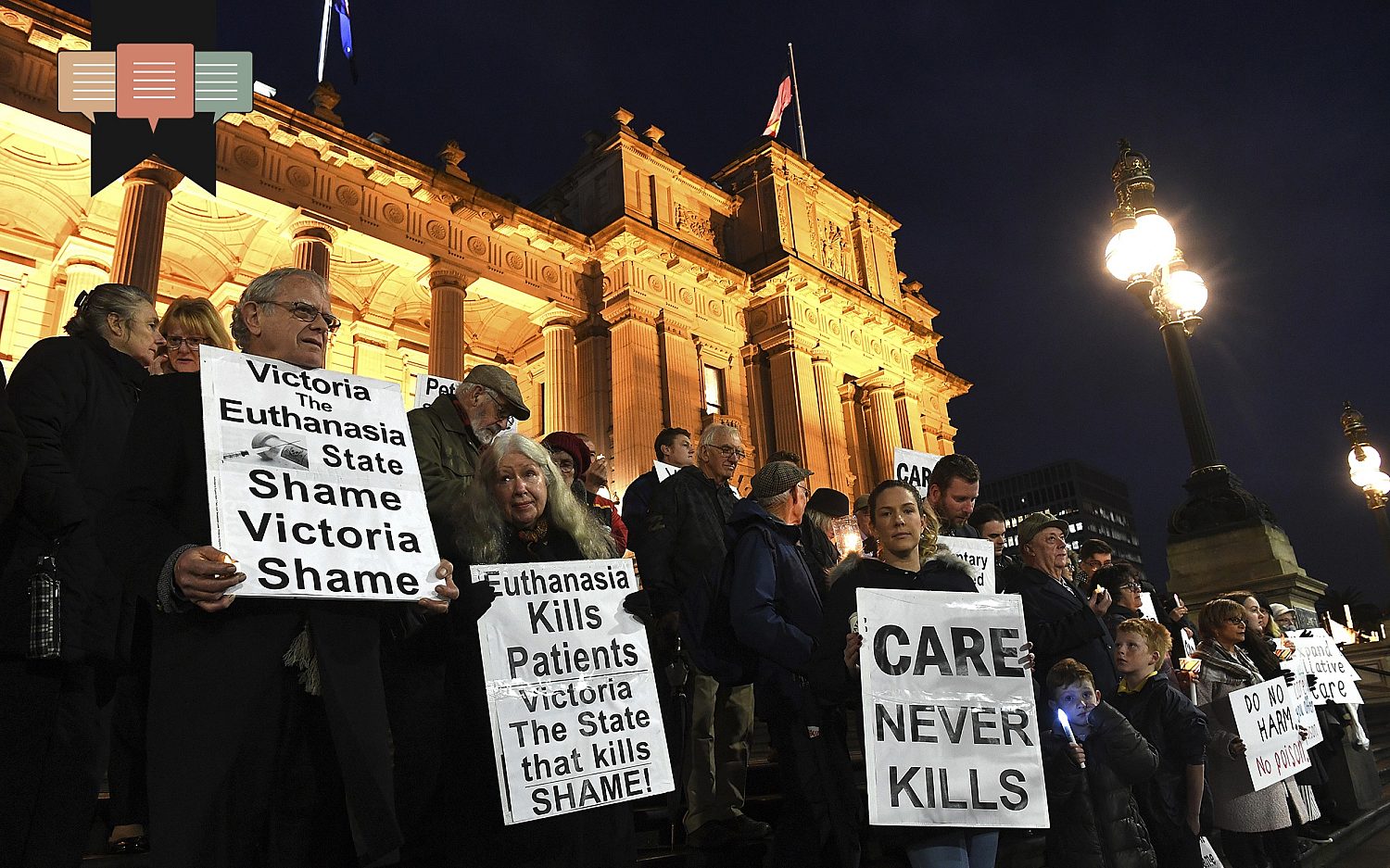
David Closson | Safeguards fall away as assisted suicide expands in Australia and Canada
Please wait while we load the latest comments...
Comments
Please register, subscribe, or log in to comment on this article.