
WNBA wackiness
SPORTS | League’s commitment to gender ideology invites uproar
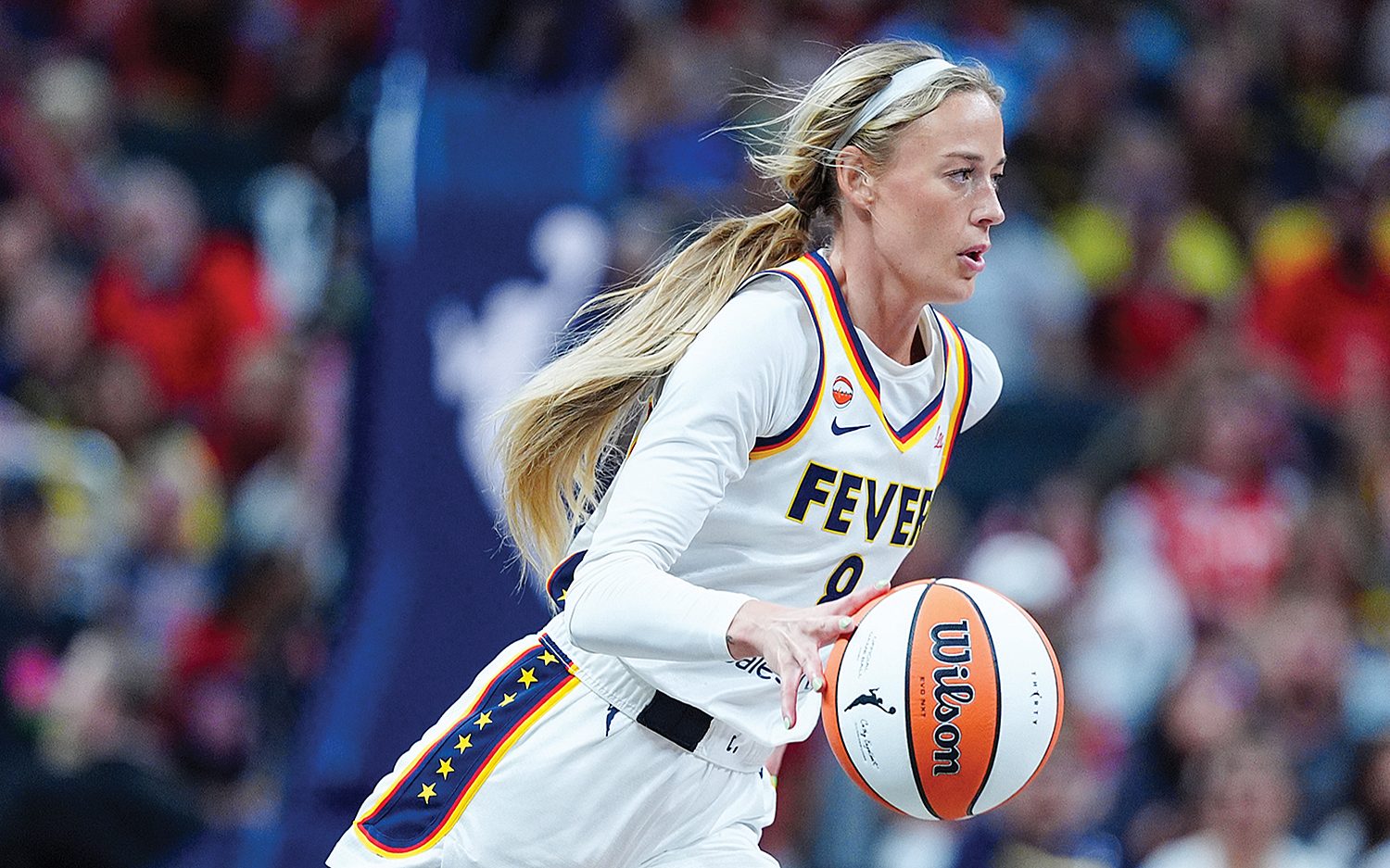
Sophie Cunningham Brian Spurlock / Icon Sportswire via Getty Images
Full access isn’t far.
We can’t release more of our sound journalism without a subscription, but we can make it easy for you to come aboard.
Get started for as low as $3.99 per month.
Current WORLD subscribers can log in to access content. Just go to "SIGN IN" at the top right.
LET'S GOAlready a member? Sign in.
The Women’s National Basketball Association’s season wound down amid furor surrounding the league’s commitment to gender ideology. Indiana Fever guard Sophie Cunningham declared publicly in July that biological men don’t belong in women’s sports, which prompted women and girls in WNBA cities nationwide to organize rallies and attend Fever road games wearing T-shirts and holding signs thanking Cunningham for standing up for female athletes.
This did not go over well at many venues where the Fever played: The WNBA suspended Seattle Storm co-owner Celeste Keaton for five games for screaming at teenage girls supporting Cunningham. Security at an Atlanta Dream game made a mother and daughter cover T-shirts from XX-XY, a brand that supports keeping women’s sports female.
Former University of Kentucky swimmer Riley Gaines has been America’s foremost advocate against keeping male athletes out of women’s sports, and is now the mother of a 1-year-old girl. She brought a sign to the Fever’s road game against the Minnesota Lynx that read, “Sophie, thank you – a girl mom.” Arena security told Gaines to put away her sign.
To test the WNBA’s policy on men in women’s sports, former NBA players Enes Kanter Freedom and Royce White in August each declared their intent to enter next year’s WNBA draft, noting the league’s collective bargaining agreement failed to clearly define who is eligible to compete.
In response, WNBA commissioner Cathy Engelbert convened a task force to define a “woman.” The task forced failed, and when asked about it at a press conference, Engelbert replied, “If you think you know how to tell the difference between a man and a woman, please speak up.”
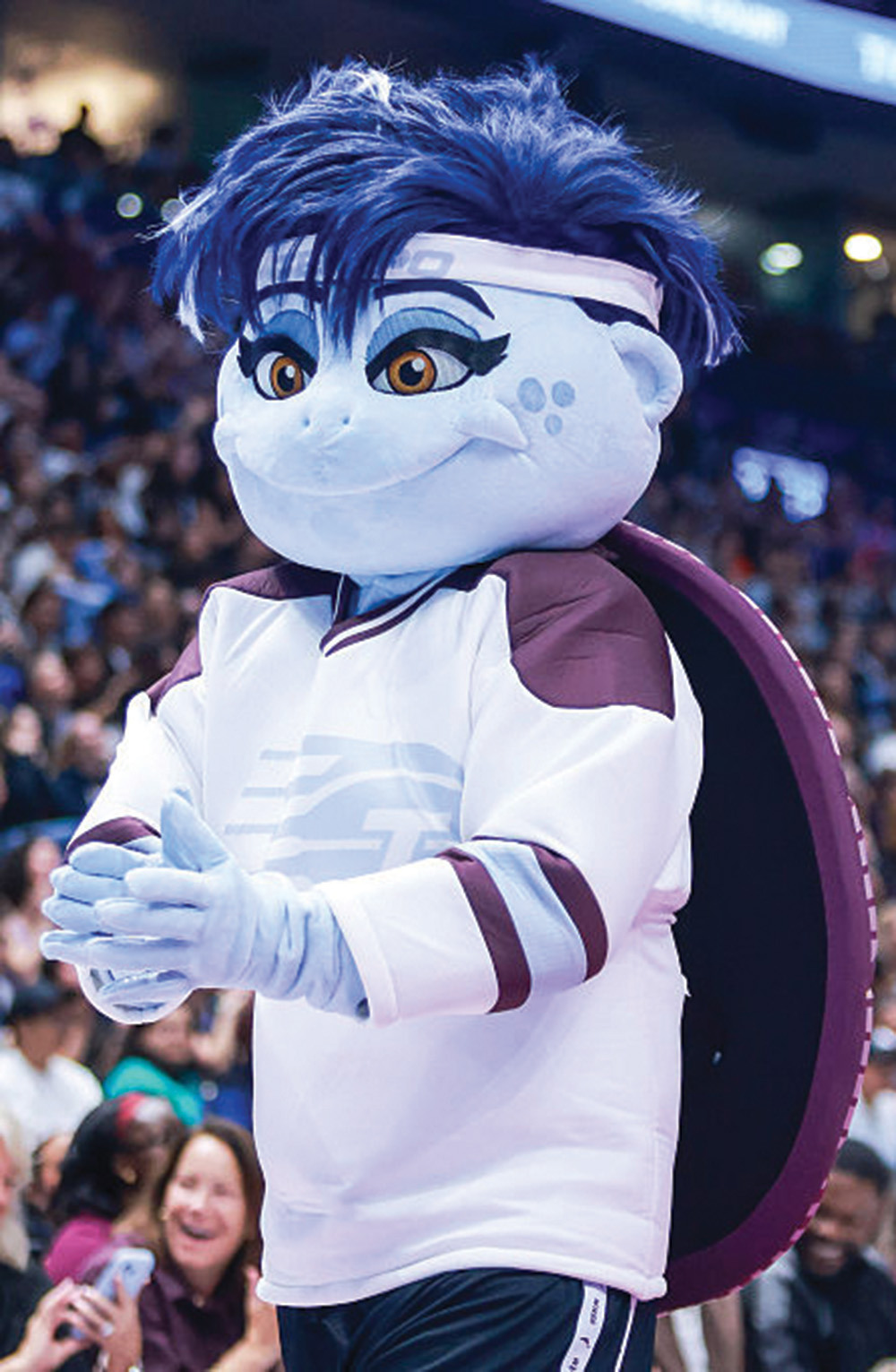
Dez Elizabeth Ruiz Ruiz/Getty Images
Mascot madness
Two WNBA teams boast mascots they claim are “nonbinary”—that is, not strictly male or female. The Toronto Tempo—the league’s first Canadian franchise, now in its inaugural season—unveiled Dez, a “borealis blue” snapping turtle with a purple shell, before its August game against the Indiana Fever. Dez has a masculine hairstyle, and the Tempo lists the turtle’s pronouns as “she/they.” Dez debuted alongside another Tempo mascot, an Arctic hare named Dot who uses traditional feminine pronouns.
The pair’s backstory, posted on the Tempo’s website, fueled internet speculation that the animal characters are in a romantic relationship.
The Seattle Storm also has a declared “nonbinary” mascot, Doppler, who resembles Elmo from Sesame Street but with fuzzy yellow trim around its eyes. Doppler uses “they/them” pronouns, and team sales of T-shirts sporting the mascot and the words “protect trans youth” raise funds for “gender-affirming care.” —R.H.

Please wait while we load the latest comments...
Comments
Please register, subscribe, or log in to comment on this article.