
WHO questions Russia on death of antiplague lab’s worker
Tedros Ghebreyesus speaks during a meeting in Kinshasa, Congo, Aug 5, 2026. Associated Press / World Health Organization
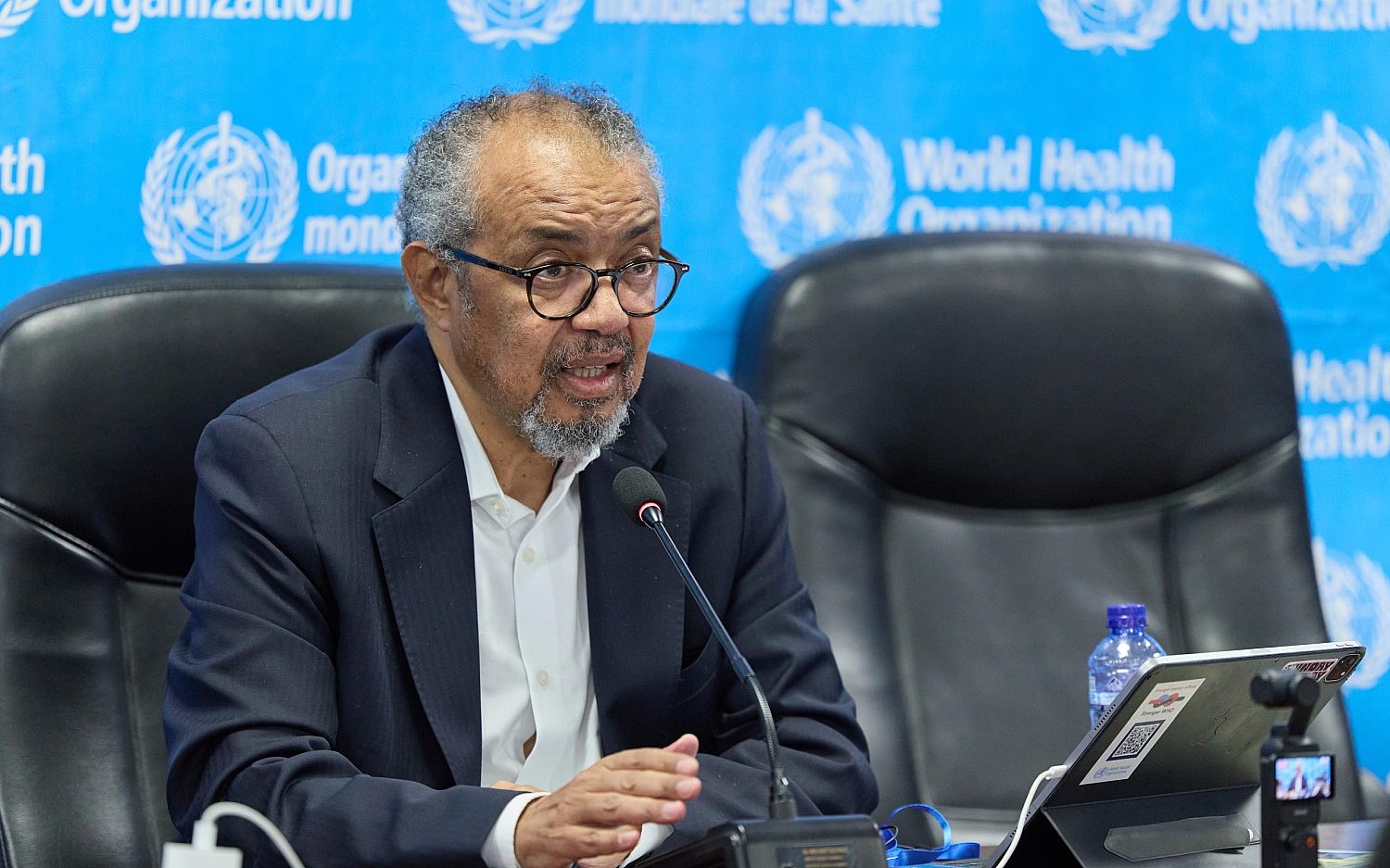
The World Health Organization urged Russia to share more information on an antiplague research worker’s recent death to clarify conflicting media reports, Director-General Tedros Ghebreyesus said Tuesday evening. Russian officials previously said that the woman, who died Friday, perished from an unknown form of pneumonia, and that extensive tests showed no pathogens in her body that were connected with her work. However, some Russian media reported that she had pneumonic plague and was accidentally exposed to it in the lab, Ghebreyesus said.
Pneumonic plague is a severe lung infection caused by the same bacteria as bubonic plague. The infection can spread rapidly through airborne particles, according to the World Health Organization.
Ghebreyesus said he wanted Russia to provide details on the cause of the woman’s pneumonia symptoms. He also asked officials to explain why they implemented various quarantine and control measures, and why people who came into contact with the dead woman were placed under medical observation. He also asked for clarification on some media reports claiming another lab employee was sick with an unknown form of pneumonia.
The U.S. embassy in Russia said Tuesday that it was also aware of the reports Ghebreyesus mentioned. The U.S. government was tracking the situation closely, it said. The United States has already been advising Americans not to travel to Russia due to the risk of wrongful detention, the embassy said.
Dig deeper: Read my earlier report on the worker’s death for more information.


An actual newsletter worth subscribing to instead of just a collection of links. —Adam
Sign up to receive The Sift email newsletter each weekday morning for the latest headlines from WORLD’s breaking news team.


Please wait while we load the latest comments...
Comments
Please register, subscribe, or log in to comment on this article.