
U.S. troops complete withdrawal from Iraq
Iraqi troops flash victory signs while riding in a convoy celebrating the complete withdrawal of U.S. troops from Iraq, in Baghdad, Iraq, Sept. 30, 2026. Associated Press / Photo by Hadi Mizban
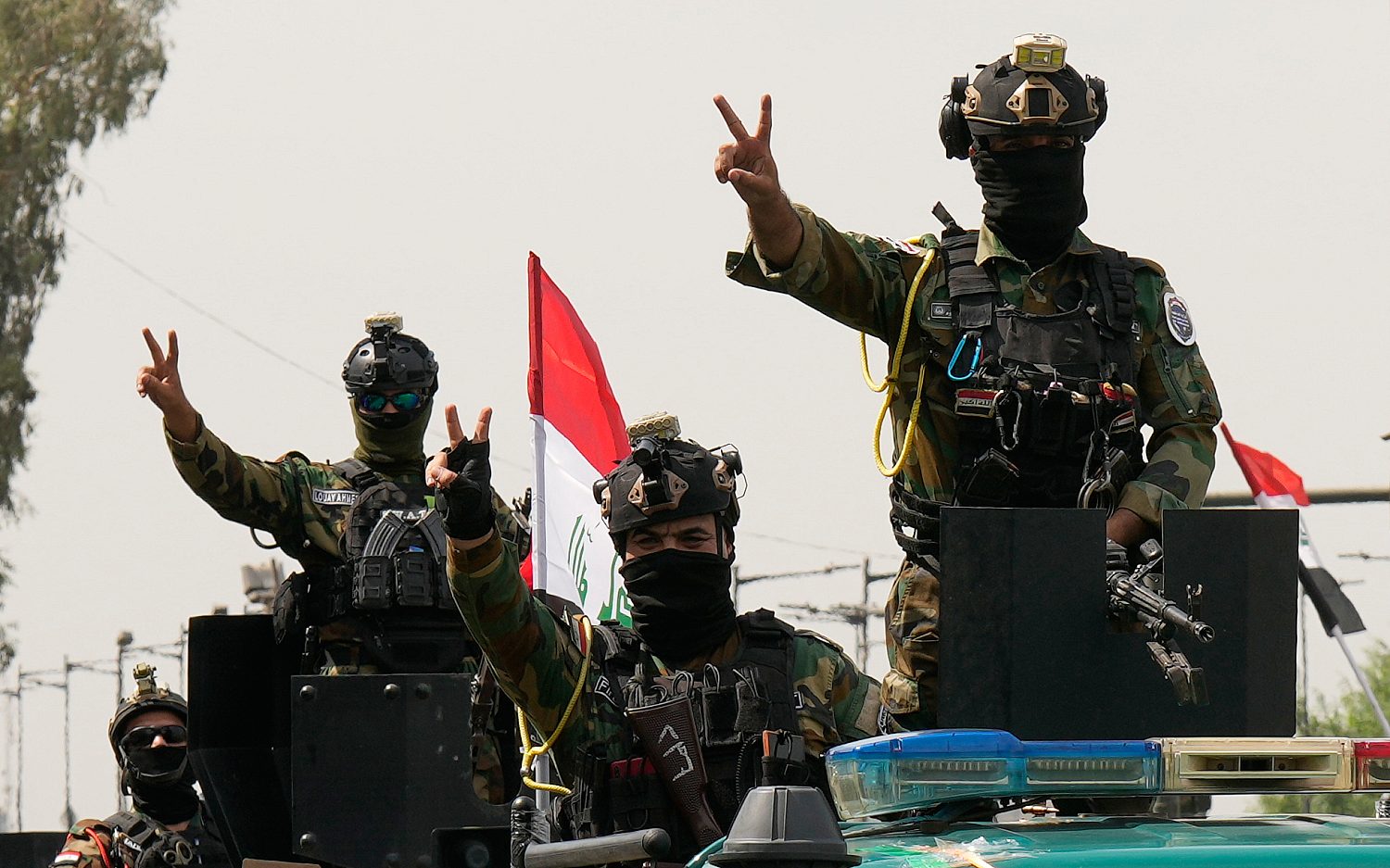
American troops departed and equipment was removed Wednesday from Erbil Air Base in Iraq, completing the U.S. military’s pullout from the country, the Defense Department said. The withdrawal began last October. The United States signed the agreement to do so two years ago, concluding a coalition mission to defeat the Islamic State terror group in Iraq, spokesman Sean Parnell said in a statement. The shift was in line with U.S. interests and marked a change from a wartime coalition mission to a more normal bilateral security relationship, he said.
The Iraqi government celebrated the withdrawal with a ceremony and speeches from its leaders, while thanking the United States and coalition partners. It proclaimed that Thursday will be recognized as the Day of Iraqi Sovereignty.
“The departure of American forces is a significant moment, because Iraqis want to feel they're responsible [for] their own country and their own security and…sovereignty,” Iraqi-American businessman Midhat Zwayen told WORLD. However, he said, Iraq still needs international help to rebuild after years of instability. “I don't see the American withdrawal as the end of the U.S.-Iraq relationship,” he said, but rather “an opportunity to refine that relationship.”
Parnell said the U.S. Defense Department would continue providing training and intelligence support to Iraq. However, the 12-year mission successfully ended the Islamic State terror group’s organized presence in Iraq, and going forward, Iraqi forces would take charge of suppressing any remnants, he said. Those forces included the Peshmerga and other security troops in the Iraqi Kurdistan region, he said.
Parnell did not comment on whether the move affected the U.S. war with Iran. Iran has attacked Iraq’s Kurdistan region, where some U.S. troops were based, several times during the war.
The joint task force that the U.S. military established to fight the Islamic State group is still active, despite the Iraq pullout, according to U.S. Central Command. The task force is now headquartered in Jordan and is leading a mission against the terror group’s presence in Syria.
What’s next for Iraq? The Iraqi government is working on building democratic institutions, establishing better international relationships, and boosting private-sector growth, according to Zwayen. Zwayen has been involved in advising the Iraqi government on plans to reconstruct and further develop the country. He also manages infrastructure and urban development projects.
Zwayen said Iraq has many openings for foreign companies and contractors, especially in filling infrastructure needs requiring specialized technology, such as water treatment. However, fears of a breakdown in security following the U.S. pullout may keep some away, he said.
Increased development could have an exponential effect on Iraq’s prosperity, Zwayen said. Iraq’s population is young and growing, but Iraqis need incentives to stay in their own country and build businesses and institutions there, he said.
Dig deeper: Read Daisy Sachoff’s recent update on the U.S. war with Iran.


An actual newsletter worth subscribing to instead of just a collection of links. —Adam
Sign up to receive The Sift email newsletter each weekday morning for the latest headlines from WORLD’s breaking news team.

Please wait while we load the latest comments...
Comments
Please register, subscribe, or log in to comment on this article.