
SCOTUS greenlights Trump administration’s expanded federal voter database
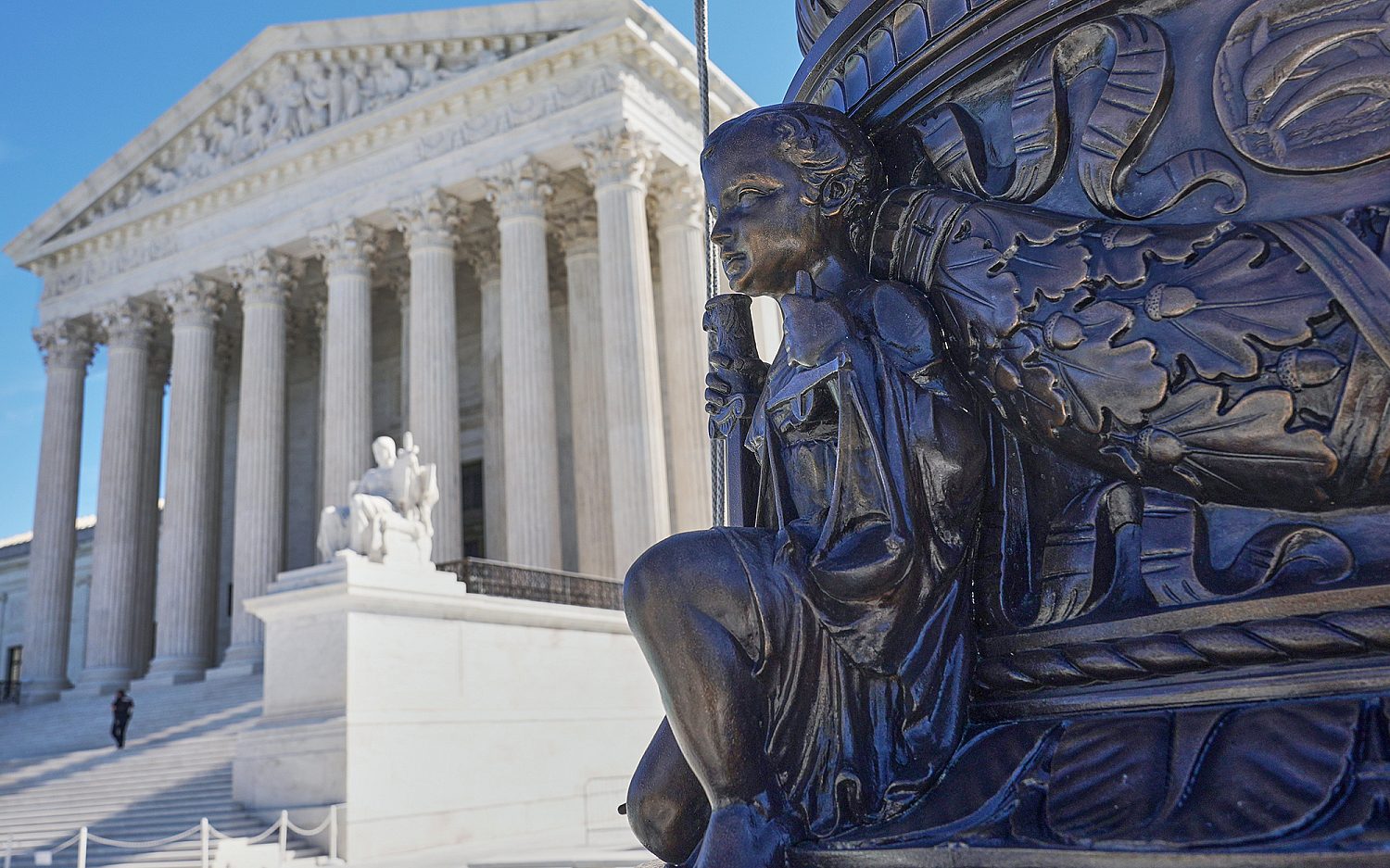
The U.S. Supreme Court building Associated Press / Photo by Mariam Zuhaib
The Supreme Court ruled Friday to temporarily lift restrictions against the Trump administration’s controversial federal voter database to prevent election fraud in the November midterms. The Trump administration petitioned the court for an emergency injunction after a federal judge ruled in June that the Systematic Alien Verification for Entitlements, or SAVE, system violated federal privacy statutes. The system aimed to bolster election integrity by weeding out noncitizen voters, prompting voter rights advocacy groups to file the federal lawsuit.
The high court returned a 6-3 decision, with the majority opinion questioning the merits of the advocacy group’s arguments. Federal officials are obligated under immigration law to respond to election requests from state and local officials seeking to verify voters’ citizenship, according to the majority opinion. The lower court ruling hindered the government from using a tool to help fulfill that legal obligation, the ruling continued.
Who dissented? Justice Ketanji Brown Jackson penned a dissent to the majority opinion, which Justices Sonia Sotomayor and Elena Kagan joined. The trio argued that the privacy risks outweighed the potential benefits. The system could revoke the registrations of legitimate voters, and the harm from burdening just a few lawful voters outweighed the government’s interest in thwarting noncitizens, according to the dissent.
Critics questioned the impact of the ruling since federal voting laws already barred states from wide-scale removal of ineligible voters from registration rosters less than three months before an election.


An actual newsletter worth subscribing to instead of just a collection of links. —Adam
Sign up to receive The Sift email newsletter each weekday morning for the latest headlines from WORLD’s breaking news team.



Please wait while we load the latest comments...
Comments
Please register, subscribe, or log in to comment on this article.