
Nepal disaster calls for counseling, supplies, aid group says
A Nepali police official stands next to a row of bodies of flash flood victims laid in a mass grave for burial in Kathmandu, Nepal, Sept. 1, 2026. Associated Press / Photo by Dar Yasin
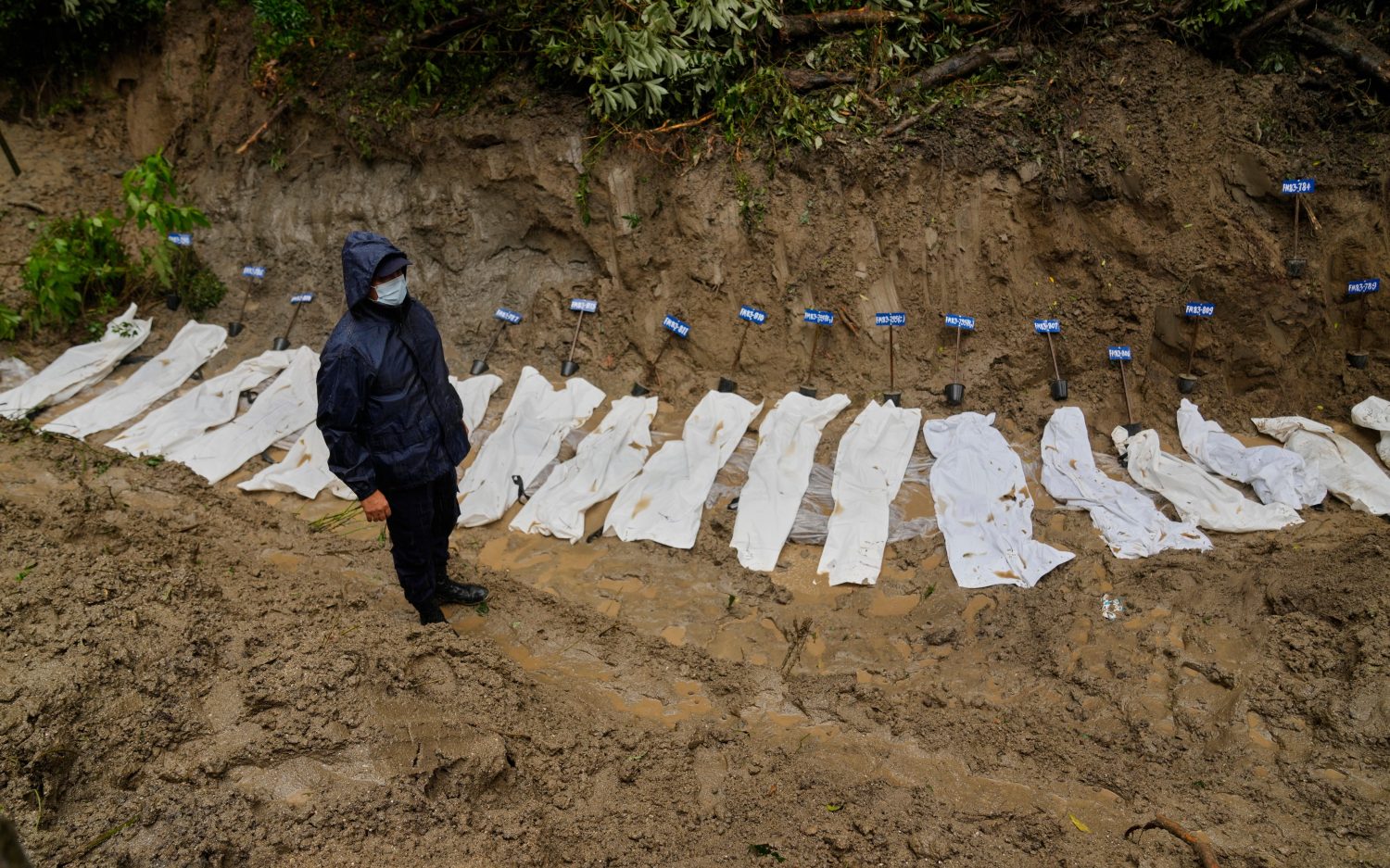
Victims of the sudden flash flood and mudslides that struck Nepal a week ago need trauma counseling in addition to drinking water and supplies, Christian aid organization Convoy of Hope told WORLD. The Aug. 26 disaster wiped entire villages off the map in regions of Nepal bordering Tibet, killing over a thousand people. Convoy of Hope workers were offering counseling and prayer to victims in the hard-hit Rasuwa and Nuwakot districts, spokesman Ethan Forhetz told WORLD. “People are reaching out, overwhelmed by what they witnessed,” he said. In many cases, people who found safety on higher ground watched their homes and towns being destroyed and loved ones swept away, he said.
The effort comes as the Nepali government’s official death toll for the disaster rose to 1,118, while more than 3,900 people are still missing, according to the Associated Press. Officials count nearly 600 foreigners among the missing. The high death toll complicates efforts to provide clean drinking water to communities, Forhetz said. Many water systems are destroyed, and bodies line the banks of some rivers, potentially contaminating any water sources that remain. Authorities and rescue teams are working to find, identify, and bury the dead—but the scope of the disaster is overwhelming, Forhetz said.
Needs for other basic humanitarian supplies, such as food, shelter, and hygiene products, are also very great in the affected areas, Forhetz said. Some Convoy of Hope aid staff who were already running programs in Nepal when the disaster struck were able to buy some supplies in-country and begin responding quickly, he said. But the wide scope of the disaster has complicated the humanitarian response: Roads, bridges, and communication infrastructure have vanished in many areas, making it hard to determine specific needs in each area, Forhetz said. In some places, there’s “no one to communicate with regarding what happened.”
It’s unclear how long the rebuilding process will take, Forhetz said. He expects that Convoy of Hope and other humanitarian organizations will keep working in Nepal for a long time. “All of the infrastructure has to be rebuilt. Then it's a question of who wants to move back there, who's going to actually live there, because I would think that there's fear of the same thing happening again,” he said.
However challenging the response, the need for long-term help provides an opportunity for long-term relationships and Gospel conversations, he said. Christians are a very small minority in Nepal, which is mainly Hindu and Buddhist. “The tangible items people need to sustain life, many times, will open the door to our ‘why,’ which is the Gospel,” he said.
Dig deeper: Read Micah Barkley’s report on efforts to rescue hundreds of workers trapped in work tunnels after the disaster.


An actual newsletter worth subscribing to instead of just a collection of links. —Adam
Sign up to receive The Sift email newsletter each weekday morning for the latest headlines from WORLD’s breaking news team.


Please wait while we load the latest comments...
Comments
Please register, subscribe, or log in to comment on this article.