
Regulatory rollback
EPA Administrator Lee Zeldin’s plan to repeal greenhouse gas emissions rules represents the latest shift in controversial U.S. power plant policies
Administrator of the Environmental Protection Agency Lee Zeldin speaks during a press conference at the G20 Ministerial meeting on Energy Abundance in Houston, Texas, on Monday. Getty Images / Photo by Ronaldo Schemidt / AFP
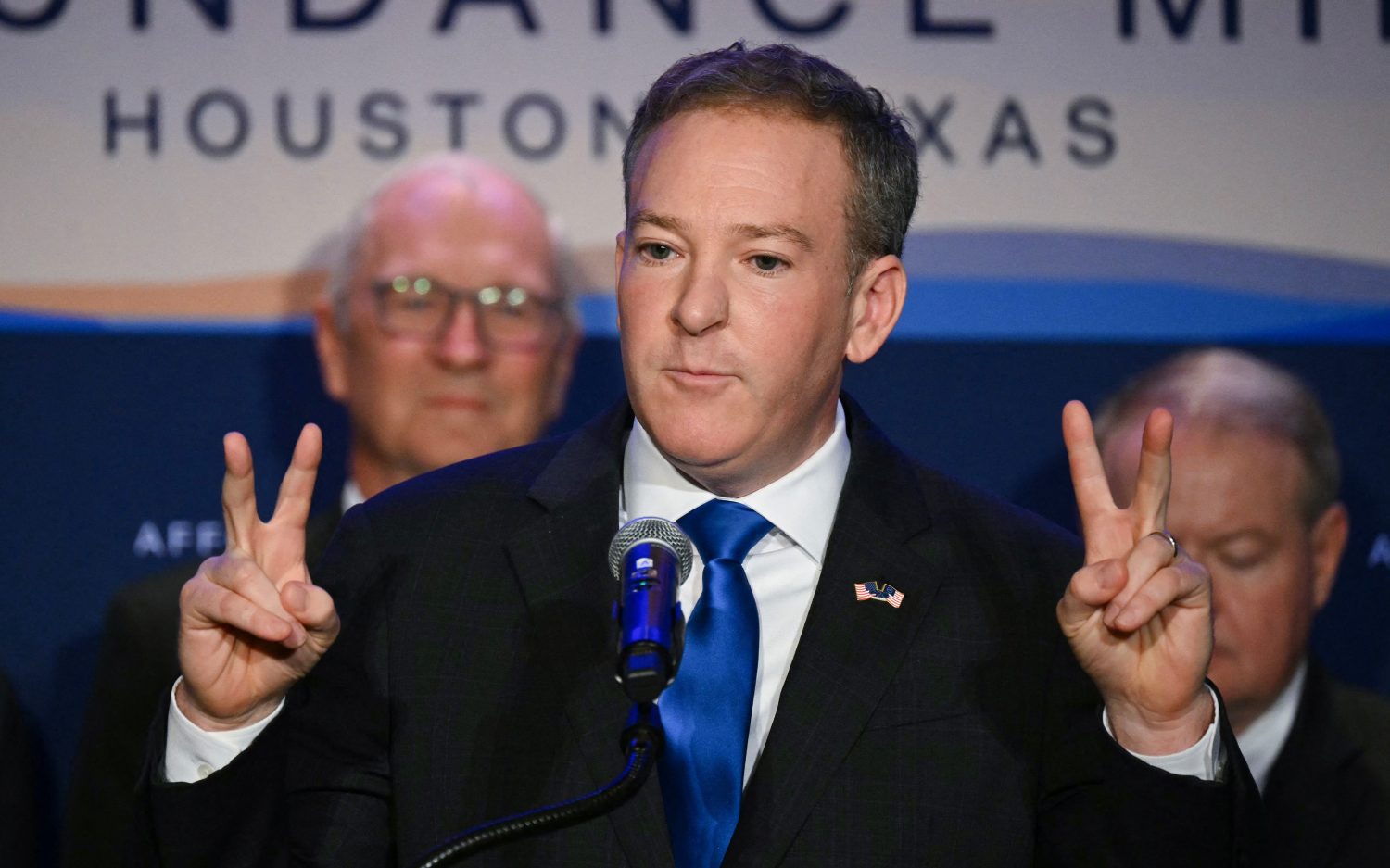
On Monday, diplomats and energy leaders gathered in the sweltering Texas heat to kick off the three-day G20 energy summit in Houston. At the gathering, Lee Zeldin, administrator of the Environmental Protection Agency, announced the latest chapter in the battle over authority in America’s energy policy—a rollback of U.S. carbon emission rules.
“We have an abundance of natural resources to deliver,” Zeldin told summit attendees on Monday. “Our policies must meet our abilities.”
The EPA’s plan marks an overturning of most of the standards established to cut back on carbon dioxide released into the atmosphere during the administrations of Presidents Barack Obama and Joe Biden. Additionally, Zeldin announced a proposal to rescind the remaining greenhouse gas emission standards for the power sector. “All of them,” Zeldin emphasized at the Monday summit.
Specifically, Trump’s EPA will repeal the standards for existing fossil-fuel steam generating unit emissions, along with the carbon capture and storage standards for coal units and for combustion turbines. Under the existing standards, coal generation units would be required to capture and store up to 90% of carbon emissions by 2032, among other rules. But Zeldin’s plan would eliminate those requirements.
Zeldin and supporters of the plan say the decision is based on the agency’s interpretation of the Clean Air Act. But the regulatory rollback highlights a long-running political dispute about greenhouse gas production, and experts predict the EPA plan will end up in court.
“I think we’re gonna see a significant legal battle over the reach of the Clean Air Act, which was defined some years ago by the Supreme Court to include greenhouse gas emission,” said Dan Esty, a professor of environmental law and policy at Yale Law School.
“Getting rid of this is one of the reasons the environmental leftists will go to court to try and challenge this proposed rule, once it’s finalized,” added Benjamin Zycher, a senior fellow at the American Enterprise Institute who specializes in energy and environmental policy.
In 2007, the U.S. Supreme Court ruled 5-4 that greenhouse gases fall within the Clean Air Act’s broad definition of “air pollutant” in Massachusetts v. EPA. That case began when 12 states, alongside various organizations and cities, called upon the EPA to regulate greenhouse gases—but the EPA responded that such involvement would be outside of its jurisdiction. Ultimately, the high court ruled that the agency did possess authority to regulate greenhouse gases, and the EPA later agreed to do so after noting that greenhouse gases had a reasonable connection to public health and welfare. The effect of the regulations were to force American energy companies to begin transitioning to power generation sources that produce cleaner emissions with fewer greenhouse gases.
Now, President Donald Trump’s EPA claims the agency has since exceeded that authority granted by the Clean Air Act to manipulate Americans’ energy choices. Some members of Congress agree.
“Eleven years ago in Houston, I called the Obama EPA’s Clean Power Plan a lawless attempt to destabilize America’s energy system. Today, back in Houston, Administrator Lee Zeldin repealed the Biden administration’s 2024 power-plant rule, its successor,” wrote U.S. Sen. Ted Cruz, R-Texas, in a Monday post on X. “Congress never gave EPA the authority to remake America’s power grid. The Supreme Court confirmed that limit in West Virginia v. EPA.”
In the 2022 Supreme Court case Cruz referenced, the court majority argued that the EPA had misused a section of the Clean Air Act to regulate carbon dioxide emissions from existing coal- and natural-gas-fired power plants. Chief Justice John Roberts authored the opinion, writing, “Congress did not grant EPA in Section 111(d) of the Clean Air Act the authority to devise emissions caps based on the generation shifting approach the Agency took in the Clean Power Plan.”
Zeldin and supporters argue that the rollback of regulations on power plant emissions will save American families and businesses billions of dollars and preserve $370 million in “direct compliance costs”—the expenses companies incur to follow government regulations.
In a Monday statement, Jarrod Agen, the executive director of National Energy Dominance Council—an advisory body created by Trump in 2025—said, “Thanks to President Trump’s EPA, common sense has prevailed, and our U.S. energy sector can unleash more reliable baseload power without the crippling regulations that have hurt American ratepayers.”
But critics say that the long-term consequences of the decision will lead to secondary costs and a slowdown in the development of other sectors, like clean energy.
“Their decision to pull down these regulations will save some compliance costs, but it will increase public health burdens across the country and around the world,” said Esty. “It is almost certain that these regulatory changes will make it more difficult for those in the United States that are attempting to put clean energy projects into place, and the result over time will be that the U.S. is economically disadvantaged.”
Micah Green, a chemical engineering professor at Texas A&M and pastor at New Life Baptist Church in College Station, Texas, agreed about wanting America to be a leader in clean energy. He said that what the energy industry needs is predictability. When I phoned Green on Wednesday, he was at an Advanced Research Projects Agency–Energy meeting in Houston, an Energy Department event not far from the G20 summit where Zeldin made his Monday announcement.
“I’m with a bunch of industry people right now here at a Department of Energy conference. And what they are asking for all the time is like, ‘Can you please tell us something we can count on for the long term?’” said Green. “Because if they know what the rules are and what the economics are, then they can plan, then they can invest, then we can create new technologies.”
With legal battles likely to ensue, the future of the Trump administration’s proposal is uncertain. But critics like Green argue that cutting carbon emission and capture standards for power plants will affect future generations.
“From a conservative Christian point of view, the national debt just seems wrong because we know that we’re spending money and asking our grandchildren to pay for it,” said Green. “To me, climate change is the same thing.”
Green added that the lack of congressional involvement in greenhouse gas emission regulation has contributed to the unpredictable landscape for the electricity industry. He faults Congress for passing legislation that is unhelpfully vague when it comes to power plant emission standards.
“Congress has been very happy to let the executive branch decide for itself what these regulations mean,” he said. “And that’s part of the reason that we have such sweeping effective changes in laws every time a new administration takes over.”
Zycher said he also would like to see congressional involvement in greenhouse gas policy, but argued that the House and Senate are too deeply divided to pass such legislation.
“I think greenhouse gas policies are fundamentally misguided, and they really ought to be thrown out wholesale,” said Zycher. “I wish Congress would do it, but Congress can’t. So we wind up with this yo-yo effect where Republican administrations get rid of these rules, and Democratic administrations reinstate them.”
In an emailed statement to me, the EPA said it expects the proposal to be published in the Federal Register in the coming days. EPA will hold a public hearing for the proposal 15 days after publication as well as a 45-day public comment period.


This keeps me from having to slog through digital miles of other news sites. —Nick
Sign up to receive The Stew, WORLD’s free weekly email newsletter on politics and government.
Please wait while we load the latest comments...
Comments
Please register, subscribe, or log in to comment on this article.