
How does a “pocket rescission” work?
Days before the end of the fiscal year, the White House proposed rescinding nearly $1 billion in congressionally approved funding
Russell Vought, director of the Office of Management and Budget Associated Press / Photo by Cliff Owen
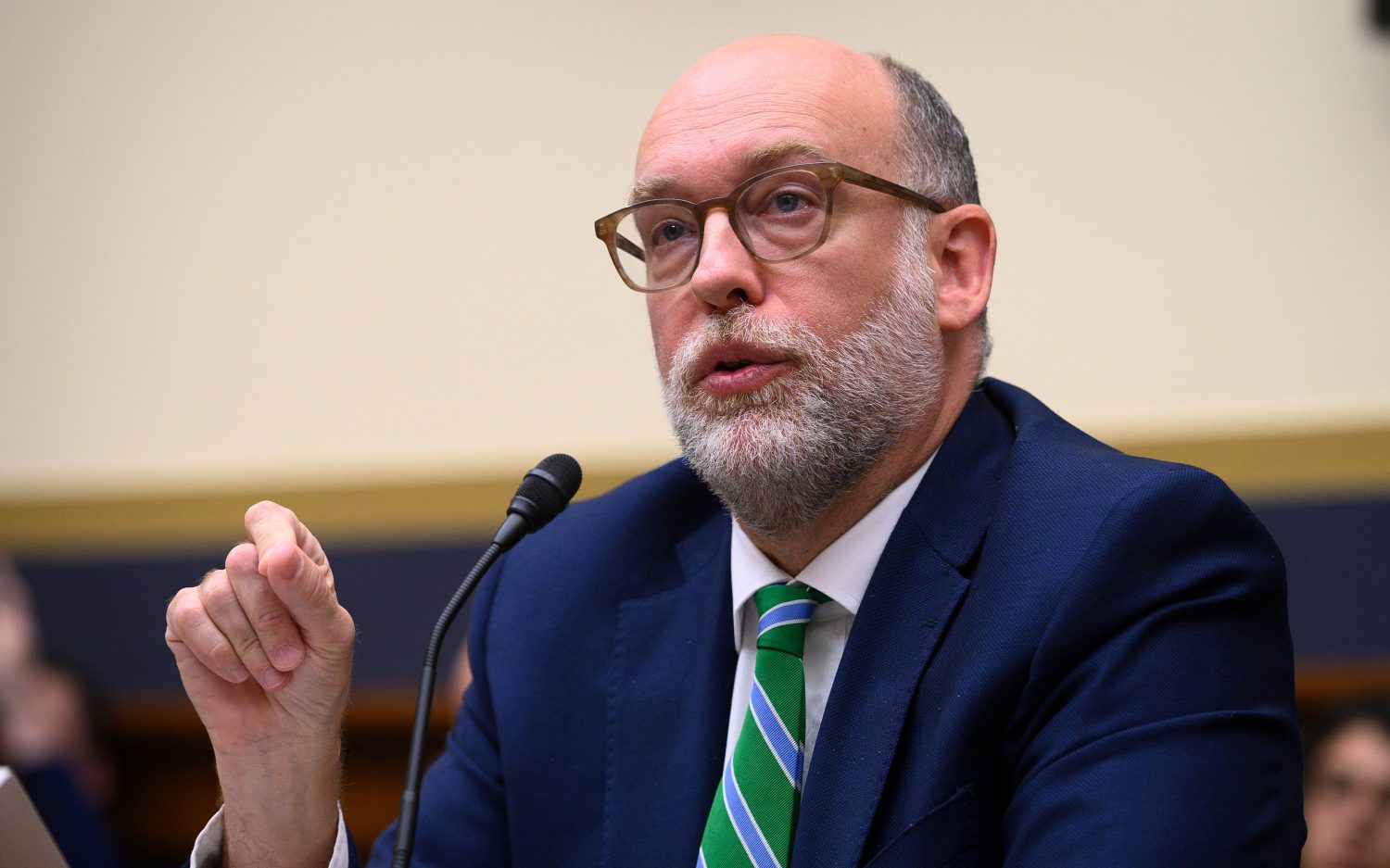
The White House announced Friday it would use presidential authority to rescind nearly $1 billion in congressionally approved government spending—days before the fiscal year’s end on Sept. 30.
“President [Donald] Trump is committed to utilizing all possible tools to cut wasteful and harmful government spending that does not benefit American citizens,” the White House said in its statement.
It wasn’t the first time Trump has used the maneuver, known as a “pocket rescission.” In August 2025, Trump used a pocket rescission to cut $5 billion in foreign aid and international organization funding, what the White House claimed at the time was the first use of such authority in 50 years. That rescission faced legal hurdles, but the U.S. Supreme Court ultimately granted the administration’s request, ruling that “harms to the Executive’s conduct of foreign affairs,” outweighed the potential harms to the suing nonprofit organizations.
But the high court last year did not settle the larger question of whether the president can confiscate funds Congress has approved. Now, the renewed attempt at a pocket rescission is facing congressional and legal backlash.
What funding would the latest pocket rescission cut? The Department of Health and Human Services faces the largest funding reductions out of all the agencies named in the president’s pocket rescission. According to the Friday announcement, $567 million would be slashed from taxpayer-funded HHS services for noncitizens—including funds to organizations like the Lutheran Immigration and Refugee Service and Southwest Key Programs.
On top of those HHS cuts, the pocket rescission targets a program that sends debt relief to foreign countries that fund climate change policies; the Commerce Department’s Minority Business Development Agency; several diversity, equity, and inclusion–related initiatives; and other “unaligned” HHS research programs.
What do Republicans in Congress think? Sen. Susan Collins, R-Maine, who faces a battleground reelection bid, wrote on X, “This is the most recent attempt by this Office of Management and Budget (OMB) to undermine Congress’s Constitutional power of the purse,” adding that the OMB “does not get to decide which programs are worth funding.”
But some Republicans expressed support for the administration’s maneuver. In a Sunday interview on Face the Nation, Sen. John Kennedy, R-La. told moderator Margaret Brennan, “I’m fine with it.” Kennedy added that he loved Sen. Collins “like a taco” but argued that “she’s wrong.” Republican Reps. Chip Roy, Scott Perry, and Marlin Stutzman also took to social media to show their support for the cuts, with Roy emphasizing, “Americans don’t want their tax dollars going to woke garbage programs or illegal alien lawbreakers.”
And Democrats? Democratic Sens. Chuck Schumer, Dick Durbin, and Jeff Merkley called pocket recissions illegal, and Sen. Patty Murray, D-Wash., wrote, “This is theft from the American people, plain and simple. These are funds Congress has delivered on a bipartisan basis and should be helping people—not cut off by a president more focused on building a ballroom than investing in families.” Democratic Reps. Pramila Jayapal, Raja Krishnamoorthi, and Mike Levin also condemned the move.
Are there any legal grounds for a pocket rescission? Russell Vought, director of the Office of Management and Budget, told Fox News host Will Cain on Monday that he did not expect legal challenges because “the Supreme Court has already upheld our ability to use a pocket rescission at the end of the fiscal year.” Vought argued that the pocket rescission is a provision of the Impoundment Control Act of 1974.
According to the Impoundment Control Act, while Congress is in continuous session, the president can withhold the budget authority for 45 days once a rescission is proposed. That’s where the “pocket” comes in. When a proposal is sent in late August or September, it can run past the fiscal year deadline, meaning that the money lapses without Congress having its full 45 days and before the president would have to release it.
The administration argues that nothing within the Impoundment Control Act forbids this maneuver. Vought told Cain, “We don’t want to have these programs that exist, and we haven’t been able to get Congress to act, this [pocket rescission] allows us, at the end of the fiscal year … to send something as a notification and the money evaporates.”
What’s the case against the move? The U.S. Government Accountability Office argued in a Tuesday letter to Vice President J.D. Vance and congressional leadership that the president’s proposal “subverts both the constitutional process for enacting federal law and Congress’s constitutional power of the purse.”
At least one lawsuit has reportedly already been filed in response to the pocket rescission, making its future uncertain. On Tuesday, the Democracy Defenders Fund and Jacobson Lawyers Group announced they filed a federal lawsuit against the Department of Housing and Urban Development for canceling grant funding—via the pocket rescission—for housing education and support-related programming. The groups allege that the administration’s decision to target funding recipients with disfavored viewpoints is a First Amendment violation.
A final resolution to the matter might ultimately require the Supreme Court to weigh in once again.


This keeps me from having to slog through digital miles of other news sites. —Nick
Sign up to receive The Stew, WORLD’s free weekly email newsletter on politics and government.
Please wait while we load the latest comments...
Comments
Please register, subscribe, or log in to comment on this article.