
Appeals court mulls mail-order mifepristone question
Pro-lifers argue the federal government does not need to wait for a decision to act
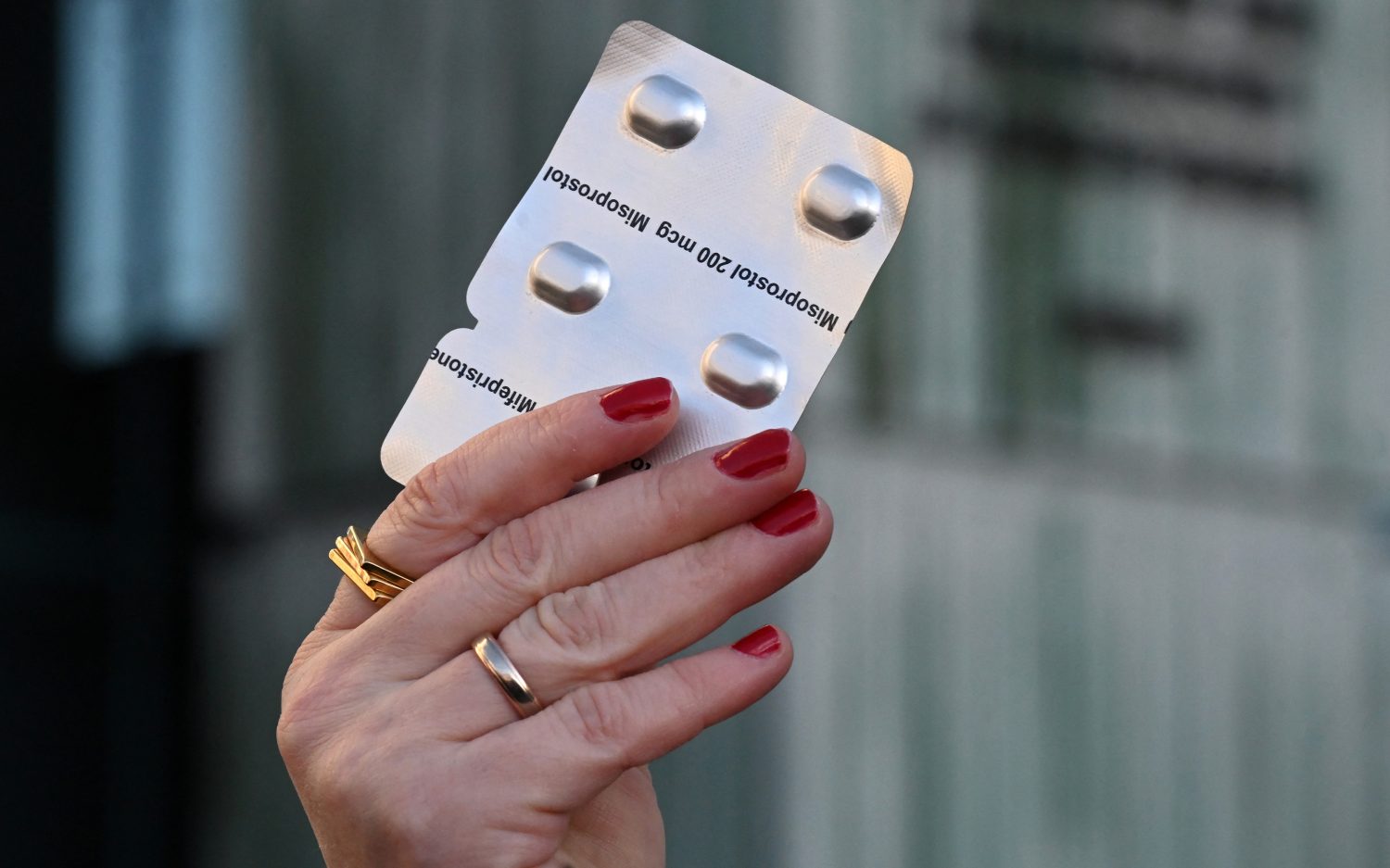
A pro-abortion activist holds a pack of misoprostol tablets. Getty Images / Photo by Sergei Gapon / AFP
A case that could bring an end to mail-order abortions is back before an appeals court and putting the spotlight on federal regulations some say nullify local efforts to protect unborn babies.
Federal regulations currently allow the abortion drugs mifepristone and misoprostol to be mailed directly to women, despite pro-life laws aimed at protecting the unborn. The state of Louisiana, along with a Louisiana woman pressured to take abortion drugs her boyfriend ordered online, are challenging the policy.
Gabriella McIntyre, legal counsel for Alliance Defending Freedom’s Center for Life, says the abortion-by-mail policy does more than skirt state regulations.
“We have put women in jeopardy where they are no longer able to make their own choice,” she said. “We have abusers, traffickers, anyone with five minutes to spare and internet access who can go online and get these high-risk, life-ending drugs.”
At the heart of the case, argued last week in New Orleans, is the question of whether the U.S. Food and Drug Administration’s policy allowing abortionists to mail the drugs to women without an in-person visit infringes on state laws and harms women. And while pro-lifers say there is nothing stopping the federal government from reinstating protections, FDA officials insist they will not act until they complete a safety review for the abortion drug mifepristone.
The 5th U.S. Circuit Court of Appeals last Wednesday heard arguments from lawyers representing the state of Louisiana, the FDA, and abortion pill manufacturers Danco Laboratories and GenBioPro. Last October, the state of Louisiana and Alliance Defending Freedom challenged the FDA’s decision to allow providers to prescribe the drug via telehealth. The drugmakers filed to intervene in the case in February.
Mifepristone is the first of two drugs used in chemical abortions. Until 2021, providers had to prescribe and dispense the drug in person, but the Biden administration that year used the COVID-19 pandemic to justify removing that requirement. It made the change permanent two years later, permanently revising mifepristone’s Risk Evaluation and Mitigation Strategy (REMS) to allow for telehealth dispensing. The state of Louisiana says the move targeted pro-life state laws after the 2022 decision Dobbs v. Jackson Women’s Health Organization.
“What we’re seeking is to vacate the 2023 REMS, which would bring us back to the way it was during the first Trump administration,” said McIntyre. But in January, the current Trump administration asked a district judge to pause the case while federal officials conduct a safety review of mifepristone. The judge agreed, but he instructed the FDA to provide a progress report by early October.
In May, the 5th Circuit agreed that the FDA policy was causing harm to the state of Louisiana and temporarily reinstated the nationwide protections. “There have been three 5th Circuit panels, two District Court judges, and even now [Department of Justice] leadership that has come to the same conclusion that the 2023 REMS is likely unlawful,” McIntyre said.
According to the pro-abortion Guttmacher Institute, more than 60% of abortions in the United States are chemical abortions. The pro-abortion Society of Family Planning estimates about 15,000 babies are killed every month in pro-life states just through illegal mail-order abortions. About 900 of those are in Louisiana.
Less than two weeks after the court halted mail-order abortions in May, the U.S. Supreme Court issued a stay allowing abortion drugmakers to continue shipping the drugs directly to women while the case continues. Last week, Louisiana again asked the appeals court to reinstate the in-person dispensing requirement, though any decision the court makes would likely be on hold until the case returns to the Supreme Court.
During the hearing, Judge Stephen Higginson questioned the state’s claims that the FDA policy itself had caused harm. He pointed to mifepristone prescribers and pro-abortion states that have enacted so-called “shield laws” as key drivers enabling abortion drugs to flow into pro-life states. “I’m looking at six different steps third parties have taken, we presume criminal, and we’re going to attribute it to the federal government?” he asked.
Louisiana Solicitor General Benjamin Aguiñaga said that only two stops separated the FDA’s policy from the state’s claims of harm. First, he pointed to the abortion drug seller Aid Access’ website, which states that because the FDA has approved abortion drugs to be mailed, sellers can send them to anyone in Louisiana. Second, he cited a New Orleans emergency room doctor who has said that her staff daily treats women experiencing complications from mifepristone, about half of whom have publicly funded Medicaid insurance.
Although the FDA reports that only about 0.5% of women who take the chemical abortion pills experience serious complications, officials have not reevaluated the data since the in-person dispensing requirement ended. The Ethics and Public Policy Center published an analysis last year that estimates the proportion could now be closer to 11%.
“Medication abortion can involve prolonged hemorrhage, incomplete abortion requiring emergency surgery, infection, sepsis, and missed ectopic pregnancy,” said Hannah Anderson, the senior director for Healthy America Policy at the America First Policy Institute, in an email to WORLD. “Those risks rise when care proceeds without in-person screening, ultrasound, or assured follow-up.”
The FDA has for months promised to conduct a safety review of mifepristone, admitting last year that it lacked sufficient evidence to prove its safety when it made the 2023 policy change. Late last month a federal judge paused another lawsuit that Florida and Texas brought challenging the FDA’s overall approval of mifepristone. That case is on hold until either Dec. 1 or when the federal government completes its safety review.
But the agency has remained tight-lipped on how it is conducting the safety review, and the FDA’s legal counsel Daniel Winik refused to discuss it during the hearing Wednesday. When asked about why the mail-order policy change was made and what safety data the agency reviewed, Winik declined to answer. Instead he said the FDA was only arguing that the state lacked standing to sue and that the agency’s review would address concerns surrounding mifepristone.
“I find that very, very unsatisfactory that the agency won’t give an opinion as to its own regulations,” Judge Higgins said.
Pro-lifers like McIntyre from ADF are glad the review is taking place, but they say it shouldn’t override efforts to ensure pro-life laws are enforceable. “It’s great that the FDA wants to look into the safety of this drug,” McIntyre said. “But it does nothing to resolve the unlawfulness of what they did in 2023 when they made those abortion drugs available by mail.”
Heritage Foundation fellow Melanie Israel believes reinstating protections may have significant bipartisan support. According to a poll conducted last month for The Center Square, just over half of Americans surveyed support mailing abortion pills but 48% also said that doing so raises safety and accountability concerns. And about one-third of respondents said they at least somewhat oppose mailing abortion drugs.
“There has always been some sort of added layer of protection for [mifepristone],” Israel said. “Over the years the abortion industry, the drug manufacturers, the distributors, they’ve been trying to chip away at those protections.”
And mifepristone manufacturers may not even be adhering to the few remaining protections in place, according to the Senate Committee on Health, Education, Labor, and Pensions. In a new report published late last month, the committee found that abortion drug companies Danco Laboratories, GenBioPro, and Evita Solutions are likely not taking federally mandated steps to ensure their products are only available through certified prescribers and pharmacies.
Committee Chairman Bill Cassidy, R-La., has said the lack of safeguards opens the door to black market abortion pill distributors and makes it easier for individuals to obtain the drugs and administer them to a pregnant woman without her consent. “We know that rules aren’t being followed,” Israel said. “And frankly, that alone is plenty of reason for the FDA to step in.”
While Israel believes either the DOJ or the FDA has the ability to immediately reinstate in-person dispensing requirements, she recognizes that pro-abortion states are claiming that doing so would infringe on their laws. “You’ve got some states asking for more safety, some states asking for less safety, and the FDA kind of in the middle,” Israel said. “And so for right now, it seems like they are taking the position of keeping the status quo and not making anybody happy.”
Despite the administration nominating pro-life leaders to both the FDA and the DOJ in recent months, Israel expects a resolution to the matter to continue being delayed. “I don’t think anybody realistically expects to see much of anything happen before the midterms,” she said. “In the meantime, it does kind of seem like this issue of hot potato.”
In Louisiana, the circuit court has not indicated when it might issue a decision.


I so appreciate the fly-over picture, and the reminder of God’s faithful sovereignty. —Celina
Sign up to receive Vitals, WORLD’s free weekly email newsletter on the pro-life movement.
Please wait while we load the latest comments...
Comments
Please register, subscribe, or log in to comment on this article.