
Codes under scrutiny
A recent report claimed wrongful diagnosis codes aided harmful transgender treatment, but proving fraud could be difficult
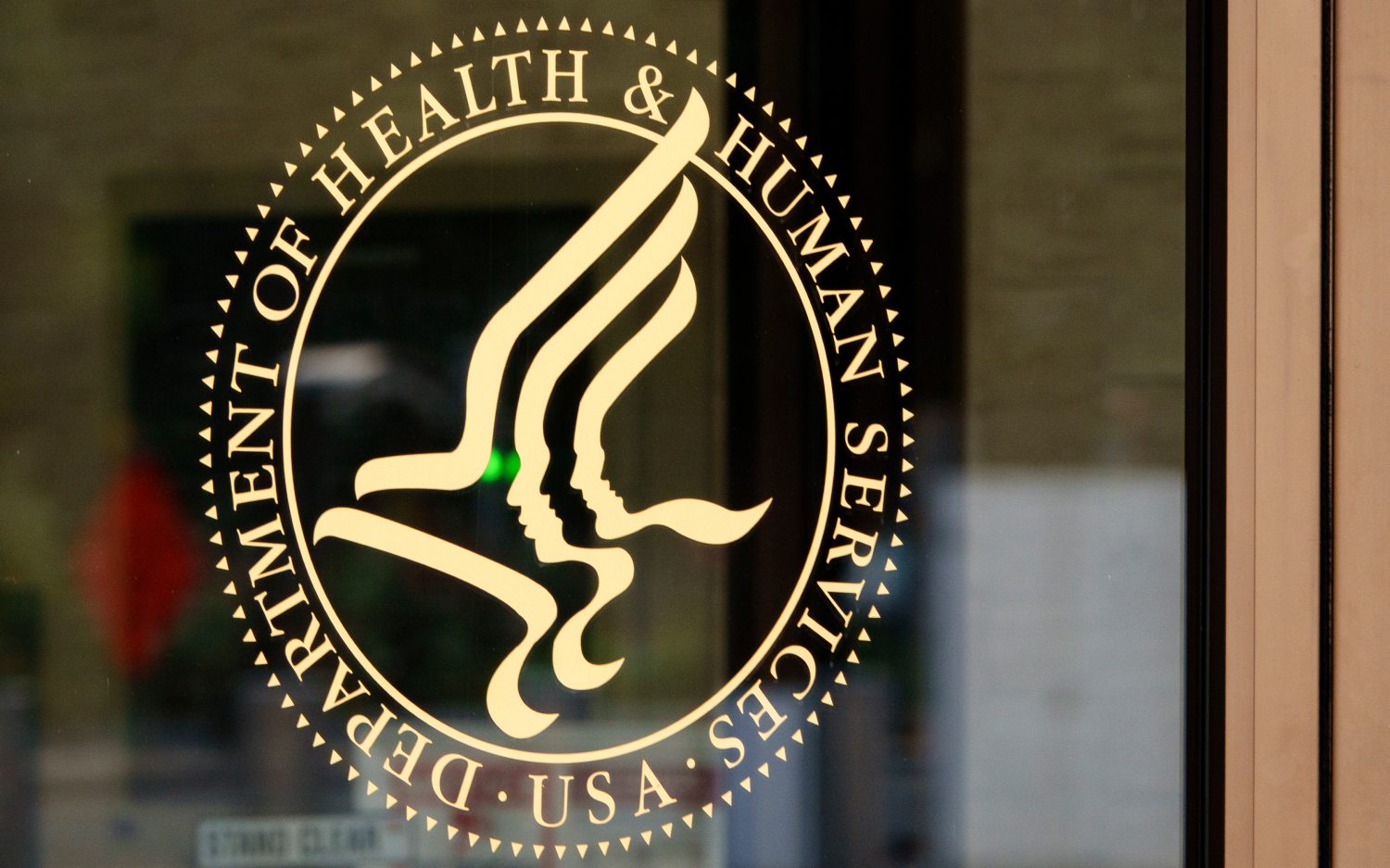
The door to the U.S. Department of Health and Human Services headquarters in Washington, D.C. Getty Images / Photo by Kevin Carter
When Soren Aldaco was 17, she told a registered nurse she wanted to be a male. The nurse, Del Scott Perry, typed a medical code into Aldaco’s file: F.64.0—gender identity disorder. That code would travel with Aldaco for years. It enabled Perry to bill insurance for testosterone and helped Aldaco gain admission to the Crane Center for Transgender Surgery in Austin, Texas, where she would eventually receive a double mastectomy.
Aldaco later sued five of her providers for medical fraud. A Texas appeals court dismissed her case due to a technicality. But in June, the Texas Supreme Court partially overturned the lower court decision, allowing Aldaco’s lawsuit against her former counselor to proceed.
Earlier this month, the U.S. Department of Health and Human Services cited Aldaco’s story in a scathing report accusing 237 medical providers of systematically diagnosing minors with conditions they did not have in order to secure insurance coverage for transgender treatment. The report may be the agency’s most aggressive move against the pediatric gender industry, with supporters claiming that money and ideology drove the medical industry to steer underage patients toward trangender interventions. But some experts say it’s not easy to prove all of these providers committed medical fraud.
The 64-page report, “Wolves in White Coats: How Doctors and Hospitals Pushed and Profited From the Fraud of ‘Gender Medicine,’” contends that providers secured prescriptions for puberty blockers, hormones, breast removal, and plastic surgery “through potentially fraudulent means.” HHS also sent a letter to the inspector general’s office requesting it investigate the 237 providers for “anomalous billing patterns.”
The allegations could embroil the named providers in a protracted legal battle with the federal government. “This report exposes, for the first time, the involvement of hospitals in promoting life-altering drugs and surgeries for children who express discomfort with their sex,” the report said.
Representatives from Independent Women’s Forum, the Center for Christian Virtue, and the Ethics and Public Policy Center contributed to the report, as did a surgeon and a pediatric endocrinologist. All have previously supported protecting children from transgender treatments. The report did not list input from professional medical associations, insurance companies, the medical billing industry, or individuals who identify as transgender.
Neeraja Deshpande, a policy analyst at Independent Women’s Forum and a contributor to the report, said the HHS report and allegations outline the shaky foundations within pediatric gender medicine. An earlier HHS report issued last November concluded that gender dysphoria in youth remains “poorly understood.”
“The first report was saying, ‘Well, there’s no scientific evidence for anything that these providers are doing,” Deshpande told WORLD. “The second report is saying, ‘OK, there’s no evidence, and yet there’s all these things that have been done to kids. … And also, here is the fraudulent billing that allowed doctors to get away with doing all this stuff on kids that had absolutely no scientific backing either.”
But did all of the 237 providers commit medical fraud? I asked Michael F. Arrigo, a medical fraud, coding, and billing expert, and though he wouldn’t comment on the HHS report directly, he said it’s one thing to show that a doctor made a medical coding error, and it’s quite another to accuse him of medical fraud.
“Fraud would be, you know that [insurance] covers a certain diagnosis, and you diagnose a patient with that condition to get it paid when you know the patient doesn’t have that diagnosis, they don’t have that condition. It varies by plan,” Arrigo said.
To commit medical fraud, a provider must use the wrong medical diagnosis code repeatedly and continue miscoding even after hospital or clinic staff have received warnings, Arrigo said. Specificity matters too, so a medical provider will get flagged if he uses a less specific code, or one more likely to guarantee insurance coverage.
“When those four things line up, you are no longer looking at a billing department that needs retraining,” Arrigo told me in an email.
When a patient comes in with a problem, doctors typically run a series of tests to figure out what’s wrong. During a first appointment, a doctor can describe the visit with a less specific medical code. So a 3-foot-tall adolescent male wondering why he hasn’t started his growth spurt could be coded as E.34.9 (endocrine disorder, unspecified), for example. But once lab results come in, insurance and billing companies usually expect more specific medical codes after the second and third appointments. For example, if bloodwork indicates the short teen had a lack of growth hormones, the doctor can modify the medical code from E.34.9 to E.34.3 (short stature due to endocrine disorder).
Arrigo said the difference between good-faith treatment decisions and fraud is often not clear. Patients have complex medical histories. Doctors make mistakes. Insurance companies have different coverage policies and occasionally modify them. States have different laws.
It’s possible to get the story wrong in both directions, Arrigo said, to either see every miscoded claim as fraud or to excuse a documented pattern of miscoding as merely clerical.
According to WORLD’s analysis of the HHS report, some of the report’s allegations would appear to meet the threshold of fraud. But other claims provide little information or only offer anecdotal evidence. Some of the accounts from former patients leave out important details, like the doctors’ names, the patients’ insurance providers, or the medical codes providers used.
The authors of the HHS report acknowledge it is not comprehensive but say it’s a starting point that includes “some next steps for policymakers interested in rooting out child mutilation.”
The report found that many providers working with transgender patients repeatedly used the less specific medical code E.34.9 (endocrine disorder, unspecified) even as they discovered more information. It cites one study where 1,480 patients were diagnosed with endocrine disorder, unspecified, when only 71 patients (4.7%) had an actual endocrine condition.
The authors list incidents of professional medical associations like the World Professional Association for Transgender Health (WPATH) and QueerDoc, a telemedicine practice for teens and adults who identify as transgender, encouraging doctors to use the endocrine disorder medical code when trying to secure cross-sex hormones for transgender patients.
But it’s unclear whether the accused providers consulted guidance from WPATH or QueerDoc. What might make fraud claims clearer, Arrigo said, is a list of diagnosed patients from an accused provider alongside the missing documentation.
“They could anonymize the patient names, and say, ‘We looked at 100 charts, and when we were looking for what supports the condition that’s covered, hypothetically, 70% of the documentation was lacking a physical examination to establish secondary sexual characteristics, something like that,” Arrigo said.
The report notes that medical providers diagnosed one patient, who it referred to with the pseudonym “Layla Jane,” with precocious puberty and prescribed a puberty blocker when she was 12. The Pediatric Endocrine Society does not recommend puberty blocking treatment for girls past 11 years old. The girl’s insurance provider, Kaiser Permanente, permits puberty blockers “when a young person wants their body to better reflect who they are.” But most insurers require a mental health consultation to receive that medical code, and Layla Jane, who struggled with severe anxiety and depression, says she didn’t get one.
Providers later prescribed Layla Jane testosterone and removed her breasts, according to the report. Now in her 20s, Layla Jane says she lives with joint pain, urinary dysfunction, and daily nerve damage. She filed a medical malpractice claim against her providers, but she said the California arbitrator assigned to her case dismissed it because Layla Jane filed it past the state’s statute of limitations.
Arrigo said insurance companies prefer specificity and will often require multiple steps, a waiting period, and clinical documentation before approving treatments. Adding a specific medical code to a patient’s file is a way of proving a treatment is medically necessary.
Layla Jane’s story may be shocking, but it’s unclear how involved the other accused providers were in their patients’ medical coding.
Of the 121 providers accused of approving suspicious claims for puberty blockers, some were local practices like Little Palms Pediatric Endocrinology and Diabetes Center, a pediatric endocrinology office in Jupiter, Fla. But the list also includes Walgreens, which fills 13 million prescriptions each year.
Some former clients claimed that providers defrauded them even without committing coding errors.
Soren Aldaco received the appropriate medical code for her symptoms of gender identity disorder. But her provider did not follow the eight steps that Aetna, Aldaco’s insurance provider, required for coverage, including talking about fertility, comorbidities, and side effects. Since Aldaco was under 18, her provider also needed to consult with a mental health professional. Aldaco says none of that happened.
But she didn’t realize she may have received harmful medical treatment until she met with a rheumatologist. “The rheumatologist refused to diagnose me with anything,” Aldaco said. She recalled the provider telling her, “The tests aren’t coming up with anything. You’re on a high-risk medication … testosterone. So, no doubt your knees hurt. It affects how your joints feel and function.”
None of the providers Aldaco names in her lawsuit are listed in the HHS report.


Thank you for your careful research and interesting presentations. —Clarke
Sign up to receive Relations, WORLD’s free weekly email newsletter on marriage, family, and sexuality.
Please wait while we load the latest comments...
Comments
Please register, subscribe, or log in to comment on this article.