
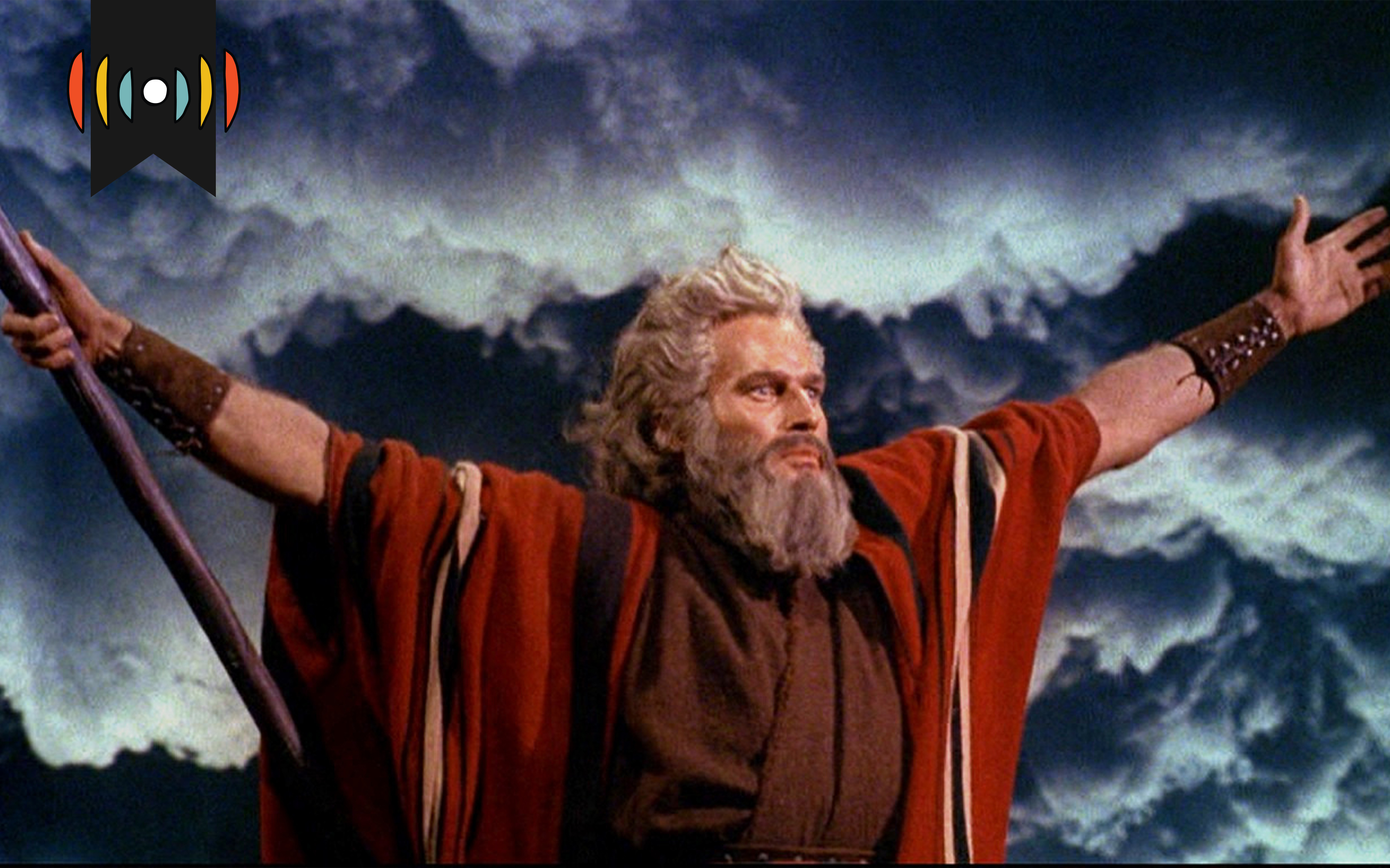
Charlton Heston in the The Ten Commandments, 1956 Wikimedia Commons / Trailer screenshot, from DVD The Ten Commandments, 50th Anniversary Collection Paramount, 2006
Editor's note: The following text is a transcript of a podcast story. To listen to the story, click on the arrow beneath the headline above.
NICK EICHER, HOST: Good morning! This is The World and Everything in It from listener-supported WORLD Radio. I’m Nick Eicher.
MARY REICHARD, HOST: And I’m Mary Reichard.
Coming next: Hollywood’s epic Exodus.
Seventy years ago, Cecil B. DeMille brought The Ten Commandments to the big screen. The nearly four-hour spectacle became one of Hollywood’s most enduring biblical epics.
EICHER: WORLD’s Max Belz examines the movie’s remarkable special effects and the story from Exodus that inspired it.
MAX BELZ: 70 years ago, Paramount Pictures released Cecile B. DeMille’s The Ten Commandments to limited audiences on October 5th, 1956. It premiered at the Criterion Theater in New York City a month later.
CLIP: How long will you refuse to humble yourself before God?
Amazingly, this was the second time DeMille made an epic about Exodus. The first time was in 1923 after a Michigan man wrote him a letter with the idea, stating, “You will not break the Ten Commandments. They will break you!”
The 1923 version was a silent film. In it, De Mille showed his great skill with hundreds of extras and exterior shots. It also blended the Biblical story with a modern fable about a Christian family divided by faith and atheism.
CLIP: Fear not. Stand still and see the salvation of the Lord.
The 1956 just focuses on the story of the Exodus: the enslavement in Egypt, the 10 plagues, Passover, the parting of the sea, entering the wilderness of Sinai, the giving of the Law, and the golden calf. Charlton Heston plays Moses—the human deliverer of the Israelite people. We hear God’s voice and see his presence in the smoke and fire.
CLIP: What is it Bythia? What did you find? Only a drifting basket.
The opening narration paraphrases Genesis. God tasked man and woman to subdue the earth, but instead they subdued and enslaved each other. Instead of taking dominion over the earth, people took dominion of other people.
CLIP: God made man. Man made slaves. Which god? The God of Abraham. The Almighty God. If your god is almighty, why does he leave you in bondage? He will choose the hour of our freedom.
The movie features crystal clear VistaVision photography. Paramount used it in part to offer a visual event people couldn’t get at home. Television became popular in the 50s and movies needed to promise something better. Similarly, today’s studios use new filming formats and sizes to compete with streaming.
CLIP: Why does a prince of Egypt kill the Pharaoh's master builder to save a Hebrew?
The Ten Commandments cost more than $13 million—the most expensive at that time—and it’s still one of the most financially successful movies of all time. A New York Times reviewer called it “a moving story of the spirit of freedom rising in a man, under the divine inspiration of his Maker.”
CLIP: God of our fathers, who has appointed an end to the bondage of Israel. Blessed am I among all mothers in the land. My eyes have beheld my deliverer.
Indeed, much of the dialogue is about freedom from bondage. The theme of freedom from slavery is integral to the story of the Exodus. That was a theme that may have been resonant at the time due to the threat of Communism, but also the collapse of racial segregation.
The movie showcases DeMille’s skill with a grand story, making use of special effects by John Fulton’s who worked with Alfred Hitchcock on Rear Window and Vertigo. In the Exodus story, he took on re-creating the plagues and the parting of the Red Sea.
CLIP: How shall I find thy road through the wilderness, Lord? How shall I find water in a desert for this multitude?
The parting of the seas was an especially tedious scene to create. The team filled a parking lot surrounded by short walls with water and ran a trough down the center. After many weeks of work, editors reversed the shot of water flowing into the trench from either side. Fulton’s visual effects on this film won him an Academy Award.
CLIP: Why is everyone afraid? Why is this night different from all others? Because this night the Lord our God will deliver us from the bondage of Egypt.
The movie uses the text of Exodus, but draws on historical novels and texts from the Jewish Midrash which told of a star predicting Moses’ birth. The movie clocks in at 3 hours and 40 minutes. The first 2 hours pass laboriously when Moses discovers that he is a Hebrew and not a real Egyptian, jeopardizing his royal future.
CLIP: Because I drew you from the water, you shall be called Moses
The first half also lingers too heavily on a melodramatic romance between Moses and Nefreteri played in a come-hither way by Anne Baxter.
The film’s rich color and epic scope earned it seven Oscars. But despite the rich colors, the movie is visually stiff. It looks like a pageant filmed on a stage with the camera far away from the action.
Vincent Price who acted in the movie said about its style that DeMille would thunder at the actors to have more passion and understanding. What DeMille wanted was a Victorian way of acting.
The movie’s style may have been dated but decades later it influenced adventure films like Raiders of the Lost Ark.
And it’s been on primetime TV during Holy Week since 1973 with a few exceptions. I first caught it on a weekend night as a boy on our 11 inch black and white television set. It was so long I thought it never ended. And if you try to watch it now, you might feel the same way. I recommend starting after the intermission when Moses meets God in the burning bush.
If nothing else, it may prompt another reading of this story about God’s deliverance of his people.
That’s this week’s WORLD History Book, I’m Max Belz.
WORLD Radio transcripts are created on a rush deadline. This text may not be in its final form and may be updated or revised in the future. Accuracy and availability may vary. The authoritative record of WORLD Radio programming is the audio record.
Please wait while we load the latest comments...
Comments
Please register, subscribe, or log in to comment on this article.