
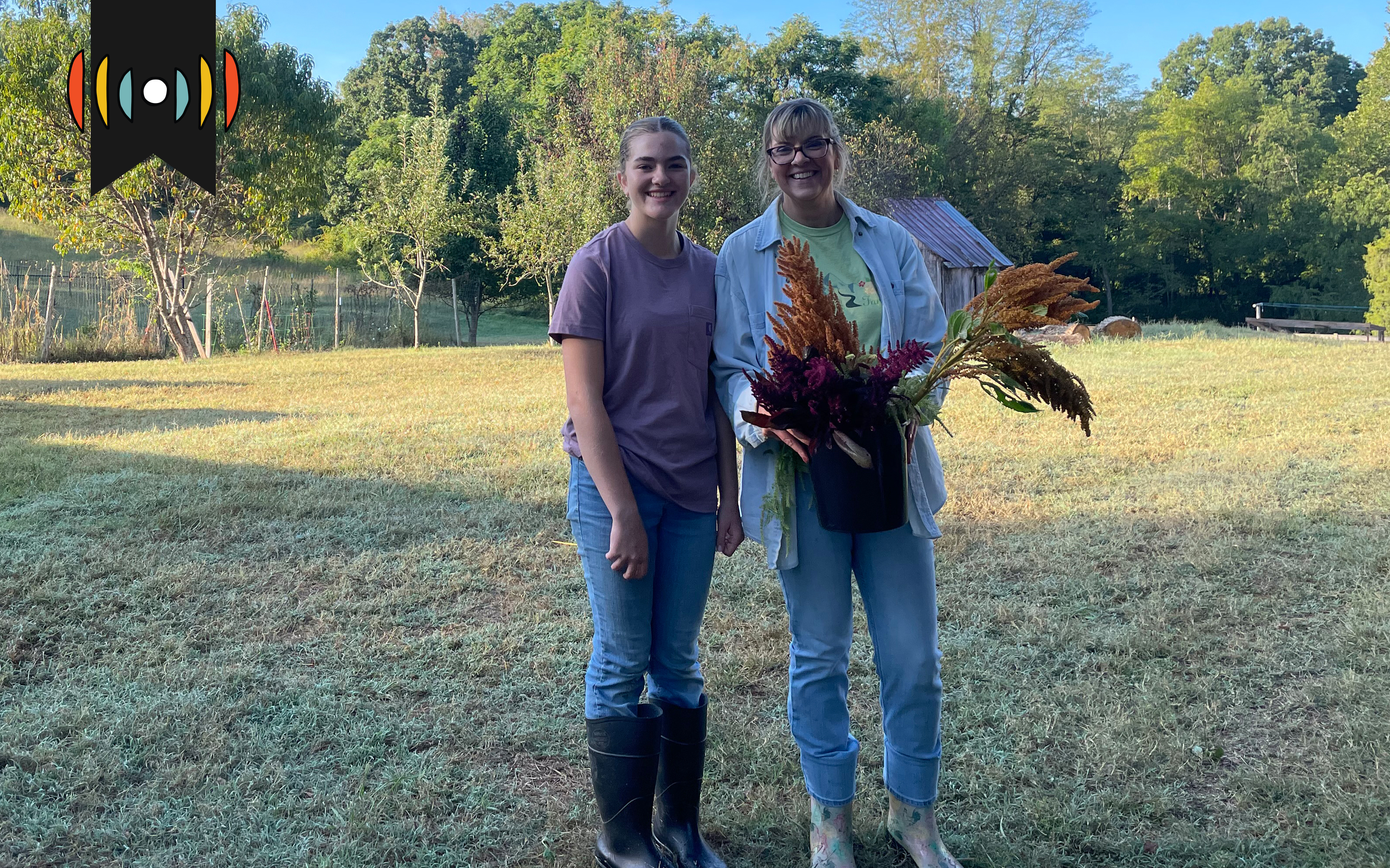
Carrie McCall and her daughter, Lillian stand together on their farm. Photo by Addie Offereins
Editor's note: The following text is a transcript of a podcast story. To listen to the story, click on the arrow beneath the headline above.
LINDSAY MAST, HOST: Today is Tuesday, October 6th.
Thank you for turning to WORLD Radio to help start your day.
Good morning. I’m Lindsay Mast.
NICK EICHER, HOST: And I’m Nick Eicher.
Coming next on The World and Everything in It: giving kids real work. A decade ago, a national survey revealed more than two in three American parents did not require their children to do regular chores at home, even though most had done chores themselves growing up.
MAST: Yet parents report feeling under strain. Last year, the U.S. Surgeon General warned that parental stress can take a toll on both parents and children.
But some families are finding that having kids carry more of the load around the house can help.
AUDIO: [Chickens clucking]
Carrie McCall and her 14-year-old daughter, Lillian, start the morning chores on their 8-acre Virginia farm at 7:30.
AUDIO: [Feed dumps into bowls, chickens clucking]
Lillian dumps cat food into two plastic bowls outside by the chicken coop. The family’s kittens and cats come running.
LILLIAN: These cats, some of them are ours, some of them are neighborhood cats, we don't feed all of them. They eat our food.
EICHER: Next, she heads to the barn to feed the cow.
AUDIO: [Sound of Lillian dumping feed]
LILLIAN: He was born around May 5…He is a red Angus.
The McCalls sell the farm’s flowers, herbs and eggs at their farm stand and local markets. Lillian has helped with farm chores since about age four.
LILLIAN: We had a horse then so I could feed the horse and brush him and help them wash him and then I could feed the cats. Play with the dog.
As she got older, she began to figure out the jobs she liked … and jobs she didn’t.
LILLIAN: I don't like the flower farming part. So It's just work that I'm not interested in, I guess. I hate weeding. I just don't like the heat. And I'd rather do inside jobs.
MAST: She enjoys housekeeping and stays on top of vacuuming and dusting while her mom works outside. She also taught herself how to manage the farm’s social media account.
While the McCalls sometimes ask their children to stick with hard tasks, they also want them to do things they enjoy.
CARRIE: So what we wanted to do with our kids is to teach them that work is a responsibility, but it's a God given gift of responsibility. So, when they begin to go with their interest in a certain thing, then they get more of that kind of job.
EICHER: The McCalls began giving their kids responsibilities long before the farm entered the picture.
CARRIE: We taught them once you moved into a toddler bed, one of the big things about that is that you have to make your bed. Every night for bedtime we'd go into their room like a half hour before and I'd like okay, we got to clean it up.
They started a job system. Each kid chose five jobs listed out on small cards stuck to the fridge.
CARRIE: Librarian? you were responsible at the end of the day to go through the house and anybody's books that were left out you had to go lay them on the bookshelf…
MAST: The family increased the children' s responsibilities as they got older. Carrie said she had to accept they might not always do it her way. But started to see them experience the satisfaction of a job well done. And they started to see hard work had other benefits.
CARRIE: So it was kind of humorous. They began to realize that you could use your work to get rid of aggression sometimes.
EICHER: At 15, her eldest son knew how to take out his frustrations on the woodpile.
CARRIE: I was not about to stop the kid. We got a wood stove, dude. I'm sorry that you're angry at me right now, but that's just the way life goes.
That kind of independence is increasingly unusual. The Institute for Family Studies surveyed more than 65-thousand parents and children … and asked about the kinds of things parents let children do.
Researcher Lyman Stone:
STONE: The big takeaway was, wow, kids today really have very little autonomy, freedom, very few experiences.
Stone believes this affects how much parents enjoy their children and whether they decide to have more. That could affect America’s fertility rate, which recently hit an all-time record low.
STONE: Parents who are more intensive, that is who make more conscious choices about their kids' child rearing, who maybe have stricter discipline or involve their kids in more activities and things. Often actually want to have more kids. They often report greater happiness with their parenting.
MAST: Aimee Seckman says giving her children more responsibility changed how she thought about having more.
SECKMAN: These first three were all young and close in age at that time and you're kind of just surviving.
But her attitude about the difficulty of having more kids improved as she watched her own take responsibility for household chores and for one another.
AUDIO: [Seckman children unloading the dishwasher]
Today her three oldest children unload the dishwasher independently—expertly scaling the kitchen counters to reach the higher shelves.
SECKMAN: Experiencing that made me realize…why a lot of people have more children…because it just becomes a cycle.
AUDIO: [Dogs barking, people yelling]
EICHER: Back at the McCall farm, Lillian prepares for a Thursday evening market in nearby Rustburg, Va.
LILLIAN: I have to write down the inventory for the markets. So how much of this tomato is going and how much pepper is going.
She loads tables and a pop-up canopy into the back of the family’s SUV and then heads back inside for schoolwork. It didn’t happen overnight, but the McCalls have found that household jobs have produced more capable kids and a more joyful family.
WORLD Radio transcripts are created on a rush deadline. This text may not be in its final form and may be updated or revised in the future. Accuracy and availability may vary. The authoritative record of WORLD Radio programming is the audio record.
Please wait while we load the latest comments...
Comments
Please register, subscribe, or log in to comment on this article.