
Moloch revisited
The ACLU wants the courts to create a religious right to kill unborn children
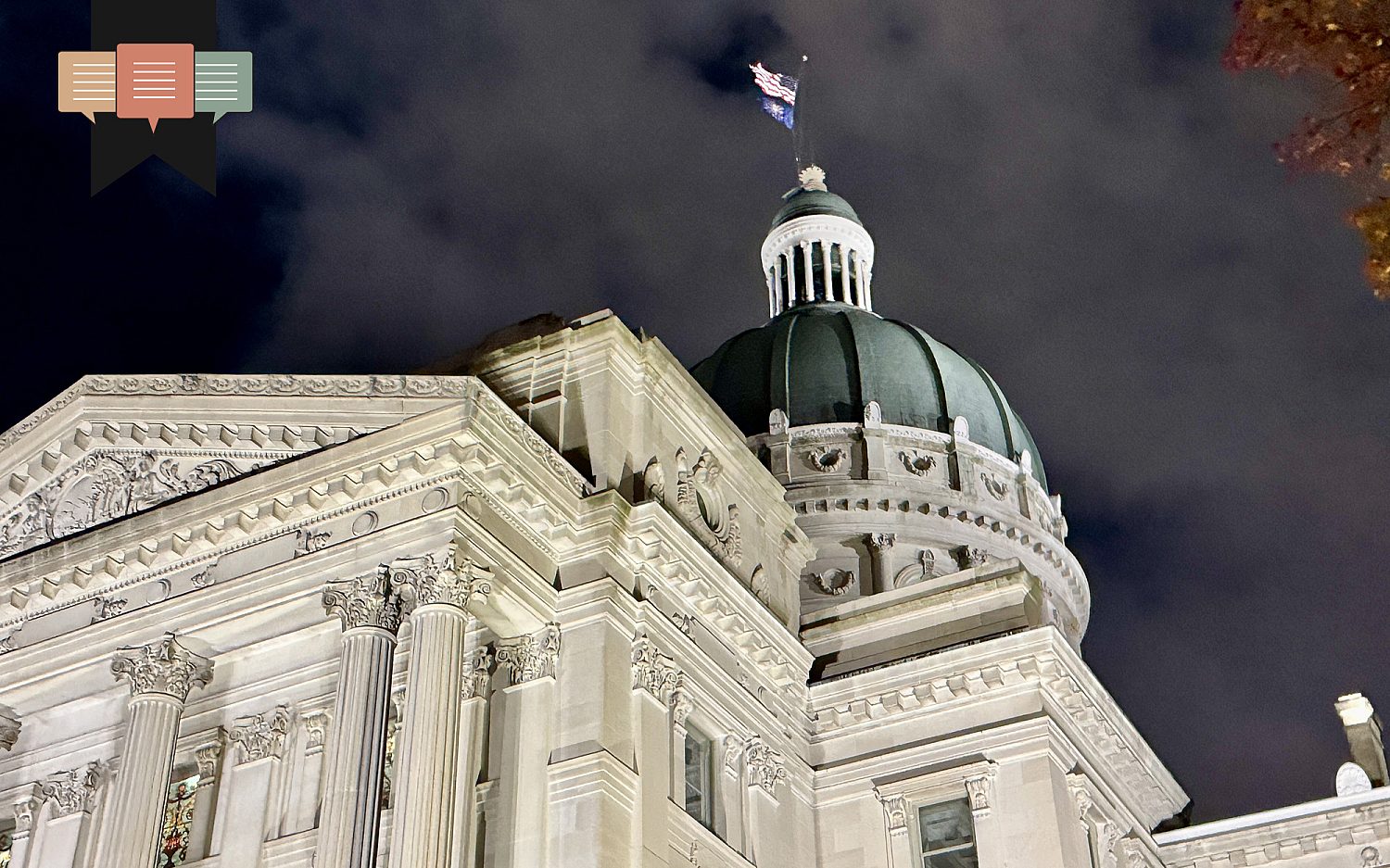
The State Capitol Building of Indiana, which houses the Indiana State Supreme court Wikimedia Commons / Photo by w_lemay
Full access isn’t far.
We can’t release more of our sound journalism without a subscription, but we can make it easy for you to come aboard.
Get started for as low as $3.99 per month.
Current WORLD subscribers can log in to access content. Just go to "SIGN IN" at the top right.
LET'S GOAlready a member? Sign in.
Is it a violation of religious freedom to stop women from getting abortions? That’s the question the Indiana Supreme Court is getting ready to answer, and its answer will clarify what we think religious freedom is for.
In 2022, Indiana became the first state to pass new abortion restrictions after Dobbs. The law bans abortion except in cases of rape, incest, lethal fetal anomaly, or serious risk to the mother’s life or health. But the American Civil Liberties Union (ACLU) sued on behalf of Hoosier Jews for Choice and several anonymous women claiming the ban violates their religious freedom.
One plaintiff, who is Jewish, relies on teaching that the unborn child is not fully a person until birth and that a mother’s physical and mental health come first. In that view, abortion may be not just permitted but required. Another plaintiff has “spiritual beliefs” centered on “bodily autonomy” which she claims gives her a religious right to abortion. Plaintiffs claim that because the state accommodates religious diets and has religious exemptions to vaccine requirements, there should also be a religious exemption to laws that prohibit abortion.
In March, a trial judge accepted the argument and barred the state from enforcing the ban against the plaintiffs and others with similar religious objections. The state appealed, and the justices heard arguments on Sept. 10. A decision is pending.
The argument from the plaintiffs in this case essentially claims a religious exemption to murder laws. Plaintiffs depend on the assumption that an unborn person does not deserve legal protection. That belief is a wish, not a fact. From fertilization, a living, genetically distinct human organism exists. It is understood that people who want abortion find the scientific reality that an unborn child is a living human to be inconvenient and engage in all manner of mental gymnastics in an attempt to wish it away, but no one has offered a good argument that unborn people aren’t people. The abortion argument doesn’t refute this fact but ignores it.
By banning abortion, the state of Indiana has simply made the abortion laws consistent with the rest of their criminal code, which says, “You can’t kill people,” and plaintiffs in this case have responded, “But my religious beliefs allow me to.”
Sadly, murder for religious reasons has significant historical precedent. Consider the Inca, who sacrificed children to their gods in hopes of a bountiful harvest. Or the Canaanites who sacrificed their born children to gain favor from Molech. If a religious claim can justify ending a child’s life before birth, what stops a devotee of the sun god from claiming the right to sacrifice his 3-year-old? The only difference here is that Indiana is stopping sacrifices to the gods of autonomy.
The Supreme Court anticipated this question in Reynolds v. United States (1879), a polygamy case, asking whether anyone would seriously argue that the government couldn’t stop a human sacrifice performed as sincere religious worship. The answer was clearly “no.”
Then there’s the irony. The same ACLU arguing there should be a religious exemption to abortion laws also represented the couple who sued Colorado baker Jack Phillips for declining to make a same-sex wedding cake. In that case, they argued no religious accommodation could be justified, even though the couple could simply go to another bakery. If you believe religious freedom can justify ending an unborn child’s life but cannot justify asking someone to find a different bakery, you don’t really care about religious freedom.
In the classical tradition from Aquinas through John Finnis, religious freedom protects our response to the truth about God, the human person, and the moral law. It has never authorized practices that violate the fundamental rights of innocent others. When religious freedom is cut loose from any account of what religion is ordered toward, it collapses into expressive individualism: my conscience, my truth, and anyone in the way loses.
We respect religious freedom because we respect people’s right to honor their conscience. Properly understood, religious freedom is one way we honor the dignity and value of others. In Indiana, we are being asked to believe that religious freedom justifies denying others the right to life.
We shouldn’t fall for it.


These daily articles have become part of my steady diet. —Barbara
Sign up to receive the WORLD Opinions email newsletter each weekday for sound commentary from trusted voices.Read the Latest from WORLD Opinions
Thaddeus Williams | America’s “existential crisis of meaning” is similar to the Babylonian king’s crisis, and the solution is the same, too

A.S. Ibrahim | In pointing to the attitudes of Muslim immigrants, Trump says what Europe’s leaders still won’t

Colin J. Smothers | The liberal religion of Senate candidate Adam Hamilton

Denny Burk | A recent article on Elisabeth Elliot is way over that line

Please wait while we load the latest comments...
Comments
Please register, subscribe, or log in to comment on this article.