
Why did the Fed hike interest rates?
BACKGROUNDER | While higher interest rates are squeezing homebuyers, the Federal Reserve’s goal is to stabilize prices overall
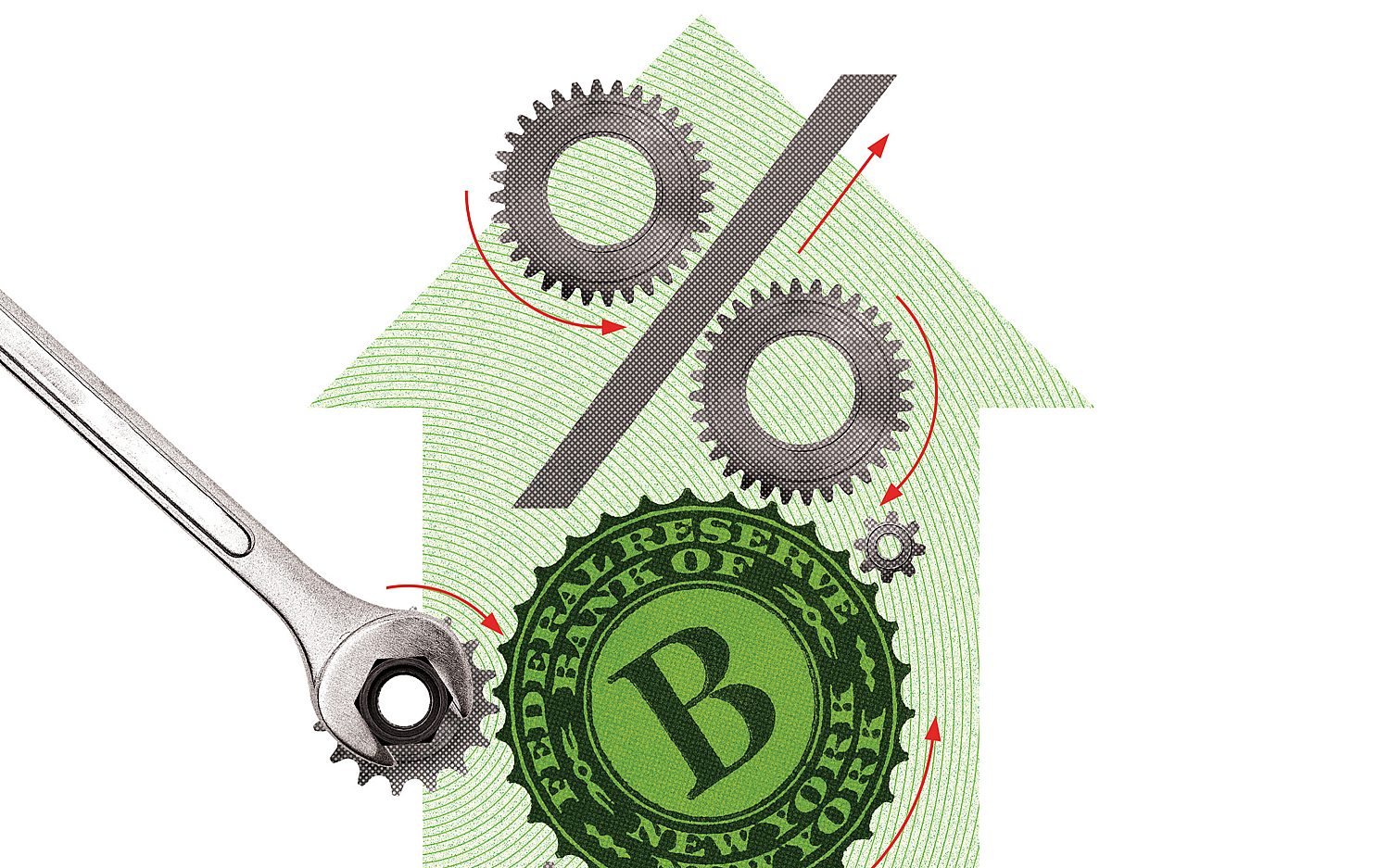
Illustration by Krieg Barrie
Full access isn’t far.
We can’t release more of our sound journalism without a subscription, but we can make it easy for you to come aboard.
Get started for as low as $3.99 per month.
Current WORLD subscribers can log in to access content. Just go to "SIGN IN" at the top right.
LET'S GOAlready a member? Sign in.
America’s economy is on a hot streak, and the Federal Reserve wants to cool down rising prices. In September, the Fed raised interest rates by a quarter-point, resulting in a new interest rate target range of 3.75% to 4%. And analysts expect the Fed to raise rates again before the year is over.
What is the Federal Reserve’s job? Two levers control inflation: fiscal policy and monetary policy. Fiscal policy is managed by the federal government and includes things like taxation and subsidies. Monetary policy is the purview of the Federal Reserve, whose goal is maintaining economic stability. It does this by trying to keep both inflation and unemployment at about 2%, which it has not done for more than 5 years. At the end of August, unemployment was sitting at 4.1% and the Consumer Price Index (CPI) at 3.4% according to the U.S. Bureau of Labor Statistics.
If the economy is doing so well, why is inflation a problem? Inflation is a part of all economies: The Federal Reserve’s job is to keep inflation manageable. The main way it does this is by trying to control the amount of money in circulation through manipulating interest rates. If money is added to the economy, inflation tends to go up and unemployment tends to go down. The inverse is also true. However, this is a careful balancing act: If the Fed raises rates too high or too fast, it could push the economy into a recession.
What does this mean for affordability? On a basic level, higher interest rates are good news for savers and bad news for borrowers. With the current hike, the Fed is following the market instead of leading it, raising the public federal funds rate to where market rates already were. This means raising rates can dampen rising prices without negatively affecting healthy labor markets. The most immediate impact on Americans is mortgage rates, which are sitting at about 7%. Ultimately, the Fed is putting a little finger on a large scale and hoping for a small movement toward market stability.
Will the rate hike hurt the economy? The Federal Reserve controls the federal funds rate—the rate at which banks can borrow and lend to each other overnight. Higher interest rates mean banks will borrow less money because higher rates make that more expensive. When the Fed raises its rates, it is signaling that inflation is so high members are willing to lower it at the risk of increasing unemployment. However, because of the market’s continued growth, Federal Reserve Chairman Kevin Warsh believes the change in rate is not significant enough to raise unemployment.
What happens next? While higher interest rates are squeezing homebuyers, the Fed’s goal is to stabilize prices overall. One rate hike will not make a big difference for most commodities. However, this small change, followed by another hike before the end of the year, should help to keep inflation in check.
Please wait while we load the latest comments...
Comments
Please register, subscribe, or log in to comment on this article.