
Why are we choosing “Choosin’ Texas”?
ESSAY | What the song of the year says about us
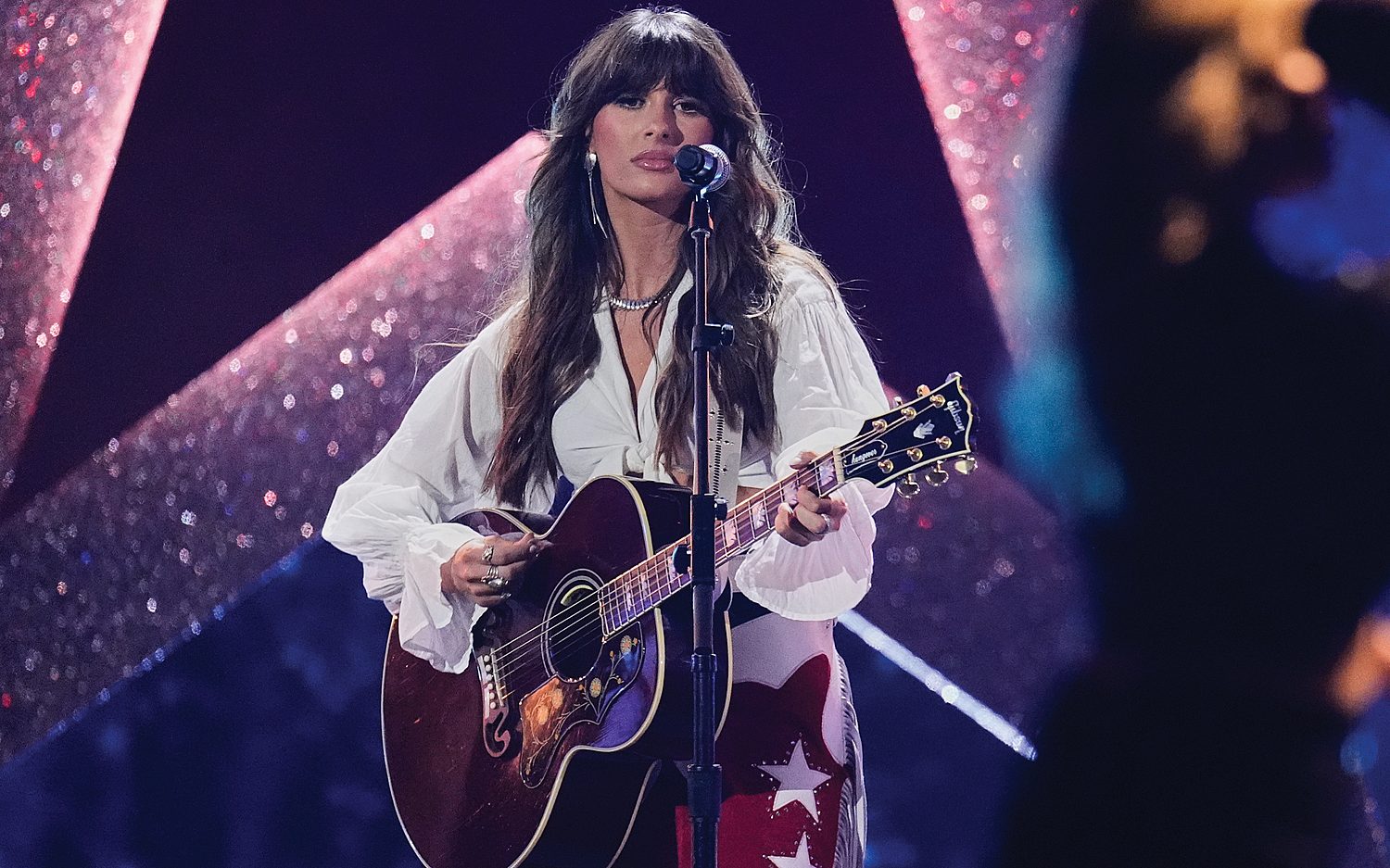
Ella Langley Associated Press / Photo by George Walker IV
Full access isn’t far.
We can’t release more of our sound journalism without a subscription, but we can make it easy for you to come aboard.
Get started for as low as $3.99 per month.
Current WORLD subscribers can log in to access content. Just go to "SIGN IN" at the top right.
LET'S GOAlready a member? Sign in.
I was born in the great state of Texas. This is important.
This is also me practicing journalistic integrity. Integrity matters when we talk about Texas. When we talk about country-pop megastar Ella Langley and her chart-destroying single, “Choosin’ Texas.” And, more importantly, when we talk about a generation that’s becoming defined by the loneliness at the heart of Langley’s “Texas.”
“Choosin’ Texas” is a cultural force operating on a scale that gets sillier with each passing week. It was first released a year ago in October 2025 as the lead single from Langley’s second studio album, Dandelion. At the time of writing, “Choosin’ Texas” has spent 22 weeks at the No. 1 spot on the Billboard Hot 100. That’s the best-ever run for a non-holiday song in Billboard history, tying Mariah Carey’s “All I Want for Christmas Is You.” It’s the song of summer 2026. Shoot, it’s the song of the year, given that its reign at the top of the charts started in February.
The song is inescapable. My family was eating lunch at Buffalo Wild Wings, and I’m pretty sure it played twice while we were there. By the time we left, the first measure of the chorus had waltzed its way into our auditory cortex: “She’s from Texas, I can tell by the way / He’s two-steppin’ ’round the room.” Naturally, my 12-year-old son asked how you can tell someone’s from Texas by the way they dance.
I said that it’s complicated and changed the subject.
What explains this song’s resonance?
The uncomplicated structure of “Choosin’ Texas” has something to do with it. Co-written by Langley, Luke Dick, Miranda Lambert, and Joybeth Taylor, “Choosin’ Texas” is about a gal from Tennessee losing her Texas cowboy to two former loves: Texas itself and an old flame from back home. She made the mistake of taking him “back to Abilene” where he forgets “the Memphis blues we used to sing”—just when she thought she got him to “fall in love with Tennessee.” Moral of the story? Never mess with Texas.
The chorus ends with lament: “A cowboy always finds a way to leave / Drinkin’ Jack all by myself / He’s choosin’ Texas, I can tell.”
It’s a mashup of “Mammas, Don’t Let Your Babies Grow Up to Be Cowboys” and “Jolene”—thematically, musically, spiritually. The nostalgia is as strong as the Jack Daniel’s that the speaker turns to. It is pastiche drenched in the neon sign of the honky-tonk. Langley’s voice is the main attraction—and rightfully so. But the lazy-Sunday-drive guitar line in the song is hypnotic.
The narrative doesn’t hold up to scrutiny, though. I’m pretty sure there are dance halls and honky-tonks in Nashville—maybe sign up for country swing classes together? Also, if your relationship is threatened by how much your guy likes “Amarillo by Morning” (in the second verse, the speaker sees this as a “warning” she should have heeded), then you’ve got bigger problems to address. It’s one of the most beloved country songs of all time! This shouldn’t be a point of division and insecurity.
Perhaps I’m expecting too much from a fictional tale about losing your love to someone else. Almost every time I listen to the song, I think, “This is what’s going to topple Mariah Carey?” Then, five hours later, I realize it’s still stuck in my head. It is defiant and infectious.
It’s a testament to Langley’s skill as a songwriter and instincts as a pop star. Her aura is certainly another major driver of the song’s sticking power.
Which creates problems for Christian parents of teenagers. Most will start by raising an eyebrow or two at the way Langley flaunts her femininity in immodest but “conservative”-coded Western attire.
This might help explain the tension in her song “Speaking Terms,” an earnest and honest assessment of her faith and desire for a deeper connection with God. At one of her shows, Langley said that she used to shy away from talking about her faith but now she can’t “shut up about it.” Perhaps the winds are changing.
But Dandelion is almost entirely blown away by the worst impulses of late-modern country. Deep-fried platitudes of living wild and free and staying true to yourself (“Dandelion,” “Be Her,” “Butterfly Season”) are served with a relish for making foolish decisions in the bar and the bedroom (“Low Lights,” “You & Me Time,” “I Gotta Quit”). Dandelion is, as a rock critic once described the pop-punk albums of my youth, a soundtrack to making bad decisions.
And this is why “Choosin’ Texas” is on such a historic heater: It’s less about a cowboy who leaves his woman for another (a tired trope of the genre) and more about two people who choose personal preferences over mutual sacrifice. It’s about a woman who thought her way of life was more compelling than his way of life.
It illuminates the heartbreak and endemic loneliness that’s defining the relationship between Gen Z men and Gen Z women. It’s an indictment of a generational inability to leave and cleave, to find happiness in seeking someone else’s happiness.
Brad Wilcox, director of the National Marriage Project at the University of Virginia and senior fellow of the Institute for Family Studies, cites a 2023 study in a recent article saying America is in the midst of a “happiness crash” due to the decline of marriage and family formation: “Marriage is the single greatest differentiator between happy and unhappy Americans.” The Institute for Family Studies’ own research backs this up. “More American men are unmarried than ever—and they are markedly less happy, in a gap that keeps widening,” Wilcox wrote in an X post dated Aug. 18, 2026. An accompanying graph plotted the plight of unmarried men, ages 20–39, who outnumber married men “nearly 2 to 1,” up 47% from 2000.
What about women?
Surveys from the Institute for Family Studies routinely show that the happiest women are married mothers. Yet study after study reveals that young people are delaying marriage and delaying having kids. The fertility rate of liberal white women in the U.S. aged 25–35 is 0.51 children. According to Gallop Poll Social Series survey data, the “gender ideology gap” has more than doubled between 1999 and 2023. Women are trending more liberal, while men are staying as conservative as they’ve always been.
The one thing that makes men and women the happiest is the one thing that’s feeling more and more unattainable.
The church must lead men and women off this lonely stretch of I-40. It’s the only institution that can, really. The Bible begins and ends with a wedding. The church is the Bride. We’re stewards of the mystery. Wilcox agrees: “Churches are built for exactly this.”
Wilcox has identified a four-step plan to help churches build a “family-first marriage culture,” one that integrates the elements needed to “make getting married and raising a family feel not just virtuous, but attractive and attainable.” His plan begins with casting a vision of family life that is “statistically advantageous but genuinely transcendent, not just true but good and beautiful.” He then proposes giving younger people hope that a “strong and stable” marriage is possible. The third step is getting them to the altar. Finally, it culminates with parents integrating faith into the daily rhythms of home life, which “increases the odds that children embrace a faith-oriented, family-focused life when they become adults.”
I would add a fifth step: two-stepping lessons at the local honky-tonk. Because if marriage is anything, it’s a dance of happiness and holiness that chooses you. Even if you have the misfortune of not being born in Texas.
—Trevor Sides is an independent cultural commentator who writes the Substack newsletter Side Notes and hosts The Songs We Know By Heart, a limited podcast series about noteworthy albums at the heart of the pre-9/11 zeitgeist
Please wait while we load the latest comments...
Comments
Please register, subscribe, or log in to comment on this article.