
Wedded persecution
INTERNATIONAL | Forced conversions and marriages threaten Christians in Pakistan
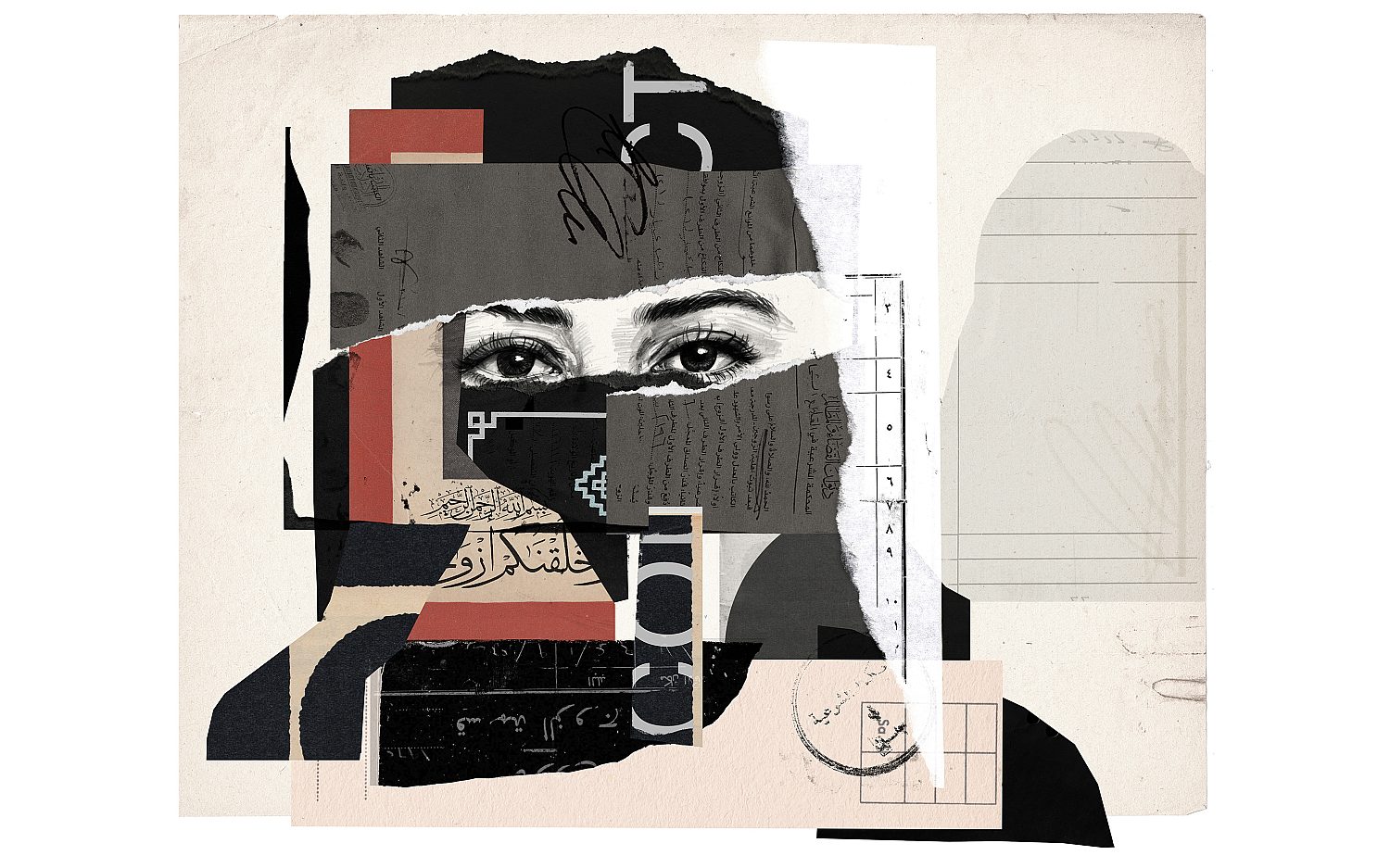
Illustration by Julian Rentzsch
Full access isn’t far.
We can’t release more of our sound journalism without a subscription, but we can make it easy for you to come aboard.
Get started for as low as $3.99 per month.
Current WORLD subscribers can log in to access content. Just go to "SIGN IN" at the top right.
LET'S GOAlready a member? Sign in.
In the scorching heat of summer, Adan Sabir passes through the narrow, fractured streets of Jaranwala, Pakistan, dressed in a burqa to conceal her identity. She firmly holds her mother’s arm, her grip tightening every time a man passes. This way of living has become the norm for the 19-year-old.
Adan’s nightmare began on July 3, 2025, when a man in his mid-20s came to the home of her aunt in Jaranwala, where she and her family were staying. Accompanied by 35 men, Usman Ali allegedly drew a gun and forced Adan to leave with him.
“We screamed in the streets, but nobody dared to help us,” said her mother, Afshan Sabir. “All the neighbors were scared because he was armed.” Adan’s family quickly filed a police report. But when authorities contacted her abductor, he produced forged marriage certificates and claimed Adan had converted to Islam and married him of her own free will.
Adan’s case is not isolated. Human rights advocates say forced marriages are a growing problem of persecution in Pakistan’s minority religious communities. Commonly referred to as “jihad love,” Muslim men abduct girls from religious minorities, force them to convert to Islam, and then marry them. The Centre for Social Justice (CSJ) and the National Commission on the Rights of Child report that cases of forced conversion and marriage have been steadily rising: It recorded 78 cases in 2021, 124 in 2022, and 136 in 2023.
Pakistan is officially an Islamic Republic, and the population is 98.4% Muslim. Non-Muslims face routine discrimination and persecution. They are forced to take menial jobs and have limited access to healthcare and legal protection. Girls face the added threat of forced conversions and marriage.
“In approximately 99% of such cases, victims are minor girls from economically disadvantaged Christian or Hindu families,” says Naumana Suleman, founder of the advocacy group Minority Women Forum. “They have little to no social or political support.” In the cases cited in a 2023 CSJ study, 23% of abducted girls were younger than 14, and 36% between 14 and 18.
Atta Ur Rehman Saman, deputy director of the Catholic Commission for Justice and Peace, notes that often the judicial system that should protect minority women is used against them.
“Ironically, the police and administration facilitate the culprits, taking it as divine duty,” Saman says. “Often, police do not act on complaints and delay investigations on different pretexts to provide time to the accused. Even courts hand over minor girls to their abductors, ignoring the law of the land, which does not permit marriage before 18.”
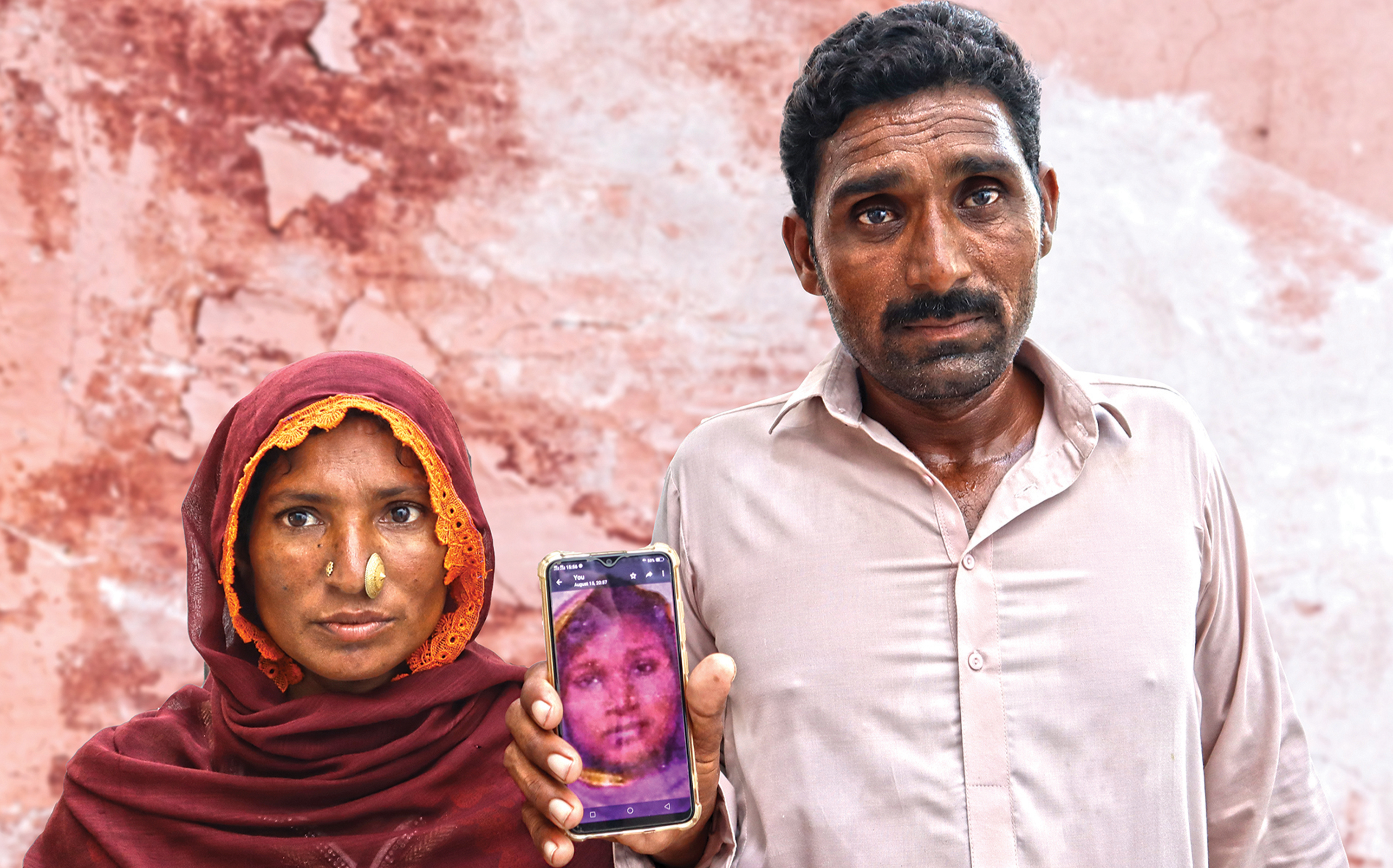
A Pakistani family shows a photo of a missing daughter. Alliance Defending Freedom
At her first court hearing in August, the month after her kidnapping, Adan remained silent. Her family said she feared that if she accused Usman Ali, he would take revenge on her elder brother. But because of her silence and the forged marriage certificate Ali provided, the judge allowed him to take her home.
Because Pakistan has a legal system intertwining inherited British law and Sharia law, Islamic influence often holds sway over the judges.
In 2020, 14-year-old Maira Shahbaz was raped, abducted, and forcibly married. Her parents challenged the validity of the marriage certificate, arguing that she was a minor. But the court dismissed the challenge and allowed her alleged abductor to take her as his wife, citing physical signs of puberty as sufficient grounds for marriage. In the 2024 case of 10-year-old Laiba Suhail, who was abducted in Faisalabad, police took no action despite her parents’ appeals. A few days later, police informed Suhail’s parents that the girl had filed an application claiming she had converted to Islam of her own free will.
In March 2026, Pakistan’s Federal Constitutional Court issued a ruling upholding the marriage of 13-year-old Maria Shahbaz (no relation to Maira Shahbaz) to a man twice her age, citing Islamic law permitting a Muslim man to marry a Christian woman as “People of the Book.” But in July, under international pressure, the federal court agreed to review the case.
Meanwhile, Adan Sabir’s family was determined to bring her back. In September 2025, they appealed to the Lahore High Court. After reviewing evidence of threats and coercion, the justices ordered her back to her family. By November, the court had accepted notice of her divorce appeal, and it seemed Adan was finally safe. She returned to her family hoping to start her life over.
But while Adan managed to escape and return to her family, her nightmare continues. Ali has continued threatening Adan and her family. They have relocated multiple times for their safety, with Adan and her mother living under the protection of a church, while her father and brother live elsewhere.
“We cannot go back home, and we cannot contact any relatives,” Adan says. “It feels like the end of the world.”
In the place they are staying, Afshan Sabir’s phone rings. It’s the church’s pastor saying they will have to move again. Adan listens to the news, then falls silent. Afshan says the experience has left her daughter deeply traumatized.
“She is quiet all day, and at night she wakes up trembling and asks us to pray with her,” Afshan says.
Adan says Ali’s threats feel less menacing than the clerics who back him up.
“According to them, I am an apostate, and as such I am liable to the consequences,” Adan says, her hands trembling. But her voice is firm: “I would rather embrace death than renounce my faith in Christ.”

Please wait while we load the latest comments...
Comments
Please register, subscribe, or log in to comment on this article.