
Weapons of winter
Ukraine prepares for the coming cold as Russia targets its energy infrastructure
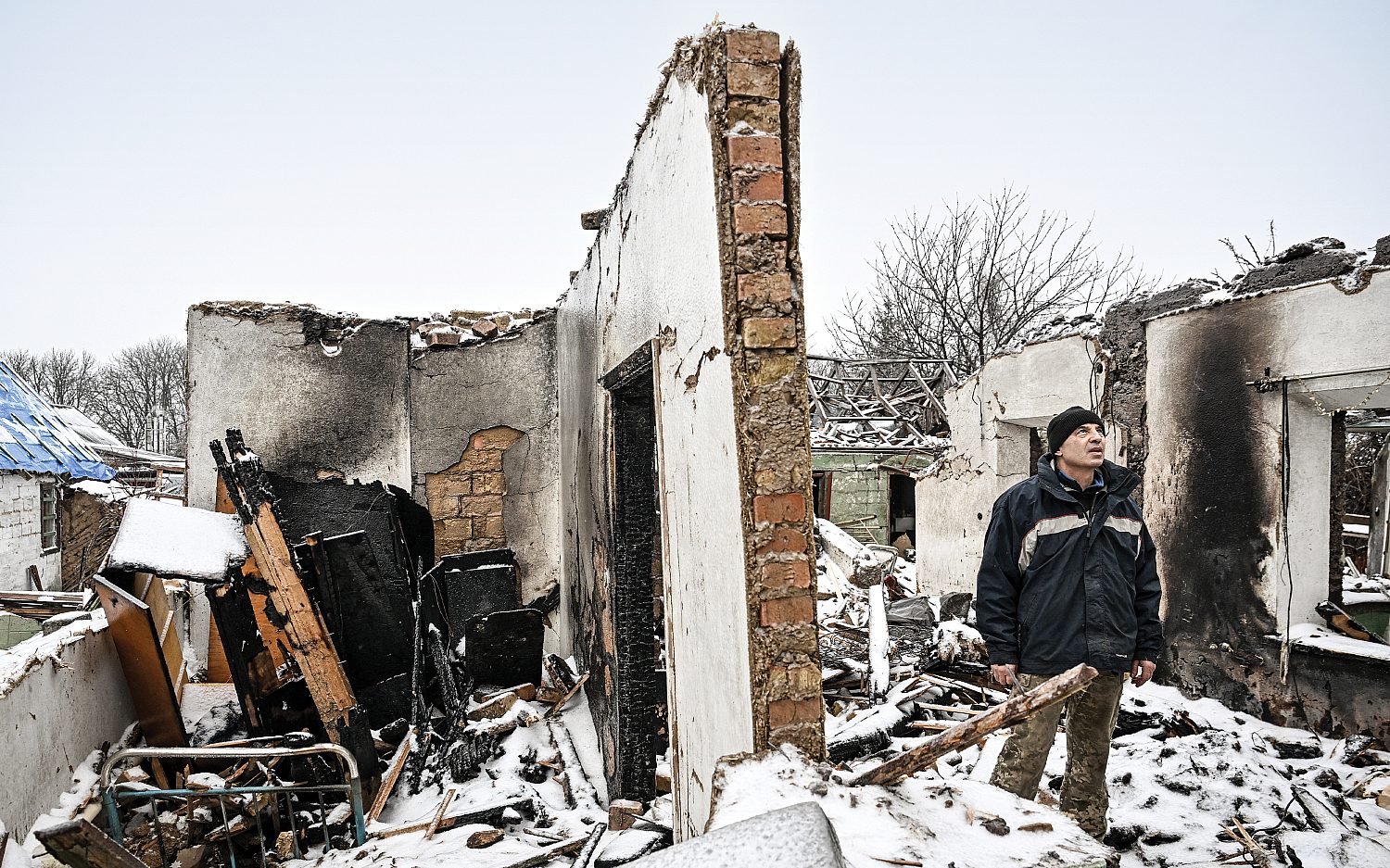
Dmytro Smolienko / Ukrinform / NurPhoto via AP
Full access isn’t far.
We can’t release more of our sound journalism without a subscription, but we can make it easy for you to come aboard.
Get started for as low as $3.99 per month.
Current WORLD subscribers can log in to access content. Just go to "SIGN IN" at the top right.
LET'S GOAlready a member? Sign in.
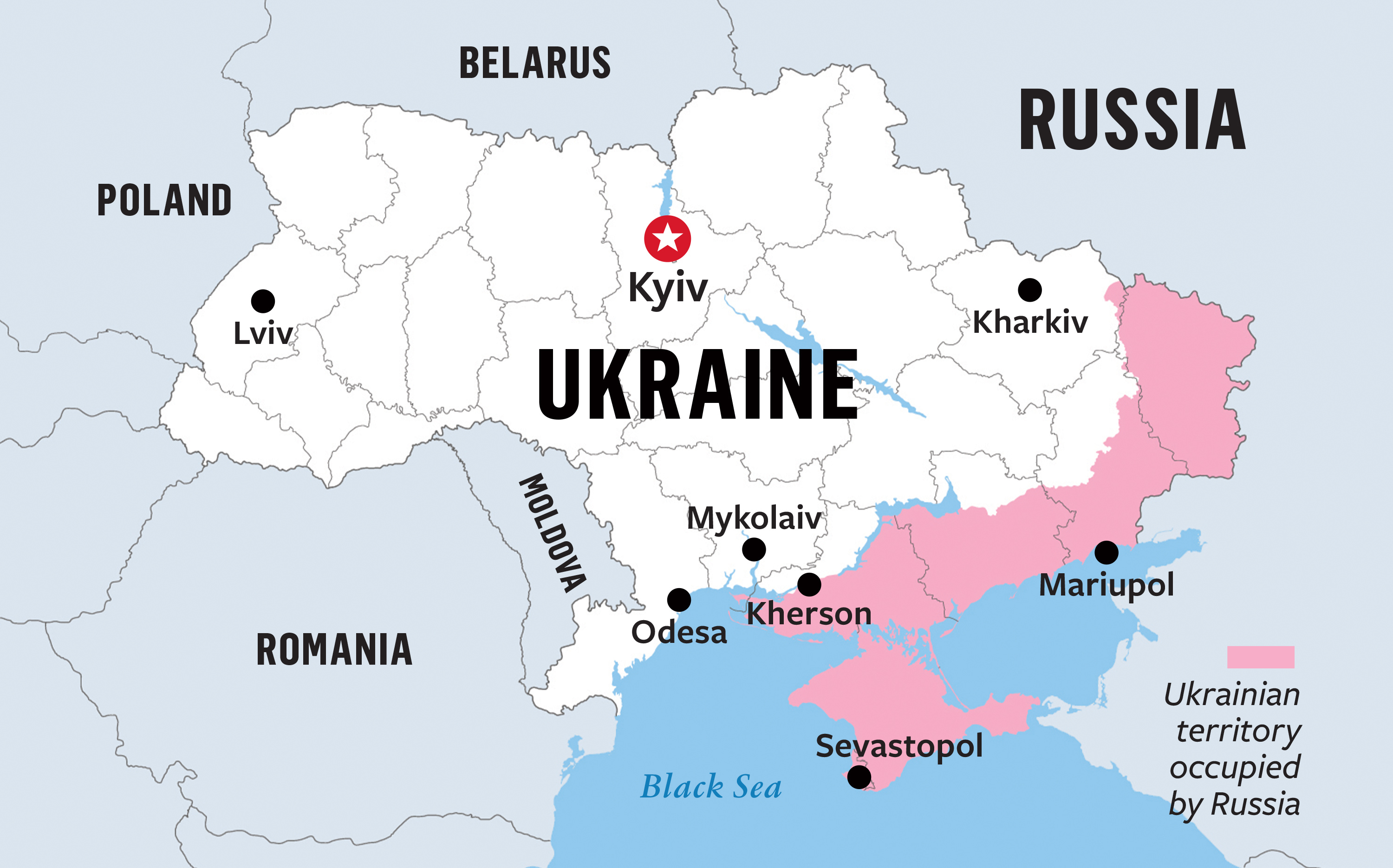
In the basement shelter that has become her home, Lyuba Horobinskaya moves briskly about the kitchen. Slim and youthful despite her white hair, she bears a friendly but no-nonsense demeanor. The kitchen is small and warm. It takes its brightness from the cabinets painted yellow and blue: the colors of the Ukrainian flag.
The shelter is buried beneath the Love of Christ Church in Mykolaiv, a river port city in southern Ukraine. Horobinskaya works as the shelter’s administrator. Its underground kitchen serves three meals a day, feeding a steady flow of refugees who have good reason to leave their homes:
A mere 40 miles separate Mykolaiv from the front line.
Given the ever-strengthening capacities of Russian missiles and drones—and this year’s intensification of attacks on Ukrainian noncombatants—the distance makes these civilians only somewhat less vulnerable to the war’s lethal violence.
The church basement stays dark, to save power. Only the kitchen lights remain on. From its stove emanates the aromas of cooking and Ukrainian kompót, a stewed fruit juice. Other, less-appealing smells filter into the room: mildew and the body odor of seniors struggling to care for themselves.
Horobinskaya is also a refugee. She fled from her home in nearby Kherson, a front-line city an hour’s drive southeast. Like many Ukrainians, Horobinskaya has suffered much since Russia’s invasion in February 2022, but she worries the situation could soon get a lot worse.
“The approaching winter gives one pause for thought,” Horobinskaya told me in September. She and others have “serious fears about a Russian breakthrough” of Ukraine’s front line, a chilling possibility given that Russia currently controls a part of Mykolaiv oblast, or region, and most of neighboring Kherson oblast. And Russia’s targeting of energy and heating infrastructure—an ongoing, years-long pattern—makes winter another weapon in the Russian campaign against Ukraine.
LAST WINTER WAS UKRAINE’S COLDEST in 15 years, with extended periods of subzero temperatures. Russian strikes have weakened Ukraine’s energy infrastructure, depriving homes and businesses of heating and electric power. This spring and summer saw Ukraine and Russia trade blows against each other’s logistics and retail infrastructure. Ukraine focused on Russian e-commerce warehouses. Russia attacked gas stations and big-box superstores throughout Ukraine, and even a PepsiCo bottling plant outside Mykolaiv.
While this winter is not forecast to break further records, certain regions are sure to suffer again. Mykolaiv, as part of the flat Eurasian steppe region of Ukraine’s east and south, generally has hot summers and cold winters—a climate comparable to the Plains states of the American Midwest.
Southern Ukrainians know better than most how new technologies have made the war even more bloody—and the coming winter even more brutal. Russia’s new “reactive” jet-powered drones can rip through the sky at 300 mph. Mykolaiv has a citywide system of air-raid sirens, but lightning-fast aerial weapons render the warning system useless.
The city’s port remains under a complete, four-year blockade from Russia’s naval presence in the Black Sea. Russian attacks in September targeted the ships moored at Mykolaiv’s docks. Agricultural goods, including wheat, corn, and the products derived from Ukraine’s famous sunflowers, cannot get to foreign markets. The trade disruptions from Mykolaiv reach across the country’s economy.
Due in part to those disruptions, Ukraine’s cost of living is high, and rising. Conflict-driven inflation climbed to 8.1% in August, from 7.2% in June, according to the National Bank of Ukraine (NBU). As prices rise but salaries remain the same, paying for goods and services becomes more expensive.
This summer the NBU raised its forecast for Ukraine’s overall inflation rate to 10% this year and 6.9% next year. For comparison, the Congressional Budget Office expects U.S. inflation to average 2.7% in 2026 and 2.3% in 2027.
NBU’s deputy governor, Volodymyr Lepushynskyi, in an op-ed from September, offered a sober view on Ukraine’s frigid future. Russia’s energy infrastructure attacks and blockade of maritime activity have created perfect-storm conditions for Ukraine’s economy, he explained.
The assaults “increase business costs, complicate exports, create additional demand for imports … and, ultimately, worsen business expectations,” he said.
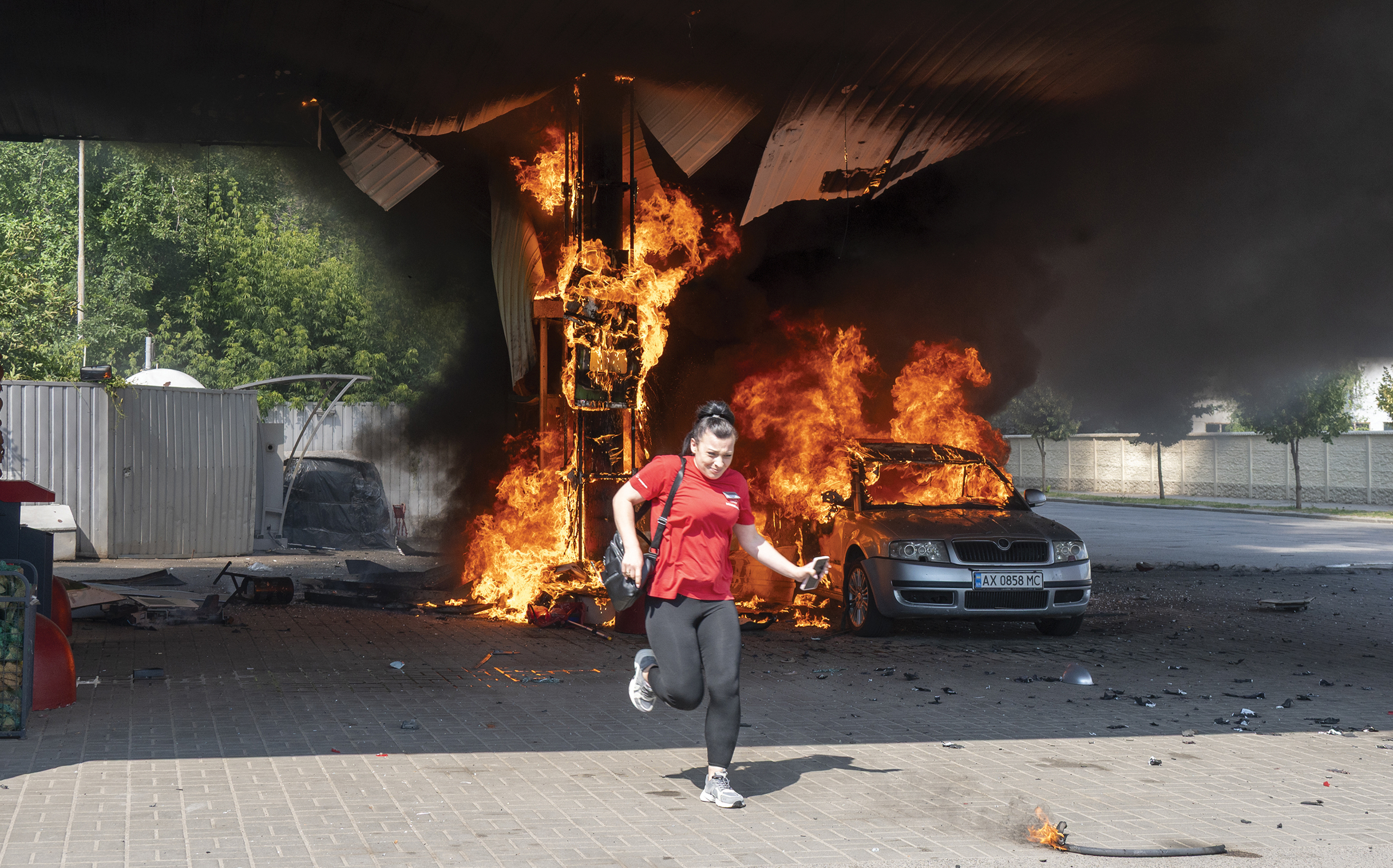
A woman flees as flames rise from a car and a fuel dispenser following a Russian attack on a gas station in Kharkiv. Serhii Masin / Anadolu via Getty Images
In a possibly deliberate double meaning, Lepushynskyi praised Ukrainian ingenuity ahead of the year’s coldest days.
“The Ukrainian economy is not freezing under this pressure,” he said. “So far [Russia] has failed to achieve its main goal—to stop the Ukrainian economy.”
Mykolaiv has become a priority destination for Ukrainian and international humanitarian aid, with money and material arriving from Asia, Europe, North America, and the United Nations. Japan in August provided Mykolaiv grant funding for more than two dozen electricity transformers.
“This equipment will now be used in the framework of preparing [the] Mykolaiv region for winter,” said Serhii Koretskyi, Ukraine’s prime minister. “We will continue to seek additional opportunities to strengthen our resilience, especially in front-line regions.”
The United States has committed $195 billion in total aid allocations to Ukraine, through legislation before or during the Biden administration. Humanitarian aid accounts for just over 2% of the total, according to a July analysis from the Council on Foreign Relations, a New York–based policy group. The last U.S. aid bill to Ukraine passed in April 2024.
As in many post-Soviet countries, corruption remains a strong concern among humanitarian aid donors. Dozens of U.S. agencies participate in good-governance oversight of aid to Ukraine, according to a Fox News report from August.
Speaking at the United National General Assembly on Sept. 22, U.S. President Donald Trump and Ukrainian President Volodymyr Zelenskyy held a joint press conference. Zelenskyy asked for U.S. support to end the war “before winter.” Trump repeated Zelenskyy’s words and nodded in apparent agreement. In a speech at the UN’s main hall the following day, Zelenskyy spoke with defiance about protecting Ukraine from Russia during cold-weather conflict.
“Ukrainians understand that this winter could be very harsh for us,” Zelenskyy told the assembly. “In response, we will have no choice but to make it painful for Russia, too.”
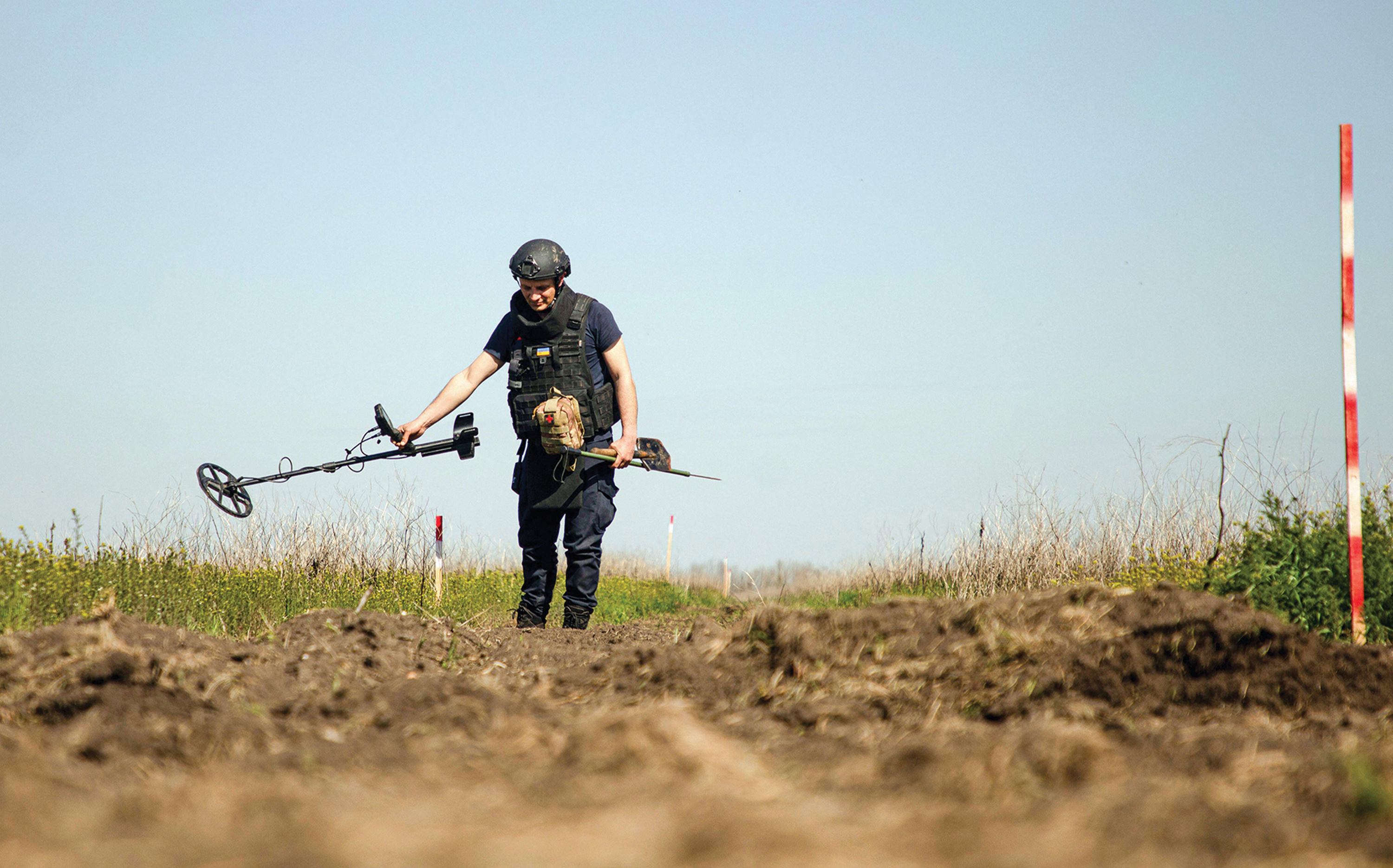
A worker scans a field for mines in the Mykolaiv region. Yuliia Ovsiannikova / Ukrinform / Alamy
WITHIN UKRAINE’S OWN BORDERS, the struggle for energy involves more than just preventing Russian attacks. Some Ukrainian public utilities say they are stuck in what economists call a “debt doom loop.” Power companies are currently under a nationwide moratorium on raising prices for heating, even as they grapple with infrastructure damage and customers’ unpaid bills.
During a city council meeting in September, local leaders in Mykolaiv heard complaints over the local utility’s $31 million debt. Without national government support, Mykolaiv’s utility and its customers could face blackouts while temperatures drop.
Dima Mocholov, a local university administrator, fears a “cascade effect.” When a home loses electricity, it also loses the means to produce hot water for cooking and bathing. No power means no internet, disrupting routines for those who work or study online. Mocholov’s own apartment lost power for several days last winter.
Like Horobinskaya, he knows another winter could make daily life in Mykolaiv even more difficult.
“We have a lot farther to fall,” he said.
When I asked if he would leave Mykolaiv if necessary, he repeated a phrase I heard many times.
“Where to go?” he asked, smiling.
Ukraine’s energy workforce faces its own problems, as the war roils the labor market for working-age men. Many of them volunteer or get drafted for the military. A conference at the end of last winter, held at the National Institute of Strategic Studies in Kyiv, noted an “acute shortage of qualified personnel in the energy sector” and a “severe workforce deficit,” even at the level of lower-skilled utility jobs.
Short of industrial-scale solutions, Mykolaiv residents and several international NGOs are reaching for simple fixes. Acted, a large, Paris-based aid group, has identified the distribution of solid fuels—especially firewood—as an essential task in Ukraine’s winterization. The group considers communities that are both rural and near front-line fighting as especially vulnerable. In Ukraine today, much like the U.S. region of Appalachia in the early 20th century, dispersed rural populations either cannot afford retail electricity or don’t have electrified homes in the first place. Without fuel, domestic problems multiply: Children and the elderly get sick repeatedly.
By U.S. standards, Ukraine is a fundamentally poor country: Its per-person income averages less than $6,000 per year, according to the World Bank. And while things cost less in Ukraine, these dire-straits conditions are limiting for the war-weary. Leaving their villages for more expensive Ukrainian cities, let alone relocating to more prosperous places abroad, requires cash and savings most Ukrainians never had.
GER3, a U.S.-based humanitarian aid provider active in Ukraine, estimates more than 2 million Ukrainians will require assistance this winter. An average local monthly pension totals just 3,000 Ukrainian hryvnias, or $67, according to the organization.
As of September, the price of one standard unit of household firewood, known as a “stacked meter,” had already reached $100, Anna Grace Calhoun, GER3’s country director for Ukraine, told me. Each household needs about eight stacked meters to make it through the winter. GER3 also conducts related home-heating services, like insulation improvements and checks on energy efficiency.
Calhoun noted these home-heating struggles are hardly unique to the Mykolaiv area: “The needs profile is similar across many Ukrainian regions.”
Even Mykolaiv’s wood-burning households face steep costs, and risks, to stay warm. Many village residents are elderly, and their pensions—a holdover from Ukraine’s years in the Soviet Union—do not meet even basic needs. Some seniors forage for wood in surrounding forests, though this means having to avoid land mines left over from Russia’s eight-month occupation of parts of Mykolaiv oblast in 2022. Russian drones pose a more active threat.
With danger underfoot and overhead, some villagers would rather freeze in their homes than venture outside.
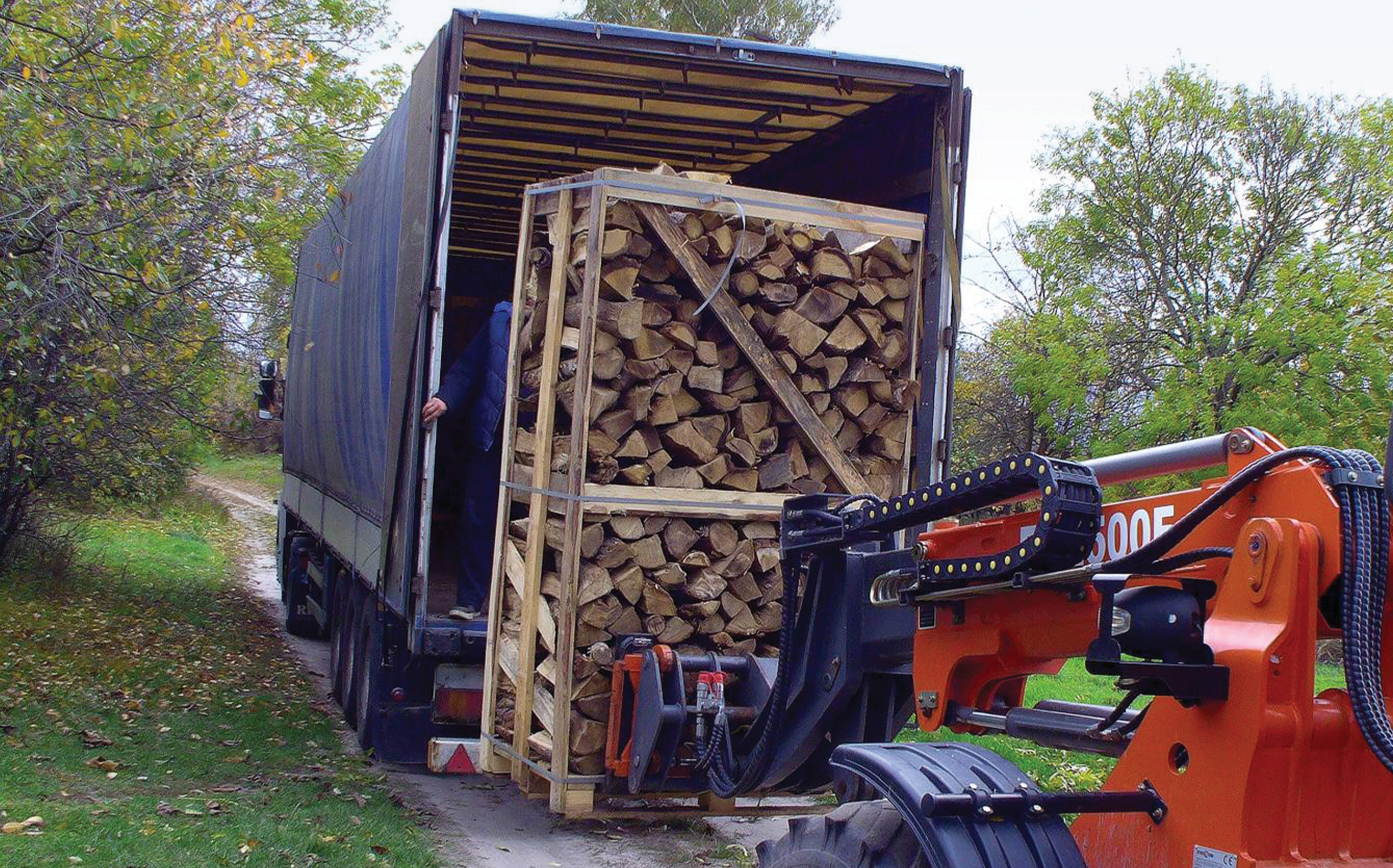
GER3 delivers much-needed firewood in rural, hard-to-reach areas. Photo courtesy of GER3
EDMUND RUDNITSKYI, pastor of Love of Christ Church, has taken energy matters into his own hands. He is building a self-sufficient system through a combination of solar panels, energy battery storage, firewood, and foreign help. Municipal power is expensive, he explained. Every minute of self-generated power helps his ministry.
In a kind of silver lining, Rudnitskyi noted that the war’s demands on churches have helped clarify priorities and sharpen motivations. Love of Christ has scaled up its mercy ministries dramatically since 2022.
“The church is returning to social and humanitarian work,” he said. “We had nothing like this before.”
During my visit, workmen hustled about the church courtyard, installing panels and arranging cables. The air already held the hint of a chill. Gray skies foreshadowed the approaching winter darkness.
In the church’s basement shelter, it was time for lunch. A dozen elderly residents huddled over bowls of soup. Some are just passing through. Others, like Lyuba Horobinskaya, have come to live here. The church offers protection from winter weather and Russian bombs.
Dima Mocholov, the university administrator, plans to face the cold head-on. He’s spent every winter since 2022 in Mykolaiv, and he has no plans to leave, even though he finds the prospect of the coming months exhausting.
“Tired or not tired, we have no choice,” he said.

Please wait while we load the latest comments...
Comments
Please register, subscribe, or log in to comment on this article.