
VisionQuest
TELEVISION | The latest MCU-related TV series wrestles with questions of identity and grief
Marvel
Full access isn’t far.
We can’t release more of our sound journalism without a subscription, but we can make it easy for you to come aboard.
Get started for as low as $3.99 per month.
Current WORLD subscribers can log in to access content. Just go to "SIGN IN" at the top right.
LET'S GOAlready a member? Sign in.
Rated TV-14 • Disney+
Cast your mind back to those heady days after Marvel Studios had released Avengers: Endgame, a movie that wrapped up the decade-long Infinity Saga and grossed more money than any other film in history. What exciting future did the studio have planned for the Marvel Cinematic Universe? Expectations soared even higher in January 2021 when the MCU’s first television series arrived on Disney+. WandaVision was delightfully weird and offered hope that Marvel would continue to give viewers fresh, innovative storytelling as it made its transition to the small screen.
That hope proved short-lived. But even though the MCU has squandered some of its cultural cachet over the last five years, I suspect many Marvelites still want to know what happened to the Vision after his disappearance at the end of WandaVision. For those true believers, Marvel Studios offers its 18th television show, the eight-part VisionQuest.
Paul Bettany returns to the role of the Vision, a superpowered android who longs to be human. The series begins with him once again hiding in Edinburgh. He’s working at the same pub he and Wanda used to frequent, but he keeps his human relationships at a distance, preferring to be a loner. Except he’s not really alone.
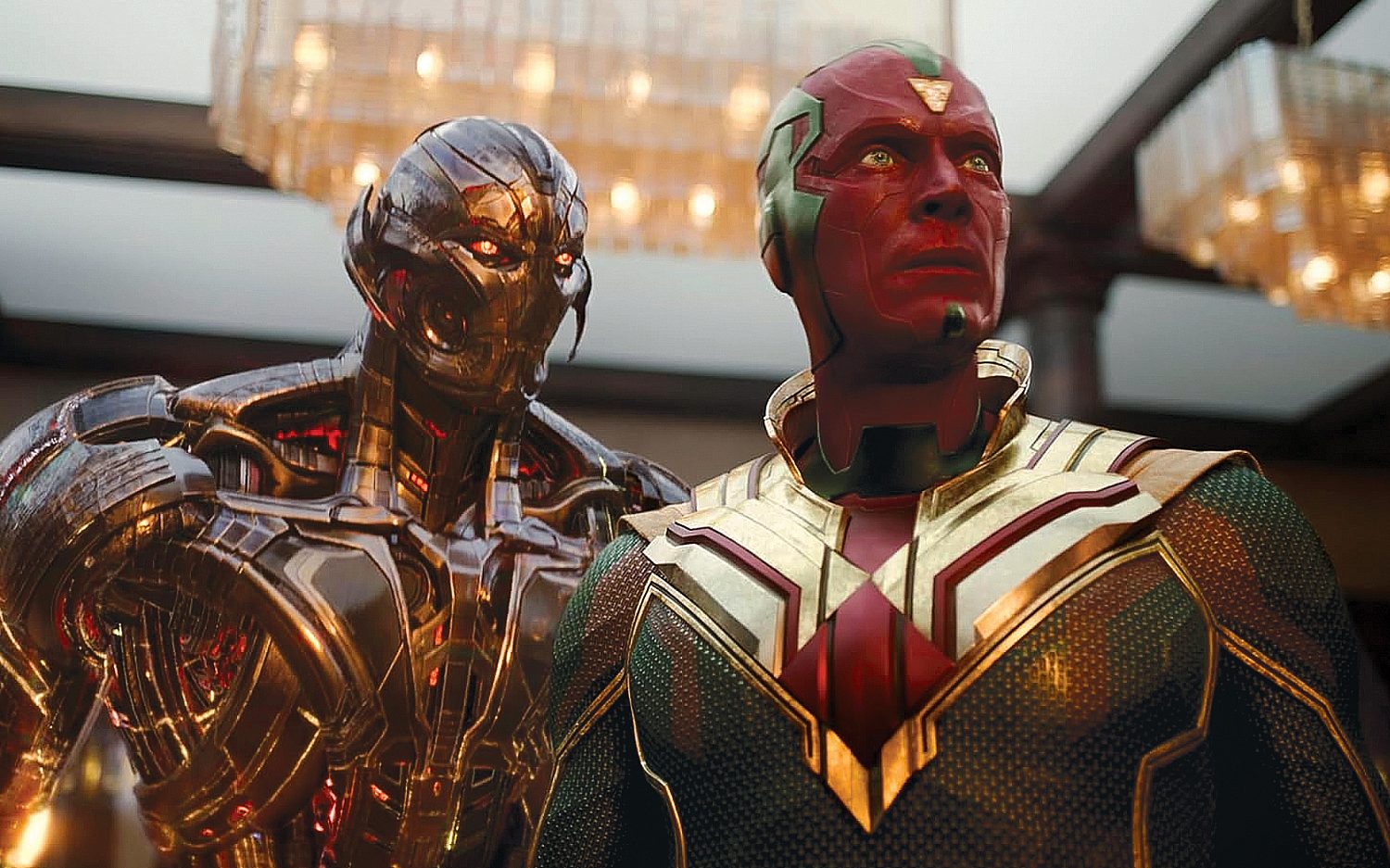
The series depicts the Vision’s mind as an elaborate Victorian house populated by a gaggle of artificial intelligence programs built by Tony Stark. J.A.R.V.I.S (James D’Arcy), F.R.I.D.AY. (Orla Brady), and E.D.I.T.H. (Emily Hampshire) help the Vision navigate his confusing existence, and D.U.M-E (Henry Lewis) and U (Jonathan Sayer) act as maintenance workers. But the show’s really about the sixth AI locked away in a corner of the Vision’s consciousness: James Spader plays the supervillain Ultron who years before had attempted to destroy humanity to establish peace on earth.
The Vision wrestles with understanding himself—to what extent is he the same being who died in Infinity War?—and the other AIs offer varying levels of support. Ultron assumes the role of disinterested truth-teller, but it’s obvious to the audience he’s playing his own game.
Soon the Vision’s identity crisis is interrupted when a high-tech bounty hunter named Paladin (Todd Stashwick) shows up, attempting to capture the former Avenger for a mysterious client. That adventure will cause the Vision to cross paths with his and Wanda’s grown son Tommy (Ruaridh Mollica), who’s trying to figure out his own identity.
VisionQuest is a worthy sequel to WandaVision, finishing the story while capturing some of the earlier show’s zaniness. The shifts between the Vision’s interior and exterior realities add whimsy to a story that could have become weighed down by superhero tropes. There’s plenty of action, but the Vision’s relationships with Tommy and Ultron drive the narrative. James Spader steals just about every scene he’s in.
The show once again trots out Theseus’ paradox, asking whether a ship that’s had all its pieces replaced over time is still the same ship, but it avoids serious philosophical reflection on its central premise about the nature of identity. I was also surprised, though gratified, that VisionQuest doesn’t wade into debates on the nature of artificial intelligence. The show’s a fantasy, so it feels free to treat its AI characters as living people, just as Star Wars did with C-3PO.
But that’s not to say the series doesn’t offer any commentary on what it means to be human. Rather than focusing on philosophical identity or the nature of AI, VisionQuest examines the human emotion of grief. Every character in this series, whether good or bad, has experienced some kind of loss, and each deals with the grief stemming from that loss in a different manner. The Vision’s quest isn’t so much to figure out whether he’s the same Vision that Wanda loved. His journey involves acknowledging his grief over losing Wanda—over losing a life he never had—and deciding what he’ll do with that pain.
Even though the show has a lot going for it, I have some complaints. First, VisionQuest has slightly more foul language than the typical MCU series. I’m not sure why AIs cuss in the MCU, but they do. Second, the series retcons MCU lore to add another layer of complexity to the Vision’s origin story. In so doing, the series robs events in the earlier Avengers movies of their importance, effectively diminishing the franchise’s heyday to tell a story that should have looked forward rather than backward.

Please wait while we load the latest comments...
Comments