
U.S. Briefs: California city takes a new approach to homelessness
San Francisco tests out a competitve process for funding homeless service providers
Ziyu Julian Zhu / Xinhua / VCG via AP
Full access isn’t far.
We can’t release more of our sound journalism without a subscription, but we can make it easy for you to come aboard.
Get started for as low as $3.99 per month.
Current WORLD subscribers can log in to access content. Just go to "SIGN IN" at the top right.
LET'S GOAlready a member? Sign in.

Fact Box Source: The World Bank
California
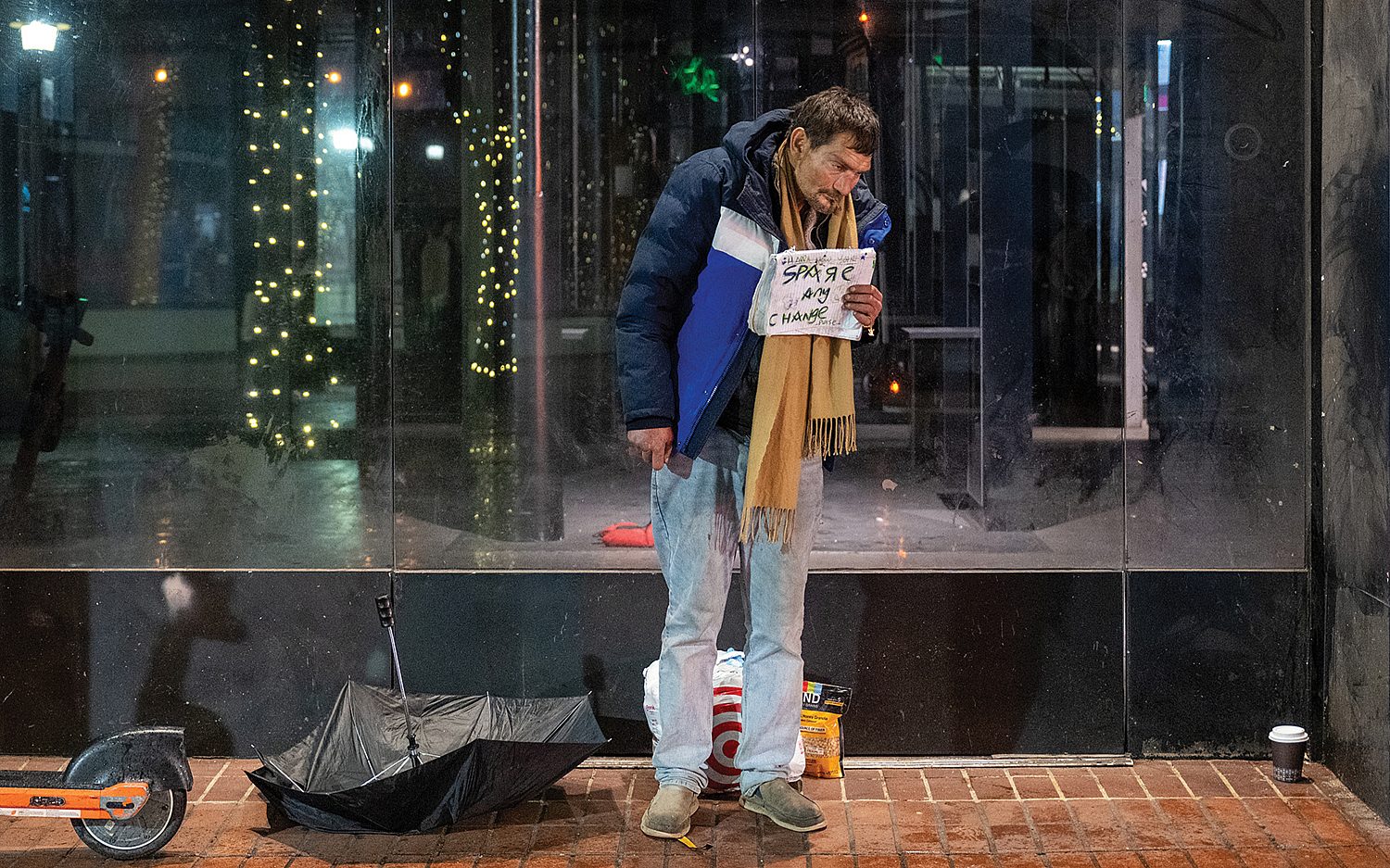
San Francisco Mayor Daniel Lurie has had enough after decades of rising street homelessness in the City by the Bay. Lurie announced the city will end its current contracts with homeless service providers—worth at least half a billion in taxpayer dollars—and begin awarding new homeless and housing contracts through a competitive process. The long-anticipated step is part of a multiyear shift toward an “outcomes-driven model” that moves people into recovery and long-term self-sufficiency as opposed to merely getting people off the street and into housing. Lurie warned of a future overhaul in March 2025 shortly after he took office. It’s unclear exactly what standards the new providers must meet, but officials said the process will likely lead to fewer contracts as they condense overlapping services. Lurie’s office requested community members and nonprofit providers weigh in about what success metrics should look like. “We’re fixing the system so we can deliver the safe and clean streets that every San Franciscan deserves,” Lurie said. “But that work can only succeed with a system that is built to deliver results, with accountability when the outcomes aren’t good enough.” —Addie Offereins
Maine
Maine’s high court upheld a custody order giving a father final say over whether his 13-year-old daughter may attend an evangelical church. The girl’s mother, Emily Bickford, took her to services at Calvary Chapel Greater Portland. In a 2024 dispute, Matthew Bradeen objected, saying the church had become a “dangerous and harmful environment” that contributed to his daughter’s anxiety, including a panic attack after a lesson on the rapture. He also said church messages portrayed him negatively. A lower court found some of the church’s language psychologically damaging and granted Bradeen authority over the girl’s religious activities. The high court affirmed the ruling Sept. 1, rejecting Bickford’s argument that the 2024 order violated her rights. Bickford may appeal to the U.S. Supreme Court. —Kim Henderson
Georgia
Authorities confirmed sightings of the grass-eating mealybug in South Georgia in August. That’s bad news for the state’s cattle growers. The fluffy-looking bug feeds on grass and injects toxic saliva into the plant, making the vegetation susceptible to disease. Native to Southeast Asia, the mealybug was first spotted in Texas last year. Researchers believe the mealybugs’ feeding patterns could destroy pasturelands that cattle rely on for grazing. Grass crops like corn and wheat may also be susceptible. Since the insect hasn’t been stateside for long, scientists still don’t know which pesticides will be most effective. Researchers at the University of Georgia recommend regular farm equipment cleaning and changing clothes after visiting a suspected infestation site. —Bekah Bernhardt

A Google Data Center in Henderson, Nev. Associated Press / Photo by Ty ONeil
Nevada
An influential southern Nevada teacher’s union is pushing back against state efforts to hamper new data center developments. The Clark County Education Association (CCEA) unveiled an eight-point plan outlining how the state’s education system could tap into the data center boom, which includes requiring centers to pay the Local School Support Tax (LSST). That tax falls under Nevada’s sales tax. Currently, new or expanding data centers pay a reduced sales and use tax rate of 2%. The Nevada Department of Taxation reported the state abated $240 million in sales tax for data centers in 2023 and 2024. The union estimates forcing the industry to chip in by paying an additional 2.6% toward the LSST could bring in $2 billion in education funding. “This industry is the future,” CCEA Executive Director John Vellardita said during a press conference. “And if Nevada gets too far behind, they won’t catch up.” The union’s plan also calls for a review of data centers’ property tax breaks to determine whether there may be another way to boost education funding. —Addie Offereins

Guy Miller / Honolulu Civil Beat via AP

Fact Box Source: The World Bank
Hawaii
Hurricane Lowell left downed trees, power lines, temporarily impassable roads, and nearly every utility customer on Kauai without power when it clipped the island Sept. 8. The Category 2 storm’s 90 mph winds, damaging rains, and high surf tore roofs from buildings, severely damaged harbors, and sank boats. Oahu had less damage, but coastal flooding there damaged roads, and one man died after being struck by a falling tree. About 20,000 customers on the state’s most-populated island lost power when wind gusts reached 80 mph. State officials advised people to stay out of waters around Kauai, Oahu, and parts of Maui for 72 hours after the rains stopped. Public schools closed for a week on Kauai to assess damages and make repairs. The storm struck as residents were recovering from severe flooding and landslides after Hurricane Lala skirted Hawaii’s big island on Aug. 15. About 200,000 customers across Hawaii Island, Maui, and Oahu lost power as up to 43 inches of rain fell in some areas in just two days. —Todd Vician
Virginia
A Williamsburg mother is caught in a legal battle after allowing her 5-year-old son to walk unaccompanied to a neighborhood pond. Karyann Parkinson, a mother of five, was charged and convicted of contributing to the delinquency of a minor. A judge sentenced her to six months of suspended jail time. Additionally, her name was added to the Virginia Abuse and Neglect Registry, and it will remain there for seven years. The incident occurred after Parkinson and her son Sam returned home from their daily walk in their gated community. Parkinson, who was eight months pregnant at the time, allowed Sam to return to the pond less than half a mile away to collect goose feathers while she prepared lunch. A neighbor who saw Sam unaccompanied called the neighborhood security officer, who walked the boy home and called the police. Two weeks later, officers returned with a warrant for Parkinson’s arrest. A district court judge then ruled against Parkinson. The family’s appeal is expected to go to trial in February. —Claire Wilkerson
Please wait while we load the latest comments...
Comments
Please register, subscribe, or log in to comment on this article.