
The Uprising
MOVIE | A rebellion that can’t pick a message
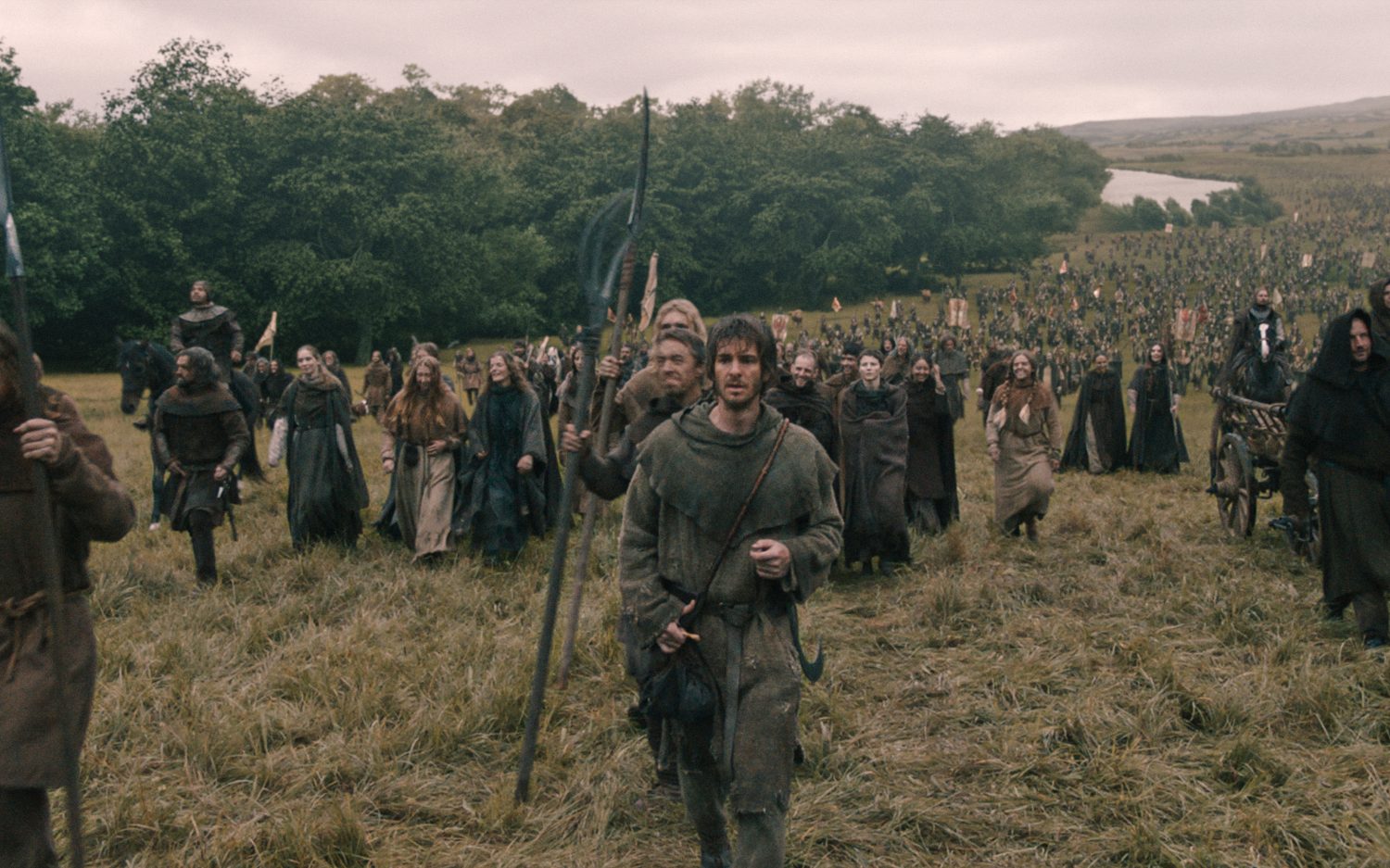
Andrew Garfield in a scene from “The Uprising.” Associated Press / Courtesy of Focus Features
Full access isn’t far.
We can’t release more of our sound journalism without a subscription, but we can make it easy for you to come aboard.
Get started for as low as $3.99 per month.
Current WORLD subscribers can log in to access content. Just go to "SIGN IN" at the top right.
LET'S GOAlready a member? Sign in.
Rated R • Theaters
Hollywood in 2026 appears to be going back to some of its old genre mainstays. Project Hail Mary gave us optimistic sci-fi. The Odyssey gave us epic myth. The Sheep Detectives gave us live-action family comedy. Now, with The Uprising, Hollywood seems to be trying to bring back the Braveheart-style historical epic. Unfortunately, this film is too confused about its own tone and message to match the satisfying power of that old classic.
The Uprising stars Andrew Garfield, a farmer known as “the Ploughman” who leads a ferocious rebellion against the tyranny of King Richard II and his oligarchs. After the plague sweeps through Europe, killing half the English population, Richard and his council of powerful men impose a brutal tax on the poorest members of society. Having had enough, the Ploughman leads other commoners on a march on London to seek justice and freedom for the land.
There are things to like about The Uprising, including its old-fashioned gritty sincerity to its characters and atmosphere. The Ploughman and the rebels are earnest and noble, and the villains are corrupt and vile. The horrors the rebels have to endure are taken seriously, and the film doesn’t interrupt the story with too many ironic jokes. The character arc of the antagonist King Richard—without getting too much into spoilers—is particularly effective in its tragedy.
The film also gives a surprisingly multifaceted portrayal of faith. We see the typical corrupt and hypocritical religious villains. But the heroes also have sincere faith. One of the main leaders of the rebellion is a priest who calls out oppression and pushes the fight for justice. He also pushes for some of its most bloodthirsty excesses—like the beheading of the king’s council.
It’s too bad The Uprising never finds its footing. Too many character moments are rushed through or contrived. Ploughman’s outburst of violence that starts the rebellion has little buildup, so we don’t feel the release of rage that he does. At the end of the film, the rebels believe the villains’ deception too easily for no other reason than the plot needs them to.
The movie can’t quite figure out a tone either. It starts by wanting to be a gritty loose retelling of the English Peasants’ Revolt. But as it goes on, it becomes increasingly comic-book-like. The final twist revealing the Ploughman’s true identity comes off as genuinely laughable. The movie also can’t pick a lane morally. Sometimes it seems to acknowledge the ethically complicated and even dubious nature of a violent uprising and its excesses. Other times it seems to romanticize and excuse it.
The movie is rated R for violence. Sometimes this violence is standard historical war epic levels, as in Gladiator or The Odyssey. Other times it shocks with a grizzly decapitation scene before returning to strategically cutting away for other decapitations. The film describes—but largely doesn’t show—sexual abuse as well.
The Uprising has enough old-school grim heroism to probably satisfy genre fans. But its muddled morals and tone mean that in a year of good options for a trip to the cinema, this is one you can pass on.

Please wait while we load the latest comments...
Comments
Please register, subscribe, or log in to comment on this article.