
The story of bookselling
BOOKS | The volatile industry that helped shape the world
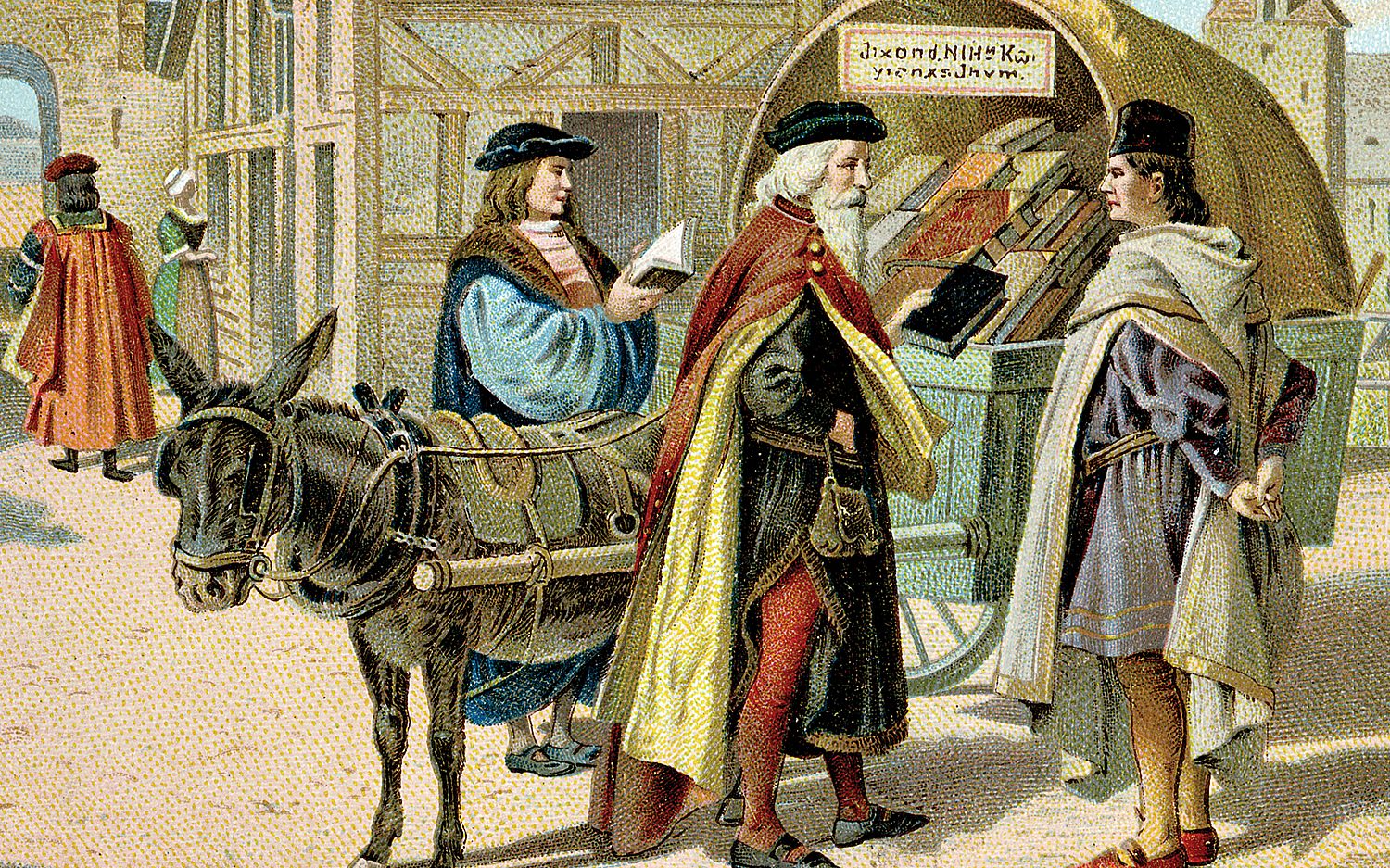
Print Collector / Getty Images
Full access isn’t far.
We can’t release more of our sound journalism without a subscription, but we can make it easy for you to come aboard.
Get started for as low as $3.99 per month.
Current WORLD subscribers can log in to access content. Just go to "SIGN IN" at the top right.
LET'S GOAlready a member? Sign in.
Andrew Pettegree’s The Bookshop (Basic Books, 320 pp.) arrives at an interesting time. Books about bookstores have perhaps never been so popular. Cozy mysteries set inside bookstores are a hot commodity, as are romances and Christmas stories. Meanwhile, celebrity book clubs, Instagram, and BookTok have shaped a book-centric zeitgeist that, in theory, should be good for booksellers. It’s cool to be the kind of person that reads, or at least the kind of person who likes books as design elements. This is good for booksellers, right?
Well, as Pettegree explains, the history of bookselling is volatile, and while the long view suggests much about which to be optimistic, it would be wise for sellers to be cautious. Pettegree traces that history from the dawn of Christendom to our contemporary age, examining the way history’s most dramatic events shaped the industry and, of course, the book.
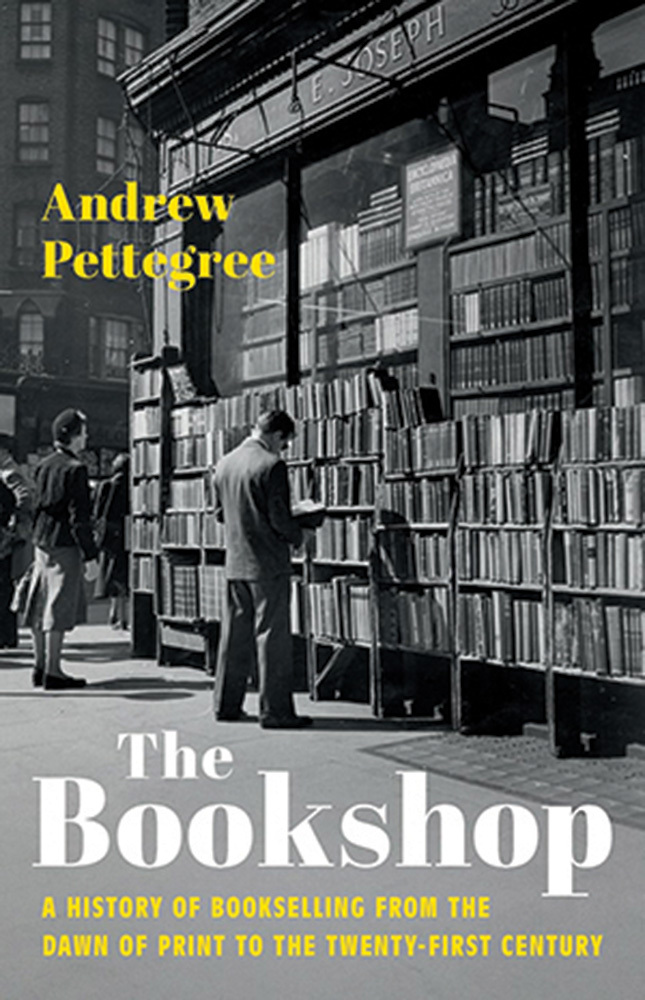
The Bookshop Andrew Pettegree
From the invention of the codex to the creation of the printing press, from the development of the first newspaper in the 1600s to the rise of the paperback 250 years later, from the birth of the antiquarian book market to the origin story of the lending library, Pettegree explores how the marketplace of books evolved—how books emerged as products central not simply to an international industry, but also to the invention of the modern world.
This book is about the derivation of the credit system upon which the publishing industry still runs and the distribution models that allowed books to be carried across the globe. It’s about the political and religious upheaval that determined which books were created, how they were manufactured, how they would be displayed, and by whom they would be read. It’s about inventors and entrepreneurs, capitalists and tycoons, kings and popes, censors and politicos, preachers and philosophers, smugglers and traveling salesmen.
Although it’s called The Bookshop, this book is less a history of bookshops and more about the process by which books are brought to market and the various challenges that bookmakers and purveyors have faced across centuries. It covers the rise of the industry superpowers, first in Italy and Spain, then in Germany and France, and eventually in Great Britain and the United States. And by extension it’s about the Spanish Inquisition and the Protestant Reformation, Napoleon and the World Wars, the Industrial Revolution and the modern banking system, railways and smartphones—all of which shaped how we engage with books.
The Bookshop is perhaps better suited for the history lover than the bookshop lover. It’s dense and detailed in the way of many great historical tomes, full of dates and data and political machination. This fascinating whirlwind looks into an industry that is ever-evolving and yet never fully leaves behind the early days, when a famous bibliophile like Samuel Pepys would browse for hours, quietly shuffling through an assortment of new titles, in search of something to carry him away. Presumably, he’d not have been a fan of BookTok.

Please wait while we load the latest comments...
Comments
Please register, subscribe, or log in to comment on this article.