
The silent Kennedy Center
WASHINGTON MEMO | An American icon for the arts falls into disrepair amid political squabbles
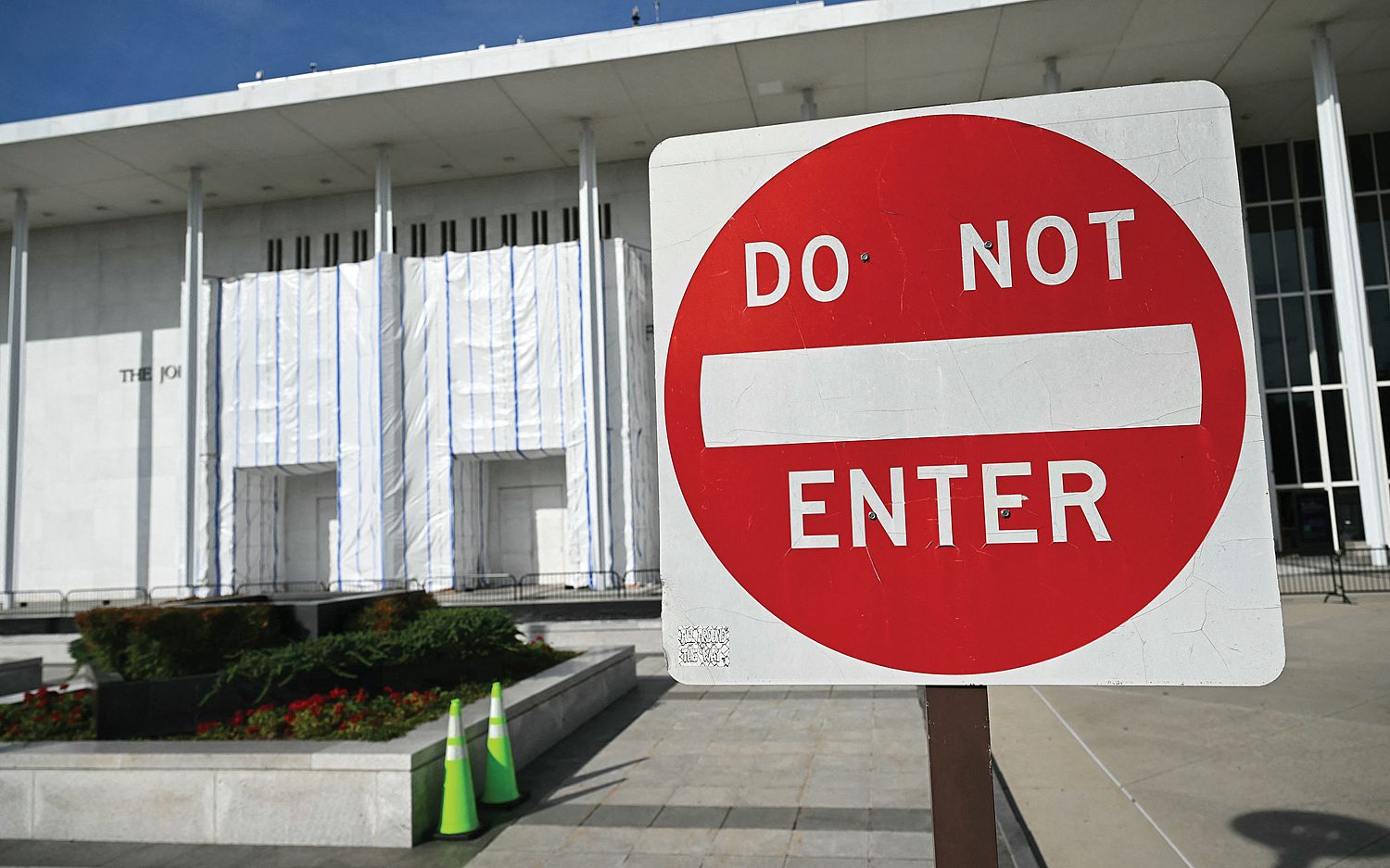
The Kennedy Center sits closed in October 2026. Saul Loeb / AFP via Getty Images
Full access isn’t far.
We can’t release more of our sound journalism without a subscription, but we can make it easy for you to come aboard.
Get started for as low as $3.99 per month.
Current WORLD subscribers can log in to access content. Just go to "SIGN IN" at the top right.
LET'S GOAlready a member? Sign in.
At an “American Pageant of the Arts” fundraising event in November 1962, Republican former President Dwight D. Eisenhower laid out his vision for a National Cultural Center. Five thousand people attended the benefit, including President John F. Kennedy and his wife Jackie. The artistic lineup on the main stage at the D.C. National Guard Armory included performances from 7-year-old cellist Yo-Yo Ma, comedian Danny Kaye, and the National Symphony Orchestra. During the event, Eisenhower beamed in from Augusta, Ga.
“I do hope that each of us that has heard and seen this performance this evening will take some inspiration and try to be a part, himself and herself, in making this center a true mecca for artists,” Eisenhower said. “One that will give everybody who visits Washington—whether from our own country or the far corners of the world—a true appreciation, a better appreciation, of America.”
Nearly 65 years later, the center Eisenhower imagined, later renamed the Kennedy Center, has become a political hot button. In early 2025, President Donald Trump replaced the institution’s leaders with allies who appointed him the first-ever president to chair the board. Since then, the center has experienced a political tug-of-war involving the adding and removing of Trump’s name from its façade, a planned Trump renovation, multiple lawsuits, and beginning in mid-September, its indefinite closure. But the building that presently reflects America’s political divide once represented a bipartisan effort to uphold the arts.
As president, Eisenhower initiated the creation of a new public auditorium in the nation’s capital. His Democratic successor, John F. Kennedy, continued the mission—kicking off a $30 million fundraising campaign with the 1962 benefit. After Kennedy’s 1963 assassination, President Lyndon Johnson signed legislation to rename the planned National Cultural Center the John F. Kennedy Center for the Performing Arts.
“Not only was it imagined originally by a Republican president, it was opened by a Republican president,” said Charlotte Canning, a theater historian at the University of Texas at Austin. “And Richard Nixon stayed away the opening night so that the Kennedys would not be overshown or challenged by a sitting president.”
According to a 1971 New York Times report describing the opening night, “The Nixon White House turned out in force … although the president will not appear at the center until tomorrow’s opening of the Concert Hall.”
On a sunny October day, I took a Metrobus from Capitol Hill to see the Kennedy Center for myself. A few security guards milled around the courtyard, while fencing encircled the silent marble structure. While the building remains closed, a shuttle bus carries visitors to the REACH—a 2019 expansion to the Kennedy Center that contains a 144-seat lecture hall, where all current on-campus programming is being held. The center’s five now-empty theaters total over 6,500 seats.
Over the years, the Kennedy Center has hosted performances ranging from contralto Marian Anderson and conductor Leonard Bernstein to soul singer Aretha Franklin. But the institution has also made art more accessible by providing free daily events since the 1990s, when the center established the Performing Arts for Everyone initiative, as well as through a variety of educational programs and partnerships with D.C. public schools.
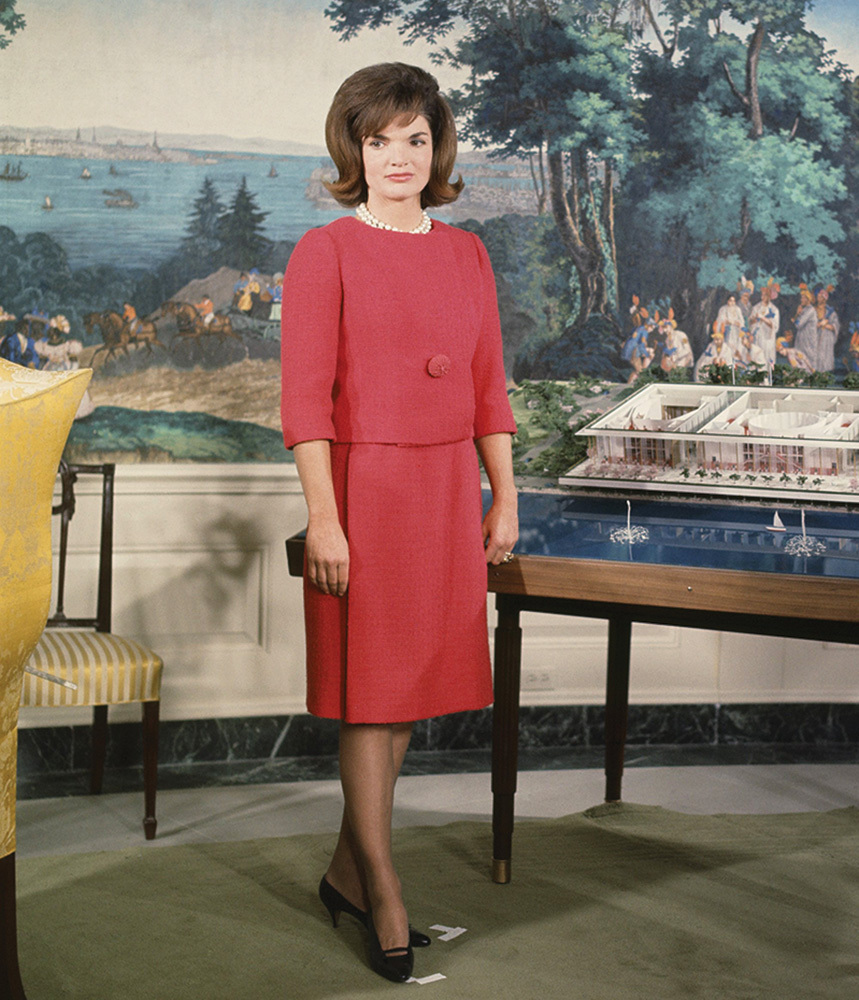
First lady Jacqueline Kennedy discusses plans for the new National Culture Center in 1962. Art Selby / NBC NewsWire / Getty Images
“The Kennedy Center is, certainly locally, one of the preeminent institutions that we have for art and culture,” said Josef Palermo, the center’s former curator of visual arts and special programming. “I think the footprint of the Kennedy Center certainly looms large over D.C., but all of America as well.”
Palermo, an artist and D.C. resident of nearly 20 years, was let go from his role at the Kennedy Center in March after 10 months at the institution. He is one of several staffers who lost their jobs amid the center’s legal back-and-forth. But before Palermo got his job, he had a vision for preserving the Kennedy Center’s future.
“I felt like going to work at the Kennedy Center during this time was a sort of artistic public service that I could do. Especially at a time when many people were publicly choosing to boycott the institution,” Palermo said.
After Trump assumed chairmanship of the center last year, several entertainers, trustees, and advisers cut ties with the institution. Then, last December, another slew of performers canceled after Trump renamed it the Trump-Kennedy Center. Ultimately, a court ordered the removal of Trump’s name from the building in May—but when the center closed for purported safety reasons on Sept. 16, Trump said it would not reopen until the U.S. Court of Appeals ruled on the name change.
“If the ruling is a negative one, which it should not be, and is not overturned by the U.S. Supreme Court, the Reconstruction and the Renovation of The Kennedy Center will not take place,” Trump wrote in a Truth Social post.
According to Palermo, it’s no secret the building has needed maintenance. But he argued renovations could have begun last year when Congress approved $257 million for Kennedy Center maintenance in the One Big Beautiful Bill Act.
While Trump’s level of interference with the Kennedy Center may be unprecedented, he is not the first president to mix art and politics. In 2021, President Joe Biden fired four Trump appointees in the U.S. Commission of Fine Arts.
“I think it’s in the interest of both parties to make sure that we clean this up and we stop the political ping-ponging of our public arts,” said Palermo. He suggested Congress require federal public arts boards to maintain a partisan balance.
Theater historian Charlotte Canning added that the Kennedy Center’s origin honored “one of the first moments ever where the United States government, and the country as a whole, was willing to acknowledge the importance of the arts and provide for them.”
Today, amid the political disputes, the nearly 1.5-million-square-foot building looms quietly on the edge of the Potomac River. During a heavy rainstorm in early September, a chunk of ceiling reportedly fell in the Grand Foyer—where artists, statesmen, foreigners, and everyday Americans have walked.
The Kennedy Center’s future is uncertain, but while the main theaters remain closed, art—from movie screenings to the Kennedy Center Opera House Orchestra—will continue down the street at the REACH. There, John F. Kennedy’s 1956 remarks to Harvard University students remain displayed on a glass wall: “If more politicians knew poetry and more poets knew politics, I am convinced the world would be a little better place in which to live.”
Please wait while we load the latest comments...
Comments
Please register, subscribe, or log in to comment on this article.