
Religion and human flourishing
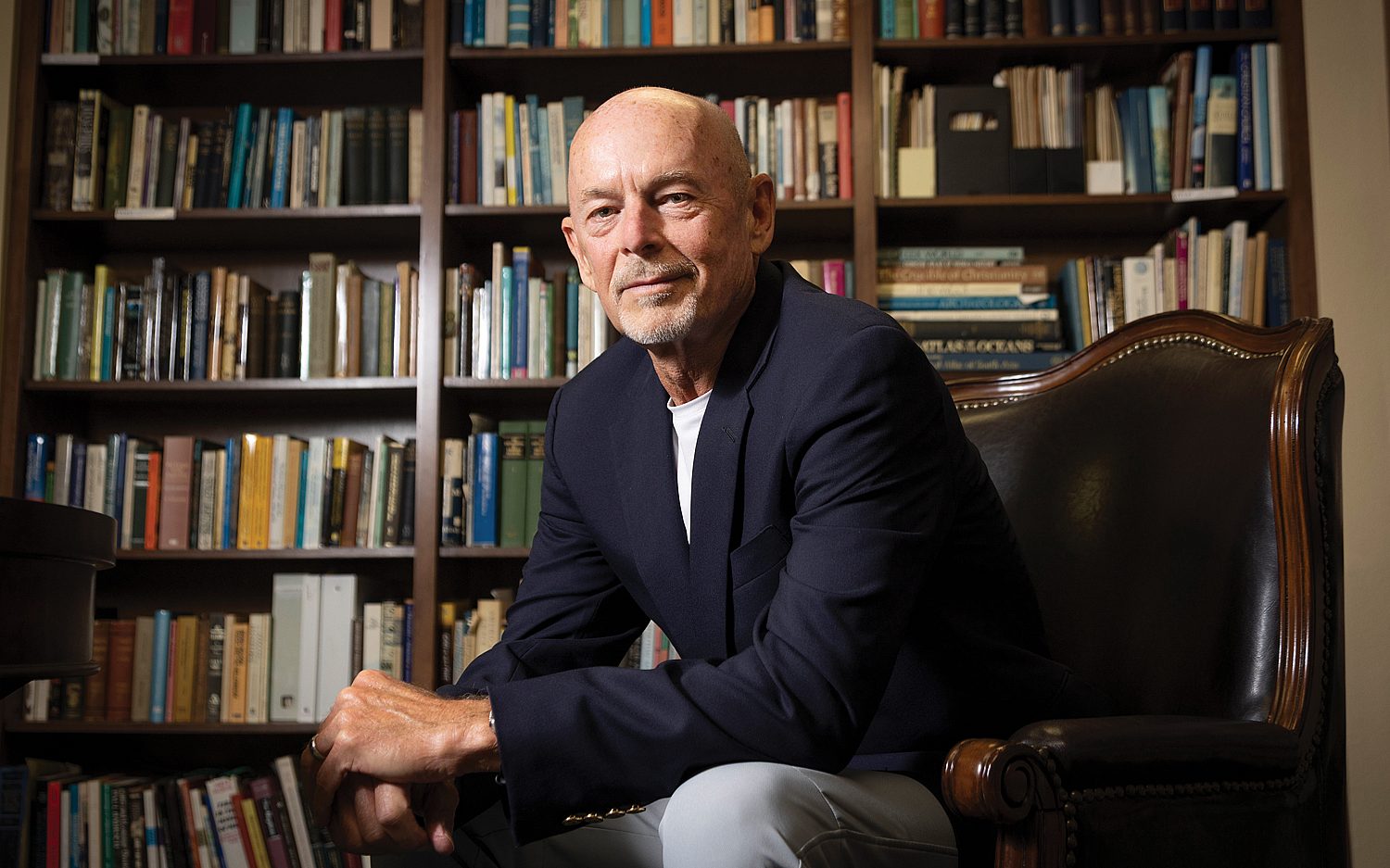
QUEST | Byron Johnson | Four books that shaped my thinking
Photo by Kim Leeson / Genesis
Full access isn’t far.
We can’t release more of our sound journalism without a subscription, but we can make it easy for you to come aboard.
Get started for as low as $3.99 per month.
Current WORLD subscribers can log in to access content. Just go to "SIGN IN" at the top right.
LET'S GOAlready a member? Sign in.
I was raised in a religious home, a fact that played a central role in my beliefs and practices as an adult. My faith journey would also influence my training as a social scientist. Being a Christian set me apart from my peers pursuing a Ph.D. I remember some classmates and professors were genuinely curious about my faith, but my worldview was constantly challenged. My advisers pushed back when I proposed writing a dissertation on religion, crime, and recidivism. I was told this would be a mistake and I should focus on something more traditional and more relevant (e.g., poverty, gender, or class and crime). If I chose to pursue the topic of religion and crime, they warned, it would likely be the death of my career.
My advisers were almost correct. Just months before I was scheduled to apply for tenure at the University of Memphis, I was terminated. I met with a university’s administrator to argue that my dismissal was not based on performance and that I would have gotten tenure if I were a Marxist and not a Christian. Surprisingly, he agreed.
Thankfully, my track record helped me to get hired quickly by another state university. After being dismissed by Memphis, I would go on to direct research centers at Vanderbilt University, the University of Pennsylvania, and now Baylor University.
A genuine hostility toward religion exists within higher education, and many within academia hold views about religion largely based on stereotypes, not data. This is one of the reasons historian Thomas Kidd and I wrote The Death of Religion? (B&H Academic, 256 pp.): to provide both empirical and historical evidence that religion continues to be vibrant despite the common narrative that paints the opposite picture.
During my career several key books informed my thoughts on these matters. First, the sociologist Rodney Stark had an enormous influence. For decades Stark was one of the most prolific scholars in sociology, covering topics such as rational choice and moral communities. Stark blazed a path that made it possible for me to pursue the overlooked topic of religion and crime reduction. Later, Stark shocked the field of sociology with his book, The Rise of Christianity (Princeton University Press 1996). Stark documented how the obscure Jesus movement became the Western world’s dominant religion in just a couple hundred years. Stark was not a believer at the time he wrote this masterpiece, but he believed in the data, and the data were undeniable. Little did I know that years later, Stark and I would be recruited at the same time by Baylor University, and that he would work with me until his death in 2022, building the Institute for Studies of Religion. Stark would go on to publish many important books on the positive role of religion, and many of these would provide compelling evidence that the influence of religion was ignored or misrepresented.
A second book is Harold Koenig’s Handbook of Religion and Health (Oxford University Press 2001, 2023) which synthesizes thousands of the most rigorous journal articles examining religion’s effects on various health-related outcomes. The book finds more than 80% of these studies report that religion has a beneficial impact on health. This book is the most cited of all references on religion and health.
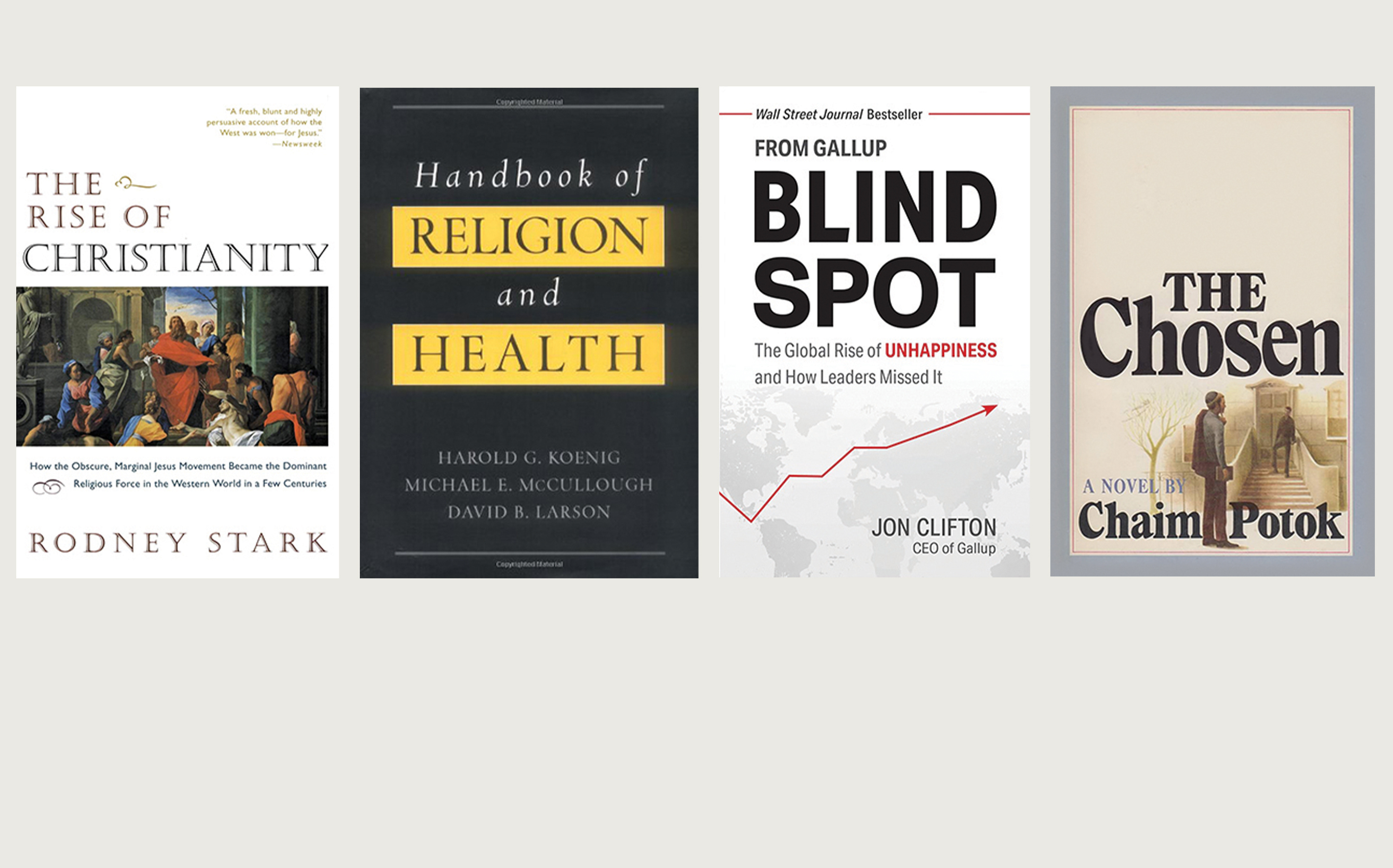
A third book is Jon Clifton’s Blind Spot (Gallup Press 2022), which documents the recent dramatic rise of unhappiness around the world. Clifton uses data from the Gallup World Poll, which since 2005 has been tracking annual data on a host of measures in more than 150 countries. Clifton shows that unhappiness—an index of anger, sadness, worry, stress, and pain—has been increasing for more than a decade. He finds that many leaders focus on measures like gross domestic product or employment levels when considering flourishing, while overlooking important variables like faith and well-being. Clifton’s Blind Spot, Stark’s Rise of Christianity, and Koenig’s handbook help us accurately assess the dynamic role of religion in human well-being.
One of my professors in graduate school was intrigued that religion was important in my life and yet I had chosen to pursue a Ph.D. within the secular academy. As a left-leaning secular Jewish academic raised in New York, he saw my upbringing and my future as representing two different worlds. He asked many questions about my faith and religious practices. Likewise, I was curious about his lack of faith. We became close friends. He saw me as an authentic religious believer, and I am certain many of the views he held about Christianity changed as a result.
One day my friend suggested I might be interested in the novel The Chosen (Simon & Schuster 1967) by Chaim Potok. I loved reading the book and began to read other novels by Potok, including My Name Is Asher Lev. Potok wrote about Jewish characters and how religious traditions often clash with the modern world. When I was recruited to the University of Pennsylvania in 2000, I reached out to Potok and was invited to meet him at his home. He subsequently agreed to serve on the advisory board of the research center I was directing at Penn. Potok understood that religion is important in society, and he became an unlikely champion for me.
Taken together, these books and authors have helped me to realize that data—both empirical and historical—supply a fuller, less biased understanding of religion’s role. This is why Thomas Kidd and I wrote The Death of Religion? Much of what we have observed and studied is simply incompatible with the relentlessly touted narrative of religion’s decline.
—Byron Johnson is the director of the Institute for Global Human Flourishing at Baylor University and is the author, along with Thomas Kidd, of The Death of Religion? Nones, Others, and the Flourishing of Faith

Please wait while we load the latest comments...
Comments
Please register, subscribe, or log in to comment on this article.