
Pushing the limits
Participation in dangerous sports is on the rise. What are these thrill-seekers really looking for?
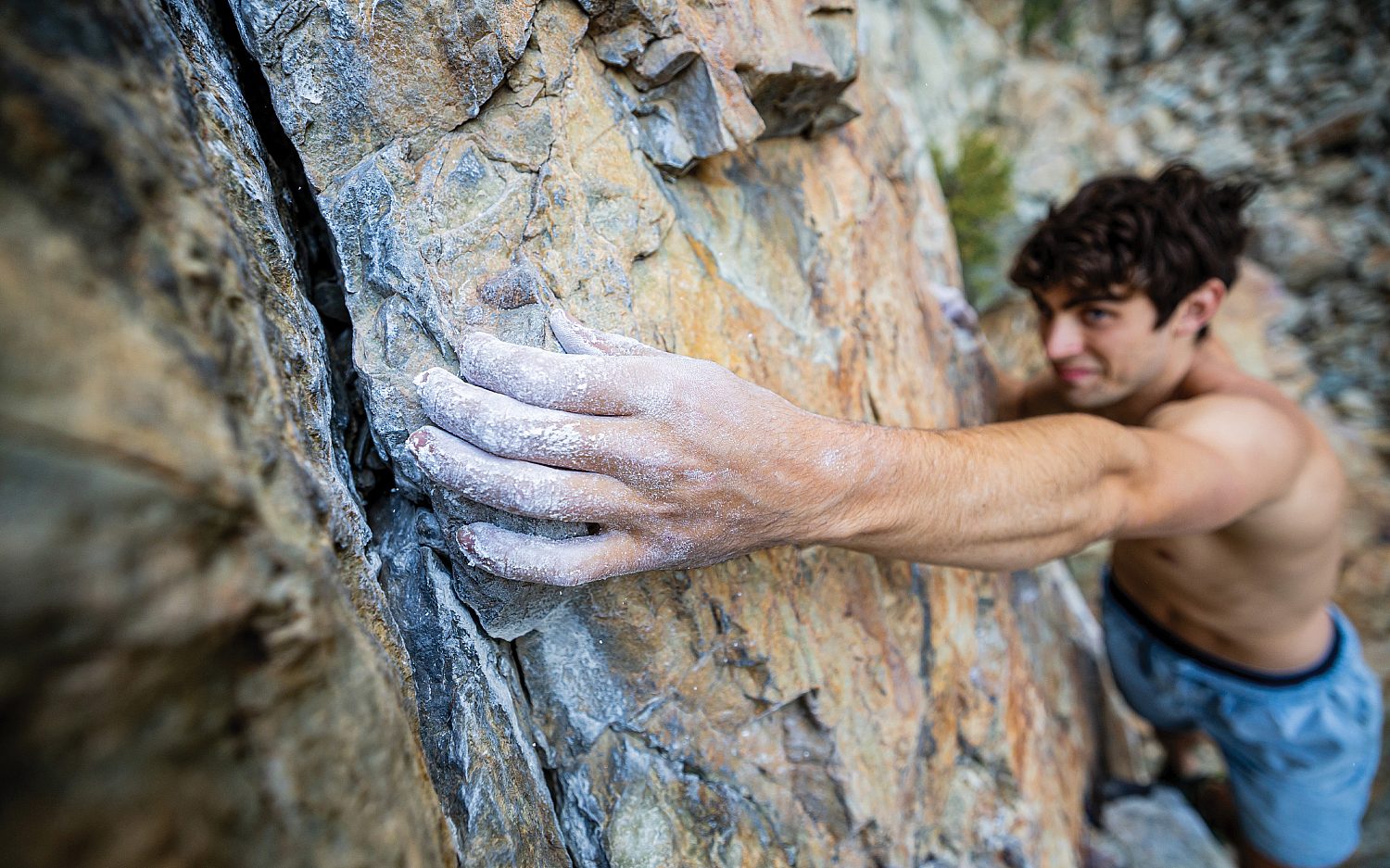
Lincoln Knowles, a 21-year-old free soloist, climbs Hollow Man in Big Cottonwood Canyon in Utah. Tess Crowley / Deseret News
Full access isn’t far.
We can’t release more of our sound journalism without a subscription, but we can make it easy for you to come aboard.
Get started for as low as $3.99 per month.
Current WORLD subscribers can log in to access content. Just go to "SIGN IN" at the top right.
LET'S GOAlready a member? Sign in.
Lincoln Knowles was hanging off a mountain when a falcon dove at his head, startling him. One wrong move could send him plummeting nearly a thousand feet. So he clung to the rocks by his fingertips and tried not to flinch as the bird swooped close.
“It’s really loud, and I’ve never been in this situation before,” Knowles recalled. “I’m just trying to stay calm, trying to stay close to the wall.”
Knowles films his free solo climbs, with only hands, feet, and chalk holding him to the mountain—no ropes—and posts the clips to social media. One commenter put his skepticism bluntly: “The job market is not thaaaaaaat bad.” But it seems there’s something inspiring about watching a man flaunt death with ego and attitude. On Instagram, his main platform, Knowles has amassed more than 130,000 followers for stunts like “Free Soloing a Harder Route Every Day Until I Fall.” (He hasn’t.)
Knowles is just one of many athletes taking sports to potentially dangerous extremes. Activities once considered reckless, fringe, and deadly are drawing millions of views on social media. Most participants aren’t paid, instead spending thousands in personal cash on gear, travel, and medical expenses. But they starve, hallucinate, dehydrate, shatter, and suffer anyway, puzzling outsiders and chasing a dream that’s tough to pin down.
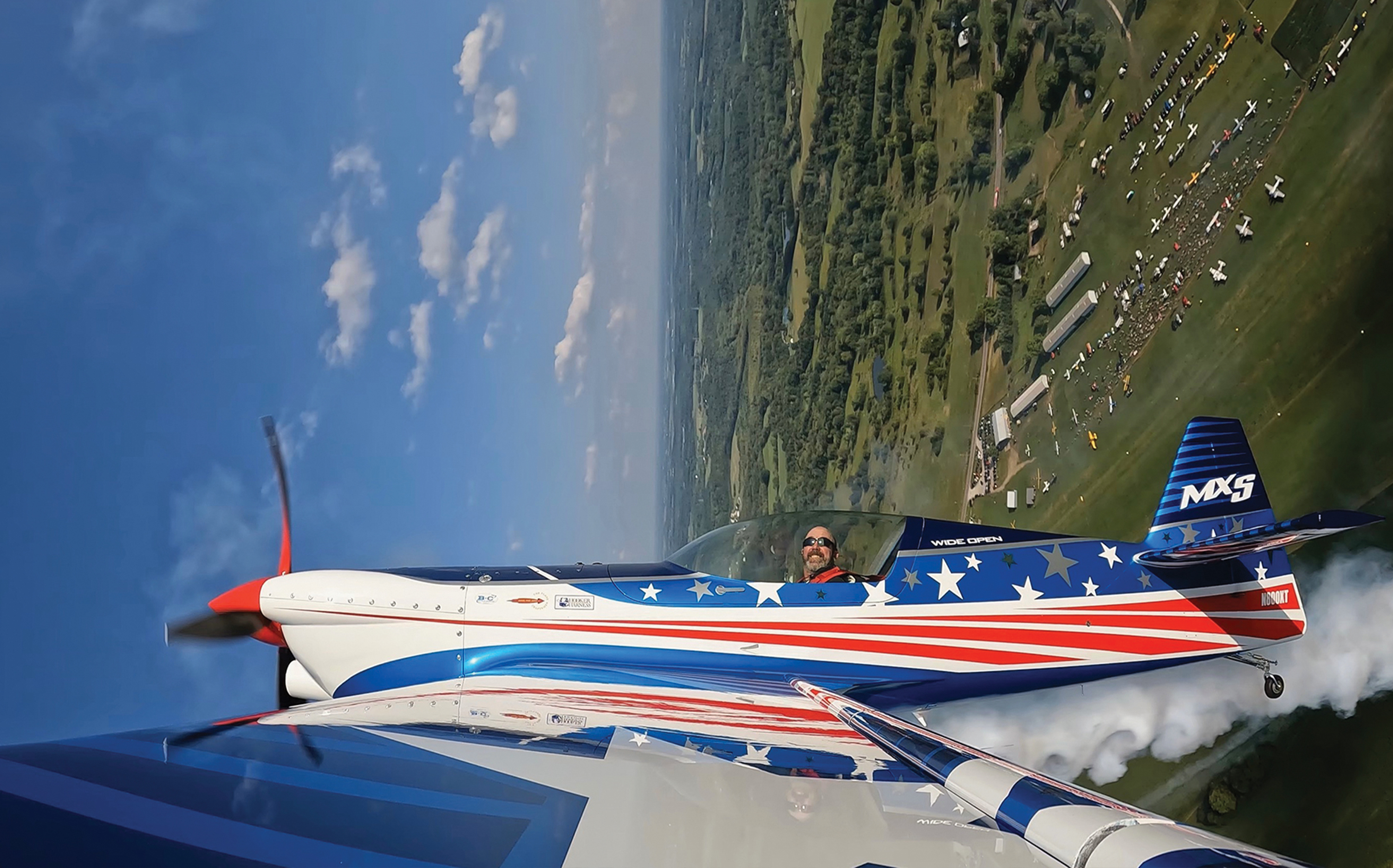
Brett Hunter defies gravity in the plane he flew in the 2013 and 2015 World Aerobatic Championships. Photo by Mike Barden
SO-CALLED “EXTREME” SPORTS are high-risk, high-reward. What that looks like in practice depends on the person and their goals, said Christopher Netley, a sports physician chiropractor at Hillsdale College.
“I would say football is an extreme sport,” Netley said. “Those guys are potentially destroying their bodies and their minds to play a game.” That’s not much different than someone in their 40s who’s never run deciding to conquer a marathon, Netley added.
From the outside looking in, it’s easy to categorize something like Knowles’ free solo climbing as an “extreme” sport. Risk: death. Reward: bragging rights and an adrenaline rush unmatched by anything the ground can offer. But Knowles doesn’t see it that way. Before he ditched his ropes, he was already climbing with bad gear and not enough of it. Now, he climbs with less weight and more preparation. He argues that’s actually safer.
Another wrench in the definition: Not every athlete sees his sport as a sport at all—or himself as an athlete.
Brett Hunter didn’t think he had a shot at college sports. So he took up flying. During one of his lessons, his instructor taught him how to recover the plane if he lost control. “What we want to do is avoid spins,” the instructor warned. Hunter thought: “Why do we want to avoid these? This seems like a good idea.”
That need for spin took him all the way to the World Aerobatics Championships in 2015, piloting a single-seat MXS aircraft that could subject his body to forces up to 10 times the strength of gravity. Remaining conscious under so much stress requires exceptional lower body, core, and cardiovascular conditioning. Hunter still doesn’t think of himself as an athlete.
“Aviation can be an art, a passion, a science, a discipline,” Hunter said. “I used to try drawing and painting stuff when I was younger, and creating. So it scratches that creative edge.”
But like other extreme sports (and unlike painting), aerobatics comes with significant risks. While the sport itself has a low accident rate, 85% of accidents that do occur are fatal, according to the Aircraft Owners and Pilots Association. Hunter has had things go wrong—running out of fuel midair, breaking an engine mount. One time, the aileron on the back edge of the wing detached and Hunter’s plane began to roll. He had a parachute, and that day he almost used it.
“I had my hand on the canopy release and one on the seat belt,” Hunter said. But he was close enough to the airport to land the plane safely. “It was fine in the moment, but afterward, man, the adrenaline hit me.”
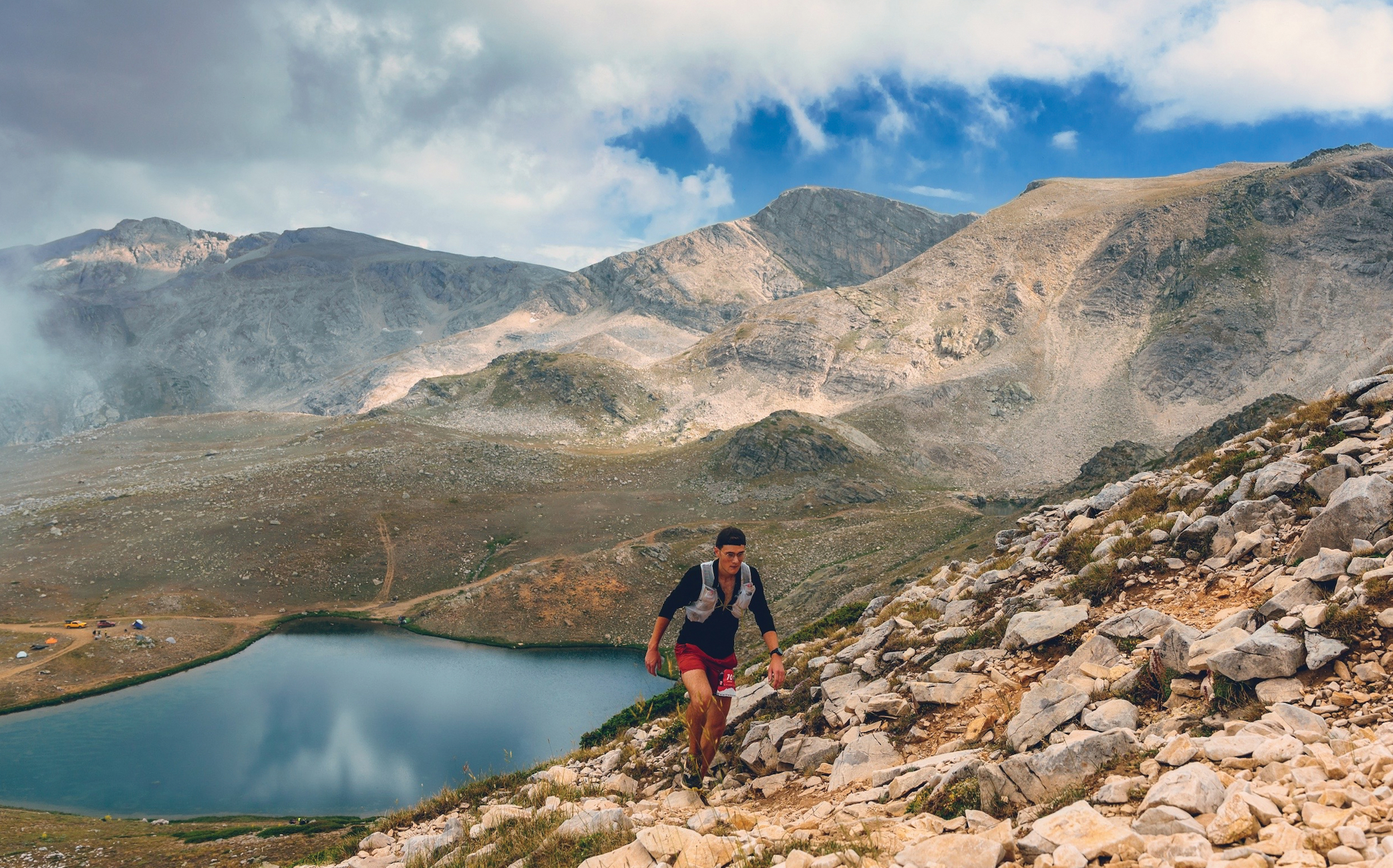
Oliver Bieser on a steep ascent en route to winning the Uludağ Premium Ultra Trail in Bursa, Turkey, in 2025. Photo by Egemen Dağıstanlı
OLIVER BIESER often fields questions he doesn’t like. His least favorite: “Don’t you know how bad running is for your knees?”
In high school, Bieser was “the fat kid.” One day when he was 17, he took off from his front door and ran 12 miles—nearly a half-marathon—without any training. Now in college, he’s a champion ultramarathoner, running up to 100 miles in a single race. When people ask about his knees, he’s always tempted to ask a question of his own: “Don’t you know how bad sitting on the couch is for your soul?”
“I don’t think I would say that I run ultras because they’re fun at all,” Bieser added. “The thing I always say is that they bring me joy, not happiness. They’re fulfilling. They are not fun.”
Bieser, Hunter, and Knowles each expressed his own clear goal. But there are easier ways to achieve most of the things they’re striving for. All three athletes know it, and all three struggled to articulate why they’ve picked the way of maximum suffering.
“I get this sense that this is what my body is meant to do, and it feels like I’m fulfilling some sort of purpose,” Bieser said. “But I think it’s also running away from mediocrity, running away from an unhealthy lifestyle, a version of myself that I fear I would be if I wasn’t running.”
There’s a joke among ultrarunners that everybody is running from something, but some go farther than others. When the brain turns dreamlike from runner’s high and glucose deprivation, mental struggles pale beside the primal, physical battle to stay alive. The risk of heatstroke seems easier to confront than the risk of spiraling into old habits, like addiction or a bad relationship. Anything left at home is outweighed by more immediate dangers.
“I got attacked by dogs during a 100k in Turkey, and that was definitely a setback,” Bieser said. “I ended up winning that one anyway. In [another] race, I started to hallucinate pretty bad. … There was this ditch along where we were running, and I was fully convinced that there were hundreds and hundreds of frogs in the ditch.”
Hallucinations are common among ultrarunners, typically caused by poor sleep and the sensory deprivation of darkness. Hunger and dehydration combine to slow down the brain. Ultrarunners can burn a shocking 11,000 calories per day, more than the body can digest, leaving them in a sustained calorie deficit despite chugging sodas and energy gels.
Studies on the health benefits of ultrarunning show mixed results. On the one hand, to researchers’ surprise, ultrarunners live longer on average than nonathletes. On the other hand, ultrarunners may be at higher risk of cardiac scarring, lung damage, kidney failure, and acute bone or muscle injury.
“Anyone who thinks that running 100 miles is making them fitter, healthier—100% it is not,” Bieser said. “All I do is run and eat. I don’t think about how it feels.”
Despite the drawbacks, Bieser describes ultrarunning as “really great.”
“I recommend it to everyone,” he added.
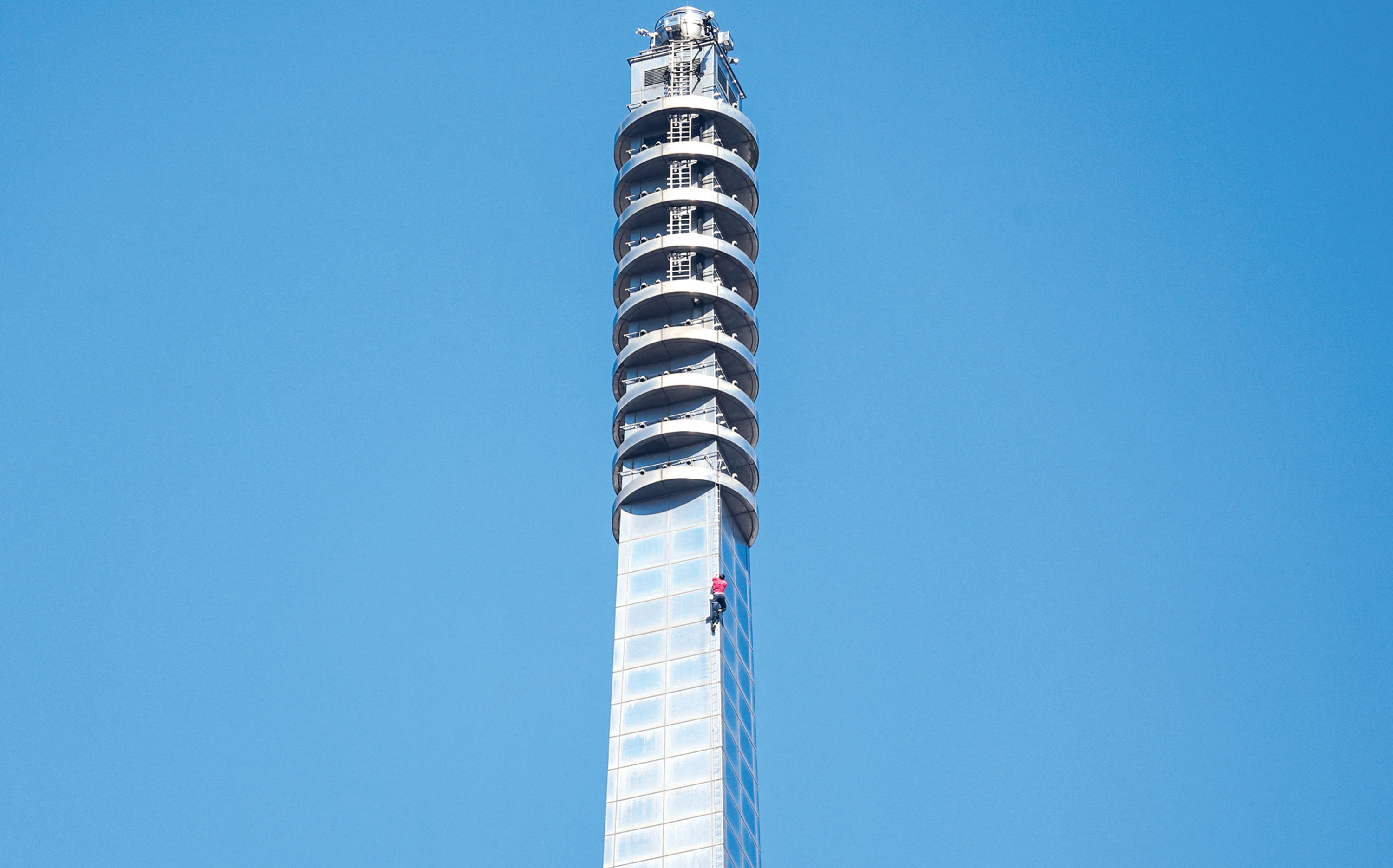
Alex Honnold free solos to the top of the tower on the Taipei 101 skyscraper in Taiwan. I-Hwa Cheng / AFP via Getty Images
IN 1996, more than 100 people summited Mount Everest. Some of the climbers lacked high-altitude training and had shown signs of oxygen deprivation even on the lower slopes. “Everest tourism” was attracting ill-prepared celebrities, journalists, and rich adventurers who wanted the adrenaline rush they read about in books and saw on TV.
So they climbed. And in one summer storm, eight of them fell. The 1996 season brought Everest’s highest death toll, an early warning of how dangerous it could be to publicize athletic achievements not meant to be imitated.
Climbers are the ones most often blamed for inspiring copycats. Deaths in this sport are often gruesome, and no amount of experience guarantees safety. In August, climber Jake Whisenant died in the Sierra Nevada just months after completing a record-setting climb of El Capitan. Free solo climbing—the way Knowles does it—is the deadliest form of a dangerous game. And that draws an audience.
In January, free solo climber Alex Honnold summited the Taipei 101 tower in Taiwan on a live Netflix broadcast. The stunt drew both awe and backlash. Climbing magazine acknowledged Honnold’s polarizing legacy. It also ran a piece calling Knowles a “clown” whose social media clips would get inexperienced climbers killed. That stuck with him. Recently, a fan came up to him in the gym and asked for tips on getting into free soloing. Knowles wasn’t sure how to respond.
“It’s kind of hard to deal with knowing there’s at least a couple people who are going to get in over their heads,” Knowles admitted. “If you’re hyper-motivated to go free soloing, I’m not going to be able to stop you. So I might as well just tell you the best way to do it safely.”
Some argue the desire for safety has obliterated valuable lessons learned from taking calculated risks. Almost every playground in America used to include a set of monkey bars. Nowadays, where they still exist, they’re often low to the ground and surrounded by hefty padding. Years of lawsuits have stripped childhood of one of its hallmark risks—and Hillsdale’s Christopher Netley says the same is true for adults: “There’s too many safety nets. You do you. And if you like it, keep doing it. And if someone watches it and they’re not ready, and they go do something dumb, then maybe you did them a favor. Maybe they learned the hard way, if they survive, that they should be more prepared.”
Netley is an athlete, too. After years spent in soccer, MMA, triathlons, and the military, he knows firsthand the intoxicating drive of standing at the top of a mountain or punching down an opponent or high-fiving squadmates after a brutal workout. He lets his kids play on the monkey bars so they can feel it too.
“I don’t think too many people regret doing stupid things and getting injured,” Netley said. “A lot of people regret not trying.”
Netley compares it to the biblical parable of the servant whose master left him with one talent. Rather than investing it, the servant buried the money, angering his master who found his gift unused.
If you have the talent for extreme sports, “you should go out there and do it,” Netley said. “But wear a helmet.”

Please wait while we load the latest comments...
Comments
Please register, subscribe, or log in to comment on this article.