
Power to the people
THE FORUM | Former Democratic strategist Evan Barker on America’s political future
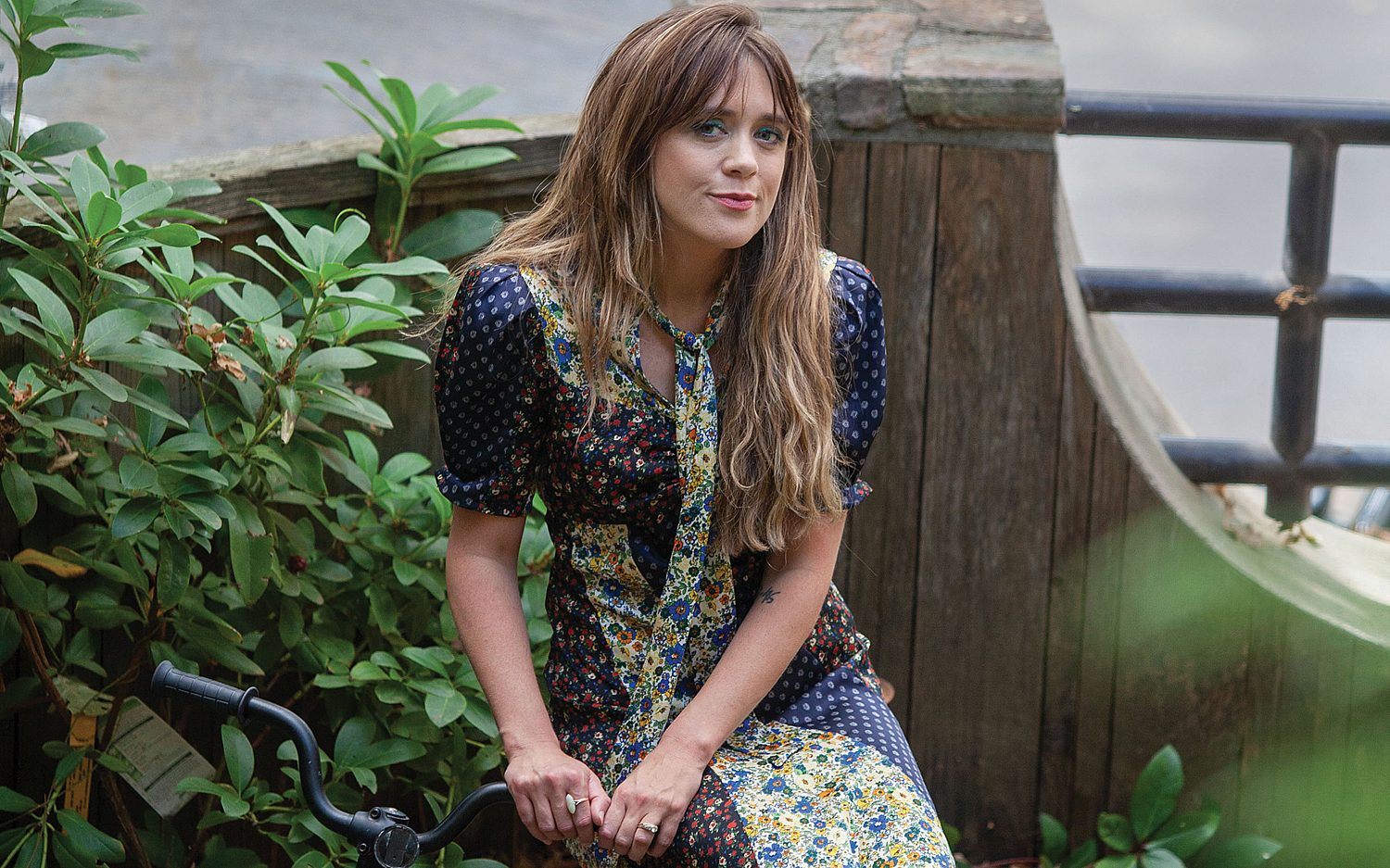
Evan Barker Photo by Gary Fong / Genesis
Full access isn’t far.
We can’t release more of our sound journalism without a subscription, but we can make it easy for you to come aboard.
Get started for as low as $3.99 per month.
Current WORLD subscribers can log in to access content. Just go to "SIGN IN" at the top right.
LET'S GOAlready a member? Sign in.
Evan Barker, 35, cut her teeth in Democratic politics in high school as an intern for former President Barack Obama’s campaign. Due to a rare genetic lung disease, Barker spent most of her childhood in and out of hospitals, and she believes Obamacare saved her life. Her dedication to Democratic ideals led to a short but eventful political career, from campaigning to fundraising and consulting for far-left candidates.
Barker’s memoir, Nothing Left: Confessions of a Democratic Operative, tells the story of how the party’s elitism and the ascent of democratic socialism and identity politics led to her public exit.
You come from a union family in Kansas City and rose to the top of a party that brands itself as the champion of working people. But once in the inner sanctum, you found you were a rarity. I was a first-generation college student. My co-workers’ parents were often Democratic donors. They were lawyers. They were professors. They were NGO leaders. They came from extremely privileged backgrounds. I would say most of them have never been to the middle of the country. It was baffling to me how at the same time they would cloak themselves in the cause of the working class, so much of what they were pushing for didn’t speak to my family members.
What was it like to have doubts about the party, but still be expected to stay in line and raise a lot of money? Especially in the years of 2020 and 2021, I’d go to meetings and constantly be expected to signal disdain for other white people, especially men. I ended up going down sort of a rabbit hole on the internet. I would listen to right-leaning podcasters. It was a way for me to process some of the absurdity that I was dealing with every single day. There was a lot of cognitive dissonance. Sometimes I would push back on my co-workers a little bit, too. When I would bring up polling, the visceral reaction from my co-workers was pure disdain. They just wanted me to shut up.
Why was it so hard to leave? It was my entire identity. It was my life. Part of the reason that I became so wedded to the Democratic Party is because the preexisting conditions clause in the Affordable Care Act changed my life. I was able to go to college because I could get health insurance, and I didn’t have to go straight to work to get it. I grew up watching my grandpa in the picket line. The first book I ever read was about President Bill Clinton. I grew up knowing I was a Democrat … a true-blue, old-school Democrat. It was also my only professional experience. Before I worked in politics, I mostly just waited tables. If something is so central to who you are, it’s hard to fully accept that organization has changed so much that you have no choice but to accept it’s changed and it’s not for you anymore. I’m still sort of dumbstruck. It still feels like a blur.
How did marriage and motherhood factor into your growing disillusionment with progressive politics and your decision to leave? For years, I saw men, white men especially, demonized on almost a daily basis. Then I had a little baby boy. It really reframed my political perspective. I was already feeling disillusioned, and then when I had him, I was like, this is the most important thing in the world to me. He’s sweet and precious and innocent to the world now. But someday he’s going to grow up, and he’s going to be viewed as public enemy No. 1 by my colleagues, by the progressives. It freaked me out. If they’re already this strong now, imagine what it could be like 20 years from now as he becomes an adult, and they acquire even more power, and maybe some of their ideas are codified into law.
It also woke me up to some of the gender and the trans ideology. I had never really paid a lot of attention to that issue before I became a mom. I thought it was something, no offense, that right-wingers were obsessed with as a way to drive anger amongst their base. But then I started taking my son to libraries and looking at all the books available to him. I went to his pediatrician appointment, and I’d see signs on the walls of the doctors’ offices advertising gender affirming care for children ages 1 to 17. That completely freaked me out. It’s something we still have to deal with. My son came home yesterday from preschool and told me that one of his classmates has three dads. It confuses children and takes away my ability to teach my son and introduce things to him about the world. It’s being politicized and pushed onto him at a very young age.
Then also the abortion issue—going to the 2024 Democratic National Convention and seeing abortion vans outside and free tacos for anyone who would get a vasectomy. I’m like, being a mother is amazing. Having children is amazing. It’s the biggest gift.
You describe yourself now as independent. What are you looking for in a candidate? I think the ideal candidate would be someone that wants to focus on expanding access to healthcare to Americans while also protecting our borders and taking the issue of immigration seriously and trying to build an industrial policy that brings manufacturing and jobs back to the United States. If somebody could represent all three of those pillars, while also bringing common sense on issues like gender, race, and policing, that party could have a ruling coalition for a generation. I think the Republican Party is a little bit closer at this point to potentially doing that.
Some studies show younger voters increasingly identify as politically independent. Do you agree? I think that my views actually represent the silent majority of this country. I think the future is going to be less about political parties in general and more about à la carte beliefs. I say this in my book, but I also think the future, whether you’re left or right, will probably be populist. You can either have a more Zohran Mamdani version, or you can have a more Donald Trump version or JD Vance version. I think people are less interested in parties and they’re more interested in politicians as people. Part of that has actually been because of the realignment that we’ve seen happen over the last 10 years between the two political parties that has been ushered in by Donald Trump and him breaking orthodoxy on some issues.
Your book addresses the socialist movement’s claim that they represent the working class. What are people missing about this talking point? What is so crazy is that they cloak themselves in the cause of the working class, but they get elected by overly educated, privileged college kids. That is who supports them. From my experience with my family, the working class wants a floor to exist. They believe in hard work. They believe in earning what they have. They don’t have a disdain for billionaires the way the far left does. The left has this pathological obsession with oppression, status, identity, and being the heroes of marginalized communities. So, they will never turn their backs on this cause.
Please wait while we load the latest comments...
Comments
Please register, subscribe, or log in to comment on this article.