
On writing “real” books
CHILDREN’S BOOKS | Two prominent children’s authors justify their profession
FatCamera / Getty Images
Full access isn’t far.
We can’t release more of our sound journalism without a subscription, but we can make it easy for you to come aboard.
Get started for as low as $3.99 per month.
Current WORLD subscribers can log in to access content. Just go to "SIGN IN" at the top right.
LET'S GOAlready a member? Sign in.
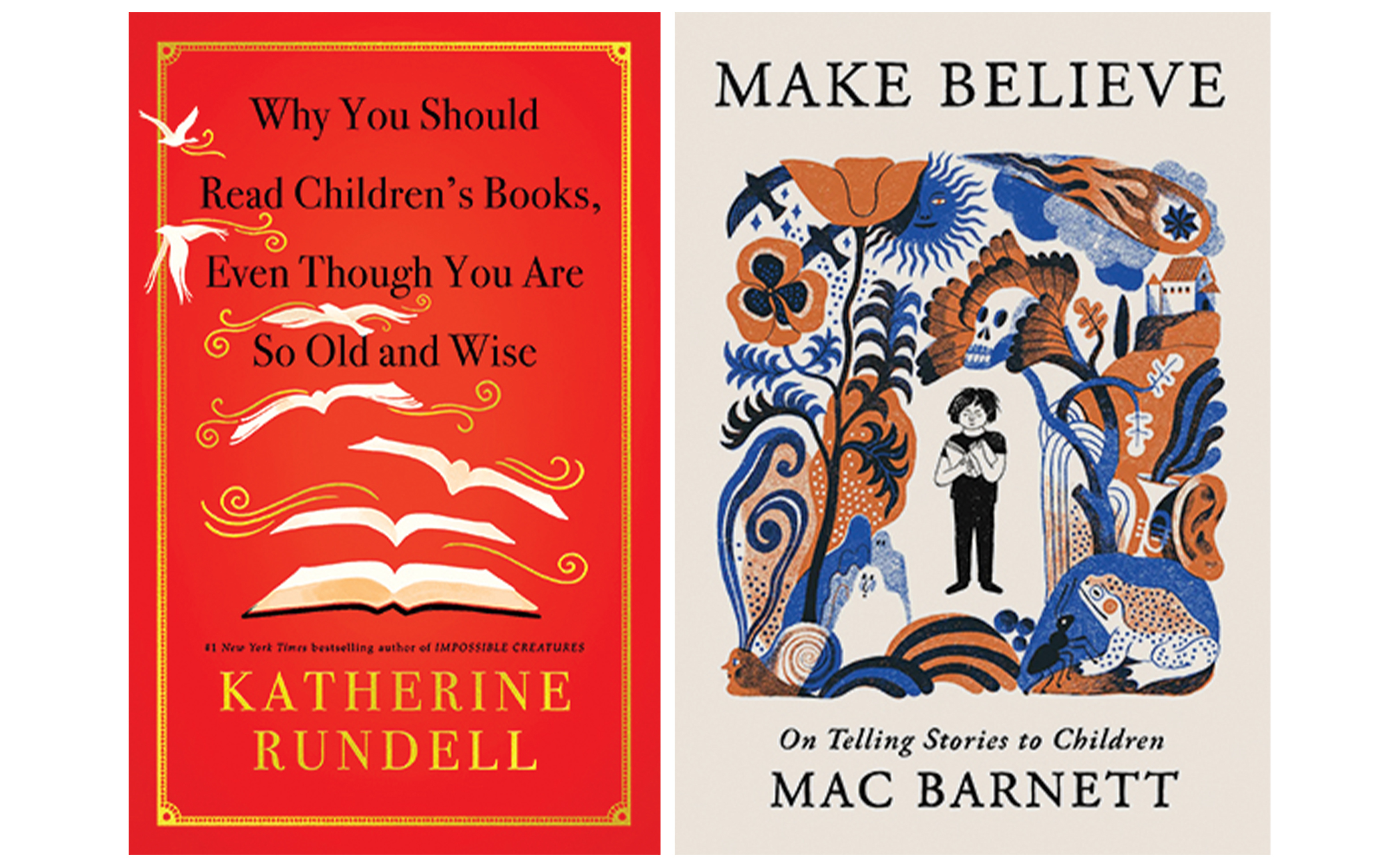
“There is a peculiar smile that some people give me when I tell them what I do,” writes Katherine Rundell. The English author and academic has won awards for her scholarly work on John Donne but is primarily known for writing children’s books. The “peculiar smile” suggests to her that writing for children might be a quirk, or hobby; certainly not a high literary calling. She smiles back in the title of her pocket-sized book, Why You Should Read Children’s Books, Even Though You Are So Old and Wise (Knopf Books for Young Readers, 80 pp.).
The response Mac Barnett sometimes gets is even more blunt: “When are you going to write a real book?” In Make Believe: On Telling Stories to Children (Little, Brown and Co., 112 pp.), Barnett takes on the assumption that writing for children must be easy: Just decide on a moral, create role models, add fairies or talking animals (because all kids like fantasy), and make it rhyme.
Perhaps writing for children is easy for a writer who doesn’t understand children. But one essential for a children’s author is to remember what it’s like being a child. Rundell was slow to read, but once she caught on, “I read with a rage to understand.” Her novels, most recently the popular Impossible Creatures fantasy series, present characters who live with a similar passion as they explore the great mystery, beauty, and challenge of simply being alive.
Barnett, best known for picture books and humor novels, fiercely defends his readers, who are “perceptive, flexible, and open-minded. They have to be. Childhood is a long series of experiments.” Many of his observations are likewise perceptive, especially when frowning at moralistic fiction: “Our only duty [as authors] is to tell good stories … to tell the truth about what it means to be a human in the world.” Rather than role models, the best writers create heroes: “A hero serves the story; a role model serves society.” Kids can tell when they are being lectured; a good author entrusts the story to the child to make his own personal meaning.
But Barnett sometimes makes unfavorable comparisons with “dead dull finished grownups.” He can be as guilty of generalizing as those stodgy adults, for children are just as varied: some inquisitive and imaginative, others cautious and literal. For Rundell, the dividing line between generations is more nuanced. Adults have wisdom to teach and values to share: “Those who write for children are trying to arm them for the life ahead with everything we can find that is true … to remind them that there are, and always will be, great, sustaining truths to which we can return.”
Both authors are refreshingly apolitical while vindicating their profession. Barnett implies that the left is at least as guilty of didacticism as the right, and Rundell ignores politics altogether. Both share valuable insights about children and the potential of what they read, but the best word may belong to Rundell: “Children’s books are not a hiding place; they are a seeking place.”

Please wait while we load the latest comments...
Comments