
Literary icon’s rocky road
BOOKS | A look at the enigmatic Cormac McCarthy
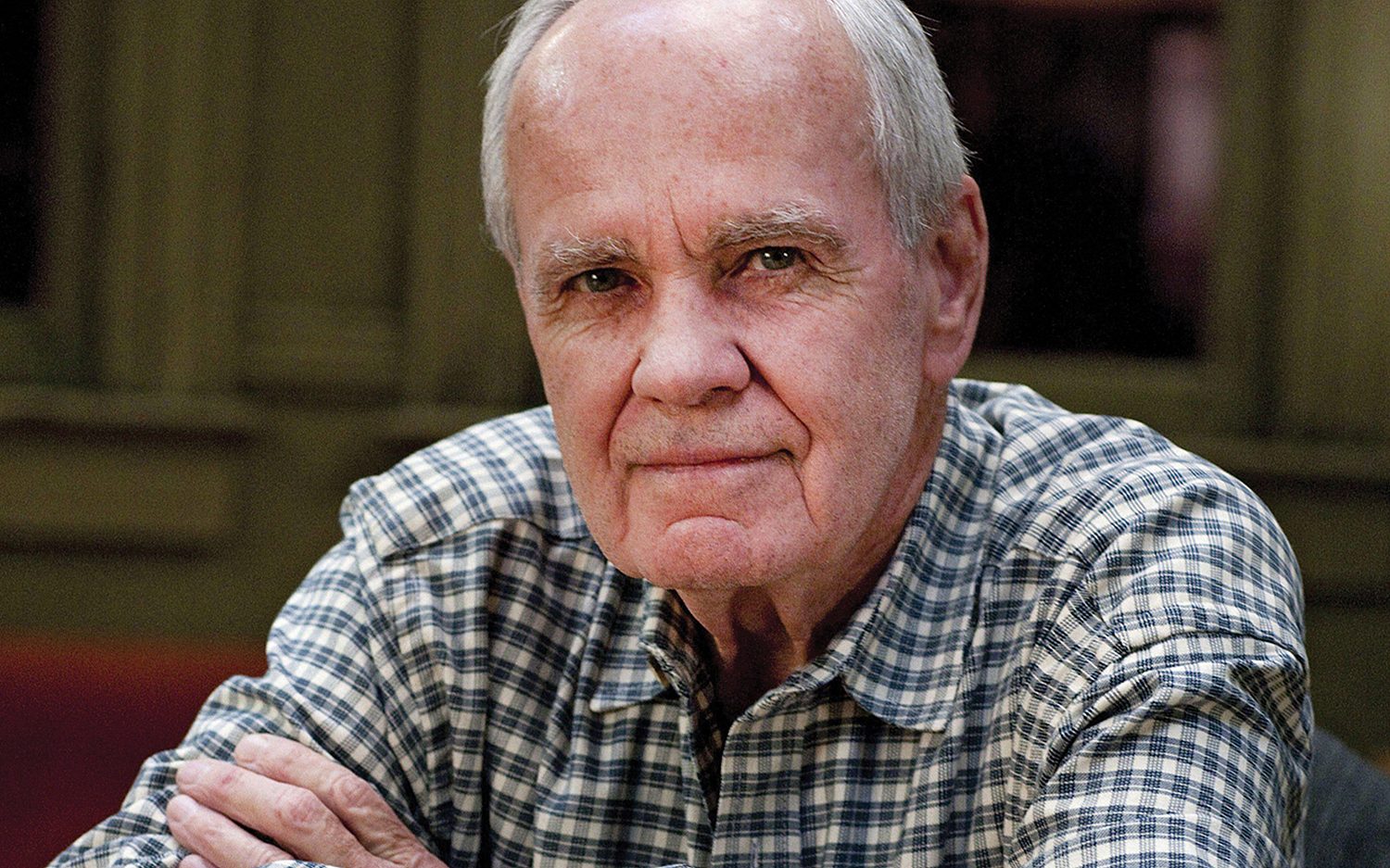
Cormac McCarthy Dawn Jones / Professor Productions / Album / Alamy
Full access isn’t far.
We can’t release more of our sound journalism without a subscription, but we can make it easy for you to come aboard.
Get started for as low as $3.99 per month.
Current WORLD subscribers can log in to access content. Just go to "SIGN IN" at the top right.
LET'S GOAlready a member? Sign in.
The American novelist Cormac McCarthy (1933–2023) was a well-known public figure about whom very little was known. He formed a mythic and nomadic image, like the loners and outlaws in his books. A disturbing glimpse into his life came in 2024, when Vanity Fair revealed his relationship beginning in the 1970s with a teenager named Augusta Britt. Were we better off not knowing much about McCarthy after all?
Tracy Daugherty’s Cormac McCarthy: A Legacy Revisited (St. Martin’s Press, 528 pp.) provides the first comprehensive look at the enigmatic literary celebrity’s life. It is a compelling work that brings to light the influences and interests, failures and successes, virtues and vices of one of the most important novelists of the past half century.
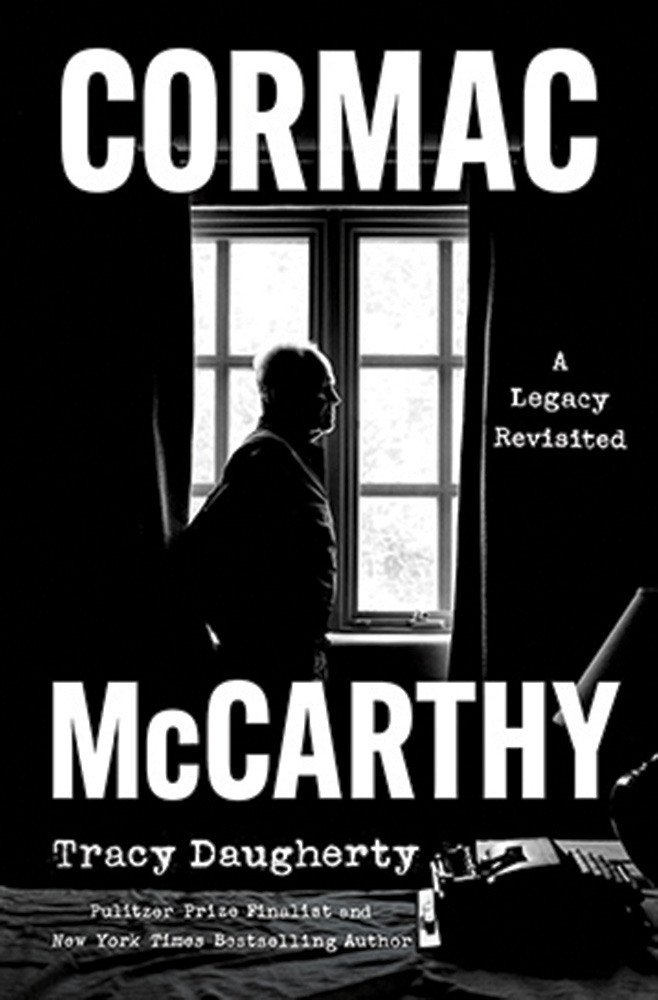
Cormac McCarthy: A Legacy Revisited Tracy Daugherty
Charles Joseph McCarthy Jr. was born in 1933 in Providence, R.I.; his family moved to Knoxville when he was 2 years old. His father worked as an attorney for the Tennessee Valley Authority, a career his son resented. The son preferred “Cormac” as a way of distancing himself from his father, not to mention Edgar Bergen’s popular puppet Charlie McCarthy. Raised in a Catholic household and educated in Catholic schools, Cormac later rejected the church even as its rituals and liturgy influenced his fiction. McCarthy wasted a year at the University of Tennessee before enlisting in the Air Force. Stationed in Alaska, he developed his appetite for reading and an aptitude for writing. He returned to UT, and although he never graduated, he published his first stories in the student literary magazine. He also met Lee Holleman, whom he would marry in 1961. The newlyweds moved to Chicago, where he completed his first novel before returning to East Tennessee.
It was remarkable The Orchard Keeper (1965) was even published. Plucked from a pile of submissions to Random House, it found its way to editors willing to eschew changes in the literary landscape and support this unfashionable, Faulkner-inflected fiction. It did not sell well; nor would his next two, Outer Dark (1968) and Child of God (1973). Daugherty describes these early works as “Appalachian novels of the damned driven from the garden by malign forces” that convey “father rage” through thinly veiled attacks on his father’s work for the TVA. McCarthy distrusted the program’s utopian vision, loathed its displacement of families, and associated it with nuclear doom.
Yet the frequent financial help McCarthy’s father provided for decades made it possible for the son to pursue his artistic ambitions. And McCarthy himself wasn’t a model of domesticity. Shortly after the birth of their son, he and Lee separated so he could focus on his work. Daugherty says McCarthy felt guilty about this, yet the novelist doesn’t seem to have provided his wife and child much help. After winning a fellowship in 1965, he traveled to Europe, where he met and married a British singer named Annie DeLisle. The couple settled in Tennessee, and then McCarthy fled southwest with a friend’s wife. Though that relationship ended quickly, he would make that region his home.
McCarthy met Augusta Britt while living in Tucson. Daugherty has “serious questions” about Britt’s details concerning her role as the novelist’s “muse” but provides evidence to support her claims about a sexual relationship. McCarthy seems to have thought of himself as both her guardian and her lover. Their relationship lasted years. If it had been revealed during McCarthy’s career, subsequent novels may not have been published.
McCarthy eventually moved to New Mexico, where he was able to finish the Knoxville novel he’d been working on for 20 years. Suttree (1979), a semi-autobiographical picaresque featuring the city’s outcasts and underclass, was another commercial dud but it helped him win a MacArthur Foundation Fellowship in 1981. That prize introduced McCarthy to new intellectual circles. Having spent most of his life with rogues, misfits, and criminals, he now built friendships with prominent scientists, like the physicist Murray Gell-Mann and the biologist Roger Payne.
With Blood Meridian (1985), McCarthy’s imagination followed his body out of Appalachia and into the southwest. Although this notoriously bloody historical novel is now recognized as his masterpiece, it was another commercial disappointment, and by the early 1990s he seemed destined to remain what the New York Times Magazine called “the best unknown novelist in America.” McCarthy’s rise in public esteem only began when Vintage Contemporaries republished his early novels in paperback. Sales for Suttree and Blood Meridian dwarfed their initial numbers. This established momentum for The Border Trilogy: All the Pretty Horses (1992), The Crossing (1994), and Cities of the Plain (1998), each set in the southwest at the dawn of the nuclear age. McCarthy had become “a brand name.” His next two novels—No Country for Old Men (2005) and The Road (2006)—were major literary events. The latter won him the Pulitzer and, perhaps more importantly, Oprah’s imprimatur.
But Daugherty suggests that even before this string of successes, McCarthy’s “devotion to the craft of fiction slipped” due to his involvement with a scientific think tank called the Santa Fe Institute. His novels had once incorporated diverse philosophies and theories as “effective means of exploring the confusions, ambiguities, and ignorance informing human experience.” Later work “would no longer ask so many questions of the world, straining, instead, to provide pat explanations.”
Daugherty, whose biography of Larry McMurtry was a Pulitzer finalist, is generally charitable toward his subject. His research is exhaustive and impressive. He excels at identifying McCarthy’s diverse literary influences—Faulkner, Joyce, Dante, Hawthorne, as well as Irish ballads, the Bible, Catholic liturgy, and especially Marjorie Kinnan Rawlings’ The Yearling. At times he falls into the biographer’s trap of imitating his subject’s style, especially when describing desolate landscapes. But he isn’t afraid to be honest about McCarthy’s inferior work, like the embarrassing screenplay for The Counselor (2013).
From the late 2010s, McCarthy’s health declined; he suffered from prostate cancer, leukemia, and COVID. Writing became more difficult. His last two works, The Passenger and Stella Maris, were not ready for publication, and Daugherty is right to say the prose “read like a parody.” McCarthy would die the following year, frail and long-haired “like a biblical prophet.”
This biography’s subtitle is provocative: McCarthy has been dead for only a few years—why does his legacy need revisiting? One reason is that Augusta Britt’s narrative threatened to negate his impressive career. Daugherty’s book is a fuller account, though with no shortage of troubling details. It won’t be the last.

Please wait while we load the latest comments...
Comments
Please register, subscribe, or log in to comment on this article.