
Kratom’s lethal appeal
IN THE NEWS | Parents and addiction specialists beg Washington to ban “gas station heroin”
Associated Press / Photo by Mary Esch
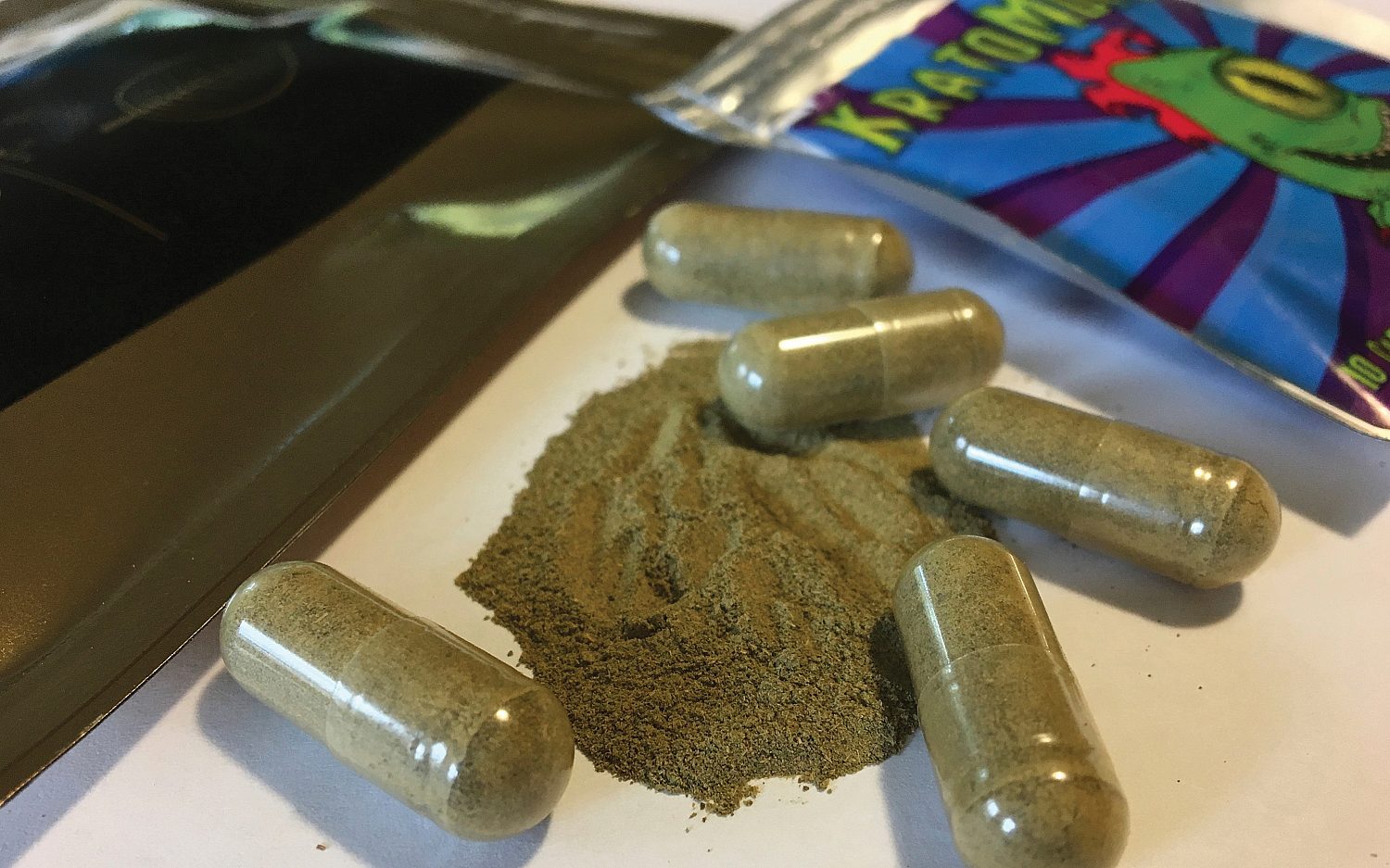
Full access isn’t far.
We can’t release more of our sound journalism without a subscription, but we can make it easy for you to come aboard.
Get started for as low as $3.99 per month.
Current WORLD subscribers can log in to access content. Just go to "SIGN IN" at the top right.
LET'S GOAlready a member? Sign in.
For more than three years, Cameron Francis started his mornings shaking a green powder into his water bottle, chugging it, then going about his day. He started the regimen as a junior at Liberty University, after looking online for a natural alternative to alcohol.
Cameron, then a distance runner for the university’s track team, thought kratom was a harmless, plant-based herbal supplement. It gave him an immediate boost in energy and focus and relieved his social anxiety.
But Cameron’s life took a downward spiral, and he and his parents learned in an emergency room in 2021 that the powder he’d become addicted to was akin to an opioid. A doctor told Dean Francis, Cameron’s father, his son would need a lot of help. “That was the understatement of my life,” Dean said. When Dean called a drug detox center in Richmond, Va., where the family lives, the person he spoke with equated kratom with heroin and said his son would experience similar withdrawal symptoms.
Kratom, a plant originating from Southeast Asia, has been dubbed “gas station heroin” for its widespread accessibility and highly addictive opioid-like effects. Eleven U.S. states and dozens of municipalities have banned kratom, and the U.S. Food and Drug Administration (FDA) does not approve selling it. Yet kratom is available online and across the country in capsule, drink, or powder forms at convenience stores, smoke shops, and health food retailers.
The psychoactive botanical is marketed as a natural remedy for pain and anxiety and as a way for addicts to wean themselves off opioids. In recent years, stronger, more concentrated synthetic versions of the opioid-like compound found in kratom, 7-hydroxymitragynine, or 7-OH, have flooded the market.
As stories emerge of kratom’s harms, a growing number of parents, doctors, law enforcement, and anti-drug advocates are raising alarm, organizing awareness campaigns, and seeking tighter state and federal restrictions.
On Oct. 9, the U.S. Drug Enforcement Administration announced an updated version of its plan to designate certain synthetic 7-OH substances as Schedule I under the Controlled Substance Act. Schedule I drugs have a high potential for abuse and no currently accepted medical use. The agency said it would establish ratio thresholds for naturally occurring kratom compounds, including 7-OH and mitragynine, while scheduling chemically modified 7-OH compounds.
Some argue those restrictions fall short. In an Oct. 7 letter to the Trump administration, three Republican U.S. senators urged a Schedule I designation for “the entire kratom plant, including all levels of 7-OH.” Similarly, Kevin Sabet, president and CEO for the Foundation for Drug Policy Solutions, appealed to the federal government to ban the whole kratom plant. “Scheduling just 7-OH is not enough,” Sabet said in an emailed statement. He noted that mitragynine, the main compound in the kratom leaf, converts into 7-OH in the body.
Reports of kratom-related deaths sparked calls for stricter regulation. In September, two University of Mississippi students found dead on the same night allegedly had packaged kratom derivatives nearby. Investigators are still determining the cause of the students’ deaths. On Oct. 5, Utah health officials linked four deaths to “high-potency, illegal chemical compounds found in certain herbal supplements, including kratom products.”
Between 2020 and 2024, kratom was detected in 5,208 overdose deaths across 45 U.S. jurisdictions, according to data from the Centers for Disease Control and Prevention (CDC) State Unintentional Drug Overdose Reporting System. U.S. poison centers reported a 1,200% increase in kratom exposure reports between 2015 and 2025, according to a recent CDC report.
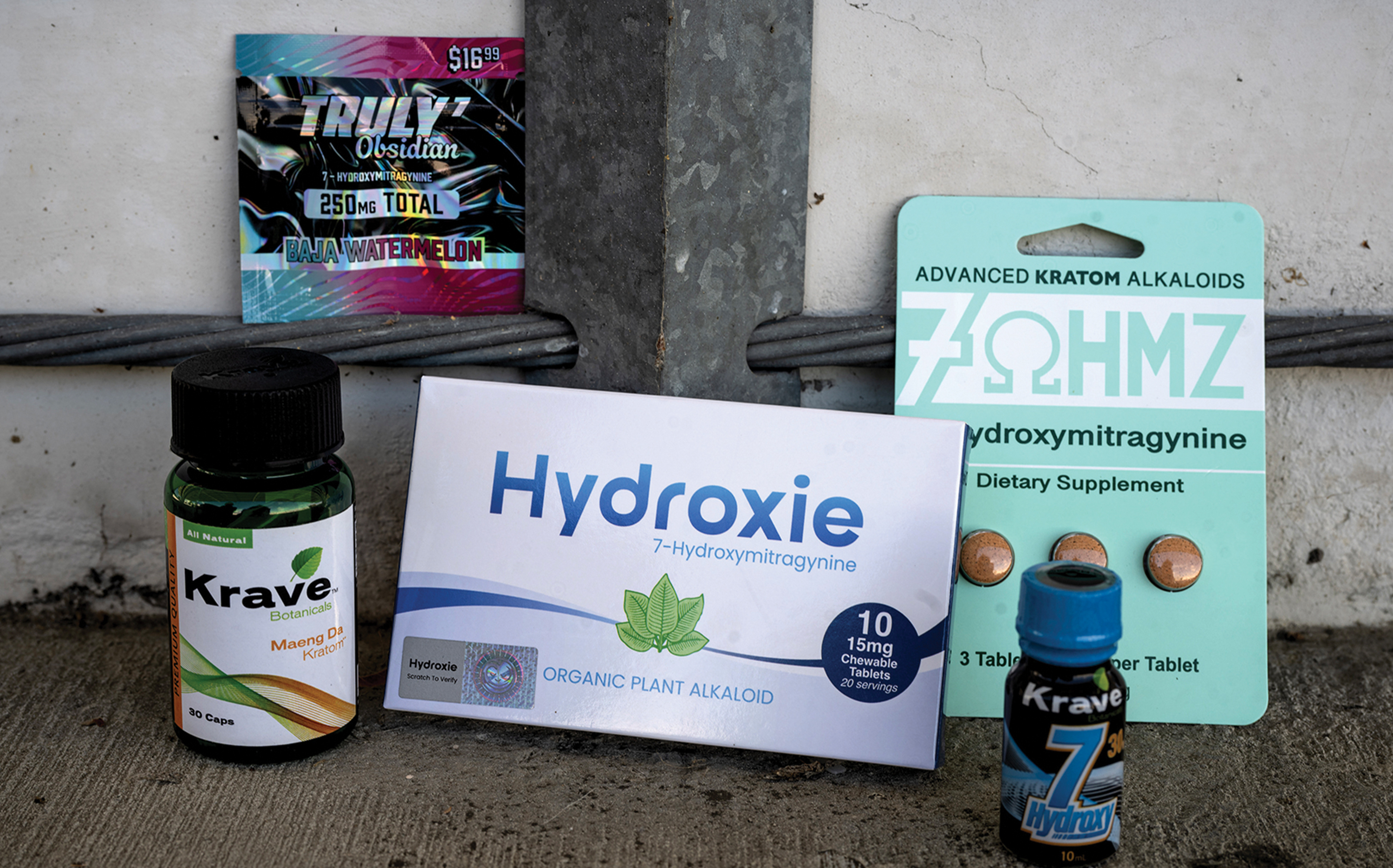
Kratom products sold in stores Mindy Schauer / MediaNewsGroup / Orange County Register via Getty Images
Dean Francis and other kratom opponents, including two mothers I communicated with who said they lost adult children to kratom-related deaths, launched a campaign on Oct. 8 called “Stop the Magicians.” The campaign targets the kratom industry and includes a petition for a complete federal ban on kratom.
Dean described their effort as a “David and Goliath” battle against wealthy kratom lobbyists with alleged ties to the now-illegal synthetic marijuana. One couple with ties to the kratom industry, David and Maya Gabbay, have been funneling millions of dollars to Republican lawmakers, according to a recent Politico report.
Indeed, kratom lobbyists have sought to influence the DEA’s decisions. The American Kratom Association (AKA) sued the DEA in September for a rule it proposed in July that would have designated any synthetic kratom products with 7-OH as Schedule I. The AKA claimed the language carried “potential unintended consequences … for properly formulated natural kratom leaf products.”
The DEA’s updated scheduling actions included recommendations from the U.S. Department of Health and Human Services to distinguish “intentionally enhanced” kratom from products “more consistent with botanical kratom.” The AKA applauded the update as “an important victory” and a resolution to its lawsuit.
Meanwhile, some medical professionals want to see more research into kratom’s risks and benefits that would inform federal regulations and oversight.
Kurt Bravata, a family and addiction medicine physician in Bolivar, Mo., favors designating kratom as a Schedule II drug instead of Schedule I. He says this would allow for clinical trials and other medical research. “Are there some medicinal benefits, and if so, let’s figure that out instead of going straight to criminalization,” he said. “I don’t want to see a bigger black market for kratom.”
Bravata, who serves as vice chair of the Christian Medical & Dental Association’s addiction medicine section, said in the last three years, he’s seen a surge of patients addicted to kratom.
“A lot of people are surprised to discover kratom is dangerous,” he said. The FDA warns consumers kratom carries risks of liver toxicity, seizures, and substance use disorder. In its concentrated form, 7-OH is “ninefold more potent than morphine,” Bravata said.
The drug is presenting new challenges for rehabilitation facilities across the country. In Meridian, Idaho, 3 of every 10 calls coming into Oakridge Recovery now involve kratom addiction, according to Danielle Fanopoulos, vice president of patient access. Earlier this year, as Idaho lawmakers debated a bill to regulate kratom sales, Oakridge sent a letter of support. The bill failed to pass.
Greg Ambroson, executive director of the Adult & Teen Challenge’s Azle campus, a faith-based residential recovery program in Texas, said he’s seen everything from people spending $200 a day on kratom to mixing it with other drugs and psychosis-like symptoms. “Word has gotten out that it’s legal heroin,” he said.
Ambroson’s campus tests regularly for kratom. But it’s difficult to maintain a standard because kratom is marketed as natural. Less than a half mile from the campus, “there’s a big feather flag advertising kratom at the gas station,” he said.
Joshua James, owner of the non-alcoholic Ocean Beach Cafe in San Francisco, says he knew little about kratom when he started selling it in 2022. James carried popular kratom drinks, including Feel Free, a 2-ounce blue bottle labeled as a “social tonic.” Botanic Tonics, the Oklahoma-based company that owns Feel Free, has sold 65 million bottles since its debut in 2020, according to reporting by The Free Press.
James noticed customers were coming in multiple times a day for kratom, oftentimes buying 12-packs. When James, a self-proclaimed proponent of “alternative buzz,” tried kratom, he says, he experienced an immediate “intensity and aggressiveness … that really messed me up.” In 2024, he stopped selling kratom, citing his uneasiness about supplying something that addictive. Earlier this year, California banned selling kratom.
In Virginia, Cameron Francis, now 31, is nearing 10 years since he first tried kratom. Dean said his son still takes medication to eliminate his craving for it: “He’s significantly better, but he’s still not himself and still looking for answers.”
Please wait while we load the latest comments...
Comments