
K-pop turns to the West
TRENDING | Korean music has gained a global audience. But has it lost its soul in the process?
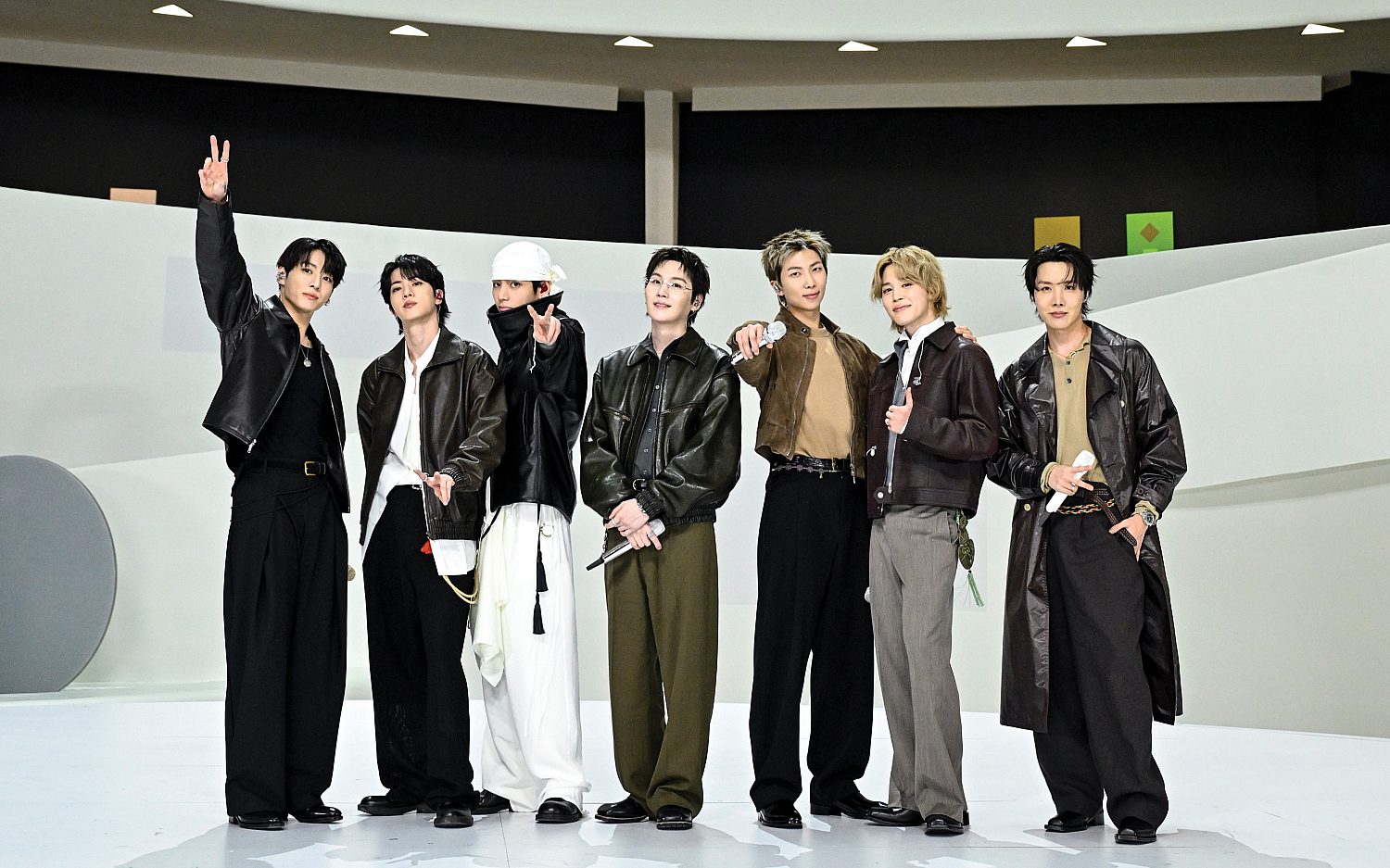
BTS after a performance on The Tonight Show Todd Owyoung / NBC via Getty Images
Full access isn’t far.
We can’t release more of our sound journalism without a subscription, but we can make it easy for you to come aboard.
Get started for as low as $3.99 per month.
Current WORLD subscribers can log in to access content. Just go to "SIGN IN" at the top right.
LET'S GOAlready a member? Sign in.
At the 2023 Coachella music festival, thousands of fans cheered and waved LED wristbands as rose-colored lights illuminated the four-person K-pop band Blackpink. The girl group’s appearance marked the first time a K-pop band had ever headlined the desert-based festival, illustrating just how popular the genre has become outside its native Korea.
This year, another quasi K-pop group took to the Coachella stage. Wearing pastel bras and singing English-language hits like “Gnarly,” Katseye’s singers don’t look or sound anything like a traditional K-pop band.
Formed in partnership with K-pop label HYBE and American company Geffen Records, Katseye brands itself as a “global group.” Only one member hails from South Korea. Not all K-pop groups have become as generically pop as Katseye. But as the genre has developed into a worldwide phenomenon, much of the music has shed distinctly Korean features. Many bands sing almost entirely in English and include provocative themes and language, alienating the genre’s original fanbase.
Thanks to a culture shaped by both Christianity and the teachings of Confucius, Korean entertainment has traditionally portrayed themes of purity and innocence, said Ray Seol, an associate professor at Berklee College of Music who teaches a course in K-pop.
K-dramas, for example, have a reputation for being mostly free of objectionable content. K-pop singers are called “idols” because they represent the ideals of a fairly moralistic society. “Idol means someone you can learn something from,” Seol said. “That’s the sensei.”
But as K-pop becomes more Westernized, some idols have stepped down from their idealized pedestals. Many of the songs from Blackpink’s 2026 album Deadline sound very similar to the musical stylings of artists like Cardi B. The girl-group Twice has released explicit songs with American rappers Saweetie and Megan Thee Stallion. BTS’ newest album Arirang includes “Normal,” the band’s first song to receive an explicit rating on streaming platforms, though several members have released edgier songs on solo albums. Seventeen has also released at least one explicit song. This January, the K-pop band i-dle released “Mono,” which directly addresses homosexuality: “Whether East or West / whether straight or gay / every day and night / dance to your real vibe.”
“I can’t help but feel like something essential has been lost, like that joyful, uniquely Korean pop sound and identity that made me fall in love with the genre in the first place,” one Reddit user complained.
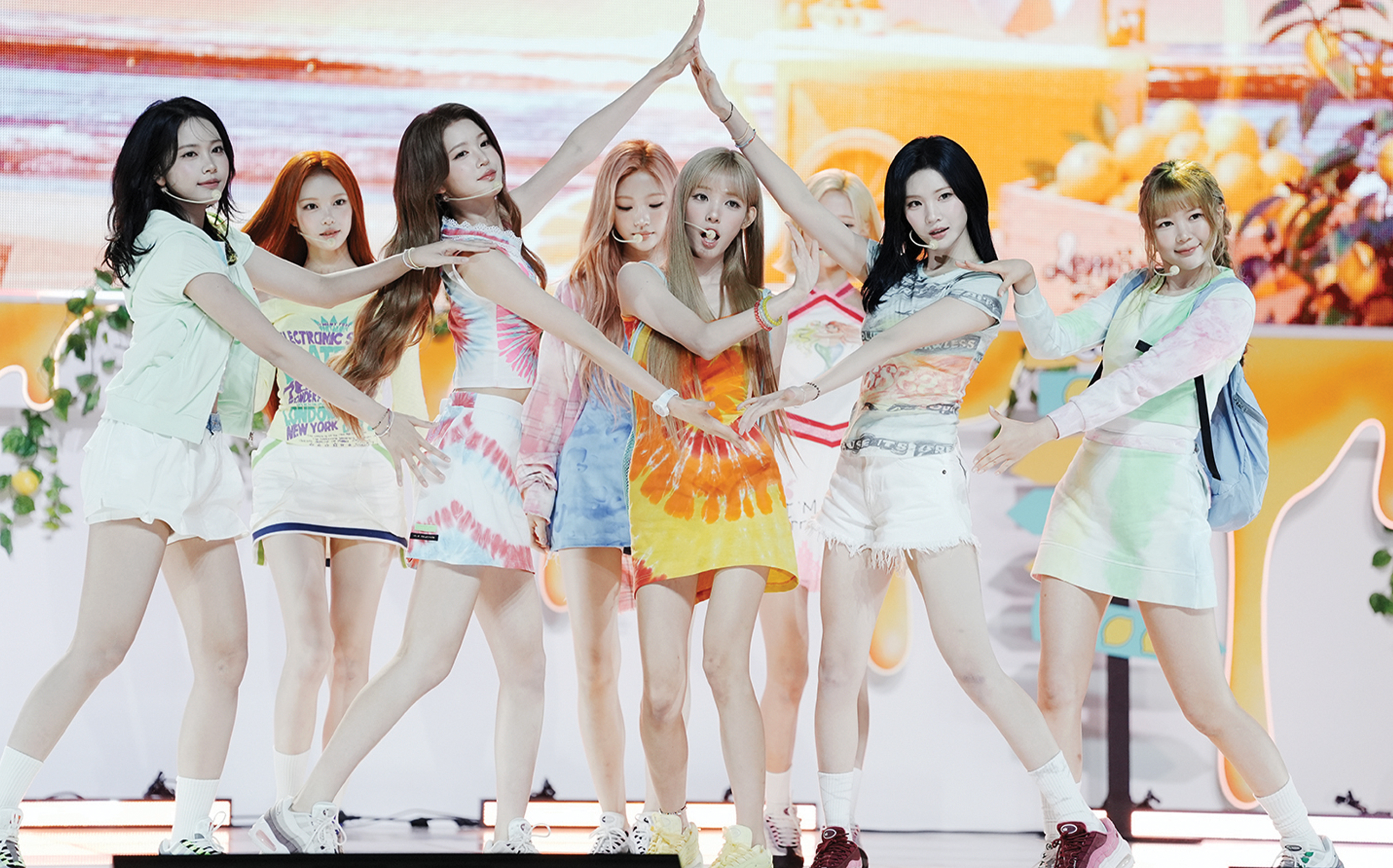
Hearts2Hearts KCNA / Imazins via Getty Images
From its genesis, K-pop blended Western musical elements like rap and R&B-style beats, Seol said. But despite being heavily influenced by American music, “K-pop was designed first for Korean people,” he added. “It was local music.”
K-pop emerged in the 1990s thanks to groups like Seo Taiji and Boys and H.O.T. Because of the influence of social media and the spread of Korean entertainment and culture—also known as the Korean Wave or Hallyu—K-pop has become extremely popular in the West.
Released in 2012, “Gangnam Style” by Psy was one of the first K-pop songs to really break into the American music scene. Today, the United States is the second-largest market for K-pop in the world, just behind Japan. When BTS dropped Arirang in March, about 115 million U.S. listeners streamed the album within a week, far surpassing listens in any other country. In August, This and That from Stray Kids ranked as the No. 1 album in the United States.
To reach listeners in the West, the big four K-pop labels—HYBE, YG Entertainment, SM Entertainment, and JYP Entertainment—gradually opted for a more “globalized approach.” That directly affected the songs themselves. According to a study from Bloomberg, almost half the songs released from the largest K-pop companies in 2024 were sung almost entirely in English.
“I feel like K-pop sounds more and more like American pop instead of K-pop,” Korean American rapper Vernon, a member of the K-pop band Seventeen, told The Hollywood Reporter in August.
Some K-pop bands also imitate Western music by embracing explicit lyrics and provocative attire. That’s a pretty significant deviation from the genre’s roots. “K-pop is known for very clean music, very healthy music,” Seol said. “We talk about love, betrayal, obviously sadness and stuff, but we don’t talk about drugs, sex, or any wrongdoing.”
By sacrificing some of the elements that originally defined the genre, Seol said, major K-pop recording labels may have alienated some Korean listeners: “People in Korea don’t really see K-pop as their own local music anymore because there’s no Korean. It’s all English now.”
While many groups continue to aim at a global audience, some bands are releasing songs reminiscent of the genre’s roots. He pointed to songs released this summer, like “Lemon Tang” by Hearts2Hearts and “Boy Meets Girl” by NCT Wish. Both songs have sparse English lyrics and focus on themes like innocence and young love. “The keyword is now local and more pure, more fresh,” Seol said. “Otherwise, we keep losing the Korean fans.”
Matthew Pellegrino, a music professor at New York University, believes up-and-coming K-pop bands will continue to focus on reaching local Korean listeners by keeping their music clean and singing in their native language. But many idol groups aim to become international sensations. Those bands will likely style themselves after Western pop groups “if they make it far enough in their career to reach that global audience,” Pellegrino said.
And if they do reach that level, they may leave Korean listeners behind. “If you ask the kids in Korea what they’re listening to nowadays, it’s probably not BTS or Blackpink,” Pellegrino said.
Korean American fan James Choi believes K-pop hasn’t fundamentally changed. “I believe at the end of the day, people like K-pop not because it’s similar to Western music but because it does have its own distinct flavor,” he said.
Growing up in the ’90s, Choi used to listen to old-school K-pop bands like Seo Taiji and Boys. This August, the now 43-year-old Choi and his wife watched from the nosebleeds of Baltimore’s M&T Bank Stadium as BTS performed for more than 100,000 fans.
“I am very proud as a Korean that Korean culture has had such influence,” Choi said. “Hopefully, it doesn’t get too watered down.”

Please wait while we load the latest comments...
Comments
Please register, subscribe, or log in to comment on this article.