
For the love of place
BOOKS | The legacy of Wendell Berry
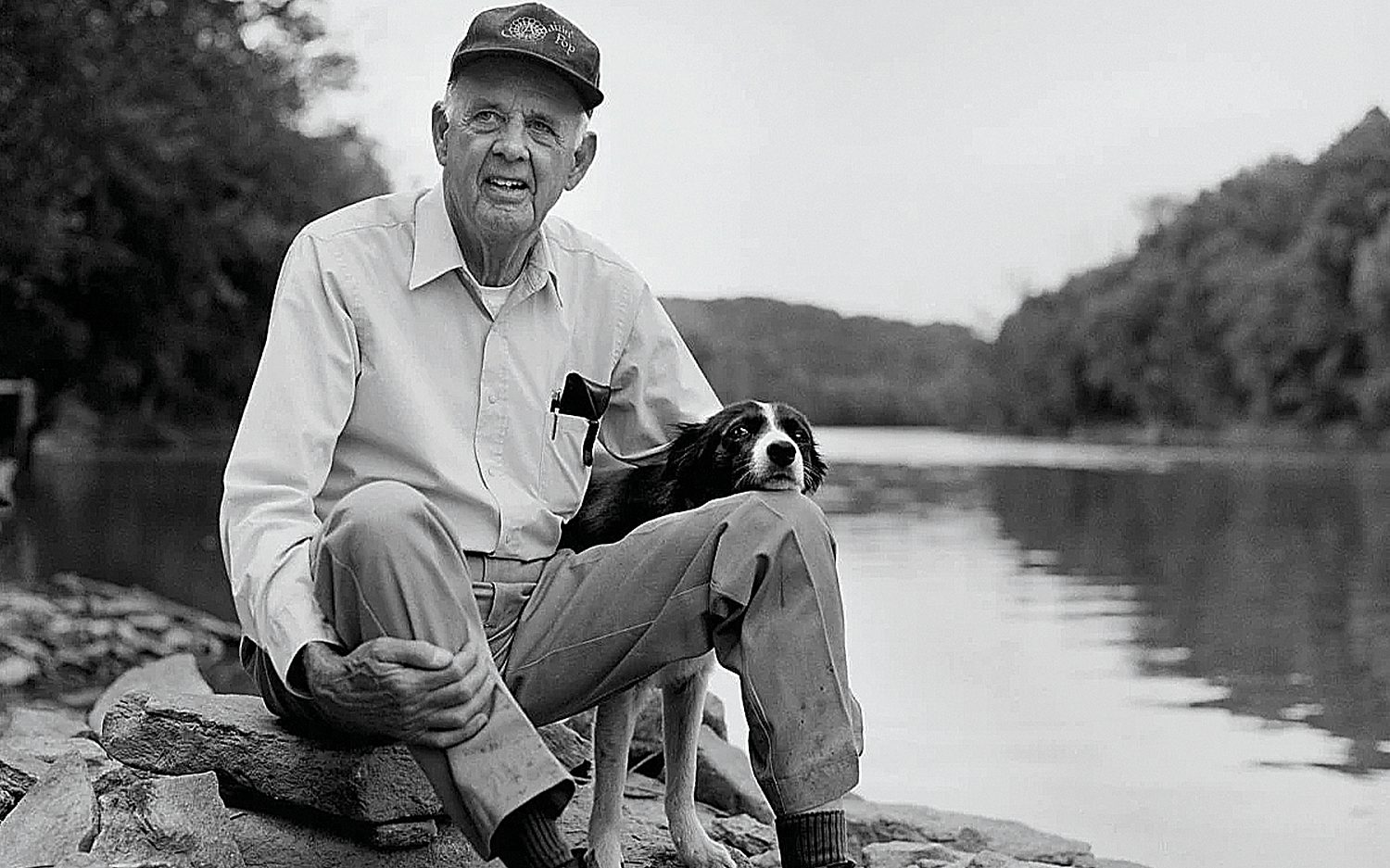
Wendell Berry Photo by Guy Mendes
Full access isn’t far.
We can’t release more of our sound journalism without a subscription, but we can make it easy for you to come aboard.
Get started for as low as $3.99 per month.
Current WORLD subscribers can log in to access content. Just go to "SIGN IN" at the top right.
LET'S GOAlready a member? Sign in.
Few public figures were as beloved as Wendell Berry, the Kentucky writer who recently died at the age of 92. Conferences have been dedicated to him while book clubs and podcasts celebrate his work. Celebrities like Nick Offerman and Robert Redford zealously followed him. Conservationist and agricultural movements have been founded upon his ideas. I’ve even heard rumors of honeymoon nights parked near his driveway.
Depending on your disposition, Berry could be controversial, stodgy, inspiring, or maddening. Some readers believe he clung to unrealistic and saccharine views of the past; others thought he was a prophetic voice in the wilderness of modernity.
The nuances of his work and legacy will be discussed over the coming years, but what cannot be debated is the reality that Berry was driven chiefly by love.
In 2016, documentarian Laura Dunn released The Seer, a portrait of Berry that is notable in part because it featured exactly zero minutes of Berry as a talking head. He is only seen in archival photographs and occasionally heard in voiceover. This forced the film to focus on the community in which Berry lived. He wanted the story of his place to be told first and foremost.
In one clip, Berry declares that our country has, by and large, forgotten what he called the “nowhere places” that used to populate it. Places like his home of Port Royal, Ky., an unincorporated town in Henry County—population less than 100.
Berry grew up in the area and for more than six decades, he and his wife Tanya lived in the same farmhouse on the same hillside overlooking the Kentucky River. But he moved away for a while in the 1960s, off to NYU and then Stanford where he joined the ranks of the up-and-coming literary figures of the time.
He once told me how much he loved living in NYC once he learned to get around, but soon he began to long for home. Tanya noticed it first, that he was always talking about Kentucky, that he was most happy when he would visit. So they went back south, motivated to help preserve the heritage of the place he loved. Kentucky was his fate, he realized, and he set to work.
A decade later, the U.S. government began to de-emphasize the small, locally oriented farms that defined places like rural Kentucky. Earl Butz, the Secretary of Agriculture, told farmers to “get big or get out.” A smallish farm unable to be a mass contributor to national economic strategy was not worth caring about. Berry, however, believed that small and trivial are not synonymous.
Because small places are easier to forget, they are harder to preserve. It takes effort and attention to do so. That effort and attention is the crucial theme of his work.
In 2012, Berry was invited to present the Jefferson Lecture, our nation’s highest honor for distinguished intellectual achievement. The resulting speech is called “It All Turns on Affection”—a phrase he borrowed from E.M. Forster’s novel Howard’s End—and in it he argues that, above all, the work of preservation demands love. Affection must bolster action.
There are two kinds of people, he says: boomers and stickers, terms he inherited from his Stanford professor, Wallace Stegner. “Boomers … are ‘those who pillage and run,’ who want ‘to make a killing and end up on Easy Street,’ whereas stickers are ‘those who settle, and love the life they have made and the place they have made it in.’” The sticker considers himself a caretaker and a steward. The boomer operates on his or her own behalf. The sticker maintains modest aspirations that recognize human limitation. The boomer lacks contentment.
Berry explores these two types of people in his fiction, especially in the novel Jayber Crow (2000), where the prideful and manipulative Troy Chatham pits himself and his machines against his father-in-law’s old, less efficient but culturally meaningful ways.
Pride and greed drive Troy, not affection for his farm. He exhibits individual ambition at the expense of the collective good. His wife is never enough. His land is never enough. Beauty is never enough. In the end, he wreaks great tragedy on his family, his farm, and his community.
In reaching past his own capacities and limitations, Troy destroys the land he should be caring for. Because he does not love it for anything other than what it can do for him, he loses it. Because he does not recognize the enduring mystery the place holds for his neighbors, he allows it to be forgotten.
In his Jefferson lecture Berry contemplates what causes people to be consumed by such greed. He concludes that Troy’s great blunder is to operate as if the place is not a living thing. He treats it as an abstraction, something to experiment with, something to test, prod, and pull apart. But when you love something, you don’t boil it down to an idea, tool, or steppingstone.
It’s easy to ignore the beating heart of an abstraction, Berry argues: “To hear a thousand deaths in war is terrible, and we ‘know’ what it is. But as it registers on our hearts, it is not more terrible than one death fully imagined. The economic hardship of one farm family, if they are our neighbors, affects us more painfully than pages of statistics on the decline of the farm population.”
In a 2019 interview with Vox, Berry said, “We’re all going to have to do something to help our land, our country itself,” and, “We have to find a way to pay it what we owe it. And what we owe it, of course is … our competent love.” Wherever we live, whatever we are called to do, whoever we live with, and whatever limitations we have before us, competence is derived from knowledge and passed on through memory, but that memory is upheld by committed affection.
“Affection,” he argues, “leads us by way of good work to authentic hope.” Through affection we can preserve the “arts of adapting kindly the many ecosystems and human neighborhoods” that make up the “human household upon the earth.”
Increasingly, we live in an age of remote living, of isolation, and the more we accept it as common good the more abstract our lives will be. We will become abstractions even to each other. Just figures on a ledger. Data points. Proofs and subproofs. Visualized charts and colored graphs.
But facts are not the same thing as truth, Berry reminds us. And there’s more truth available in deep slumber in a well-kept wood than there is in any ledger that quantifies how much financial good that forest can offer.
When Berry returned home from New York in the mid-’60s, he was told he was crazy, that he was wasting his literary talent and education. He was warned he’d be forgotten. But Berry was a sticker not a boomer. Far from revealing some great good amid the cultural elite, his adventures reinvigorated his love for the people, places, and culture of his heritage, for the ways and means that defined the world in which he’d been raised. So he returned home with a clear sense of vocation, a sense of duty born out of affection rather than pride. And in settling into the work of his life with “authentic hope” he reminded his readers of the dignity of places we might otherwise think of as backwoods or backward. To be out of the way, he insisted, is not to be nowhere.
As it turns out, his work will endure far longer than any of the doom-and-gloom naysayers could have ever imagined when they warned him against returning home. In subordinating his own personal ambitions to the memory of those he loved he planted the seeds of a legacy greater than he could have imagined.
As the titular narrator of Jayber Crow claims, “To love anything good, at any cost, is a bargain.”

Please wait while we load the latest comments...
Comments
Please register, subscribe, or log in to comment on this article.