
Familial fissures
BOOKS | The far-reaching effects of a no-contact culture
Illustration by Krieg Barrie

Full access isn’t far.
We can’t release more of our sound journalism without a subscription, but we can make it easy for you to come aboard.
Get started for as low as $3.99 per month.
Current WORLD subscribers can log in to access content. Just go to "SIGN IN" at the top right.
LET'S GOAlready a member? Sign in.
When an adult son or daughter goes “no contact” with a parent, more than one relationship is severed. Grandparents lose contact with grandchildren. Cousins lose contact with cousins. An entire family tree can split. Noelle Mering writes in her new book No Contact: How a Seductive Ideology Broke Families and Friendships and How We Can Repair Them (Forum Books, 288 pp.) that in the age of social media and therapy speak, today’s sharp uptick in family estrangement is societally destructive.
An estimated 68 million Americans are estranged from a close relative. These estrangements have a variety of causes, from abuse to political differences. A disproportionate number of estrangements over political or religious views involve people of faith who lose, rather than cut, contact with a family member, Mering writes.
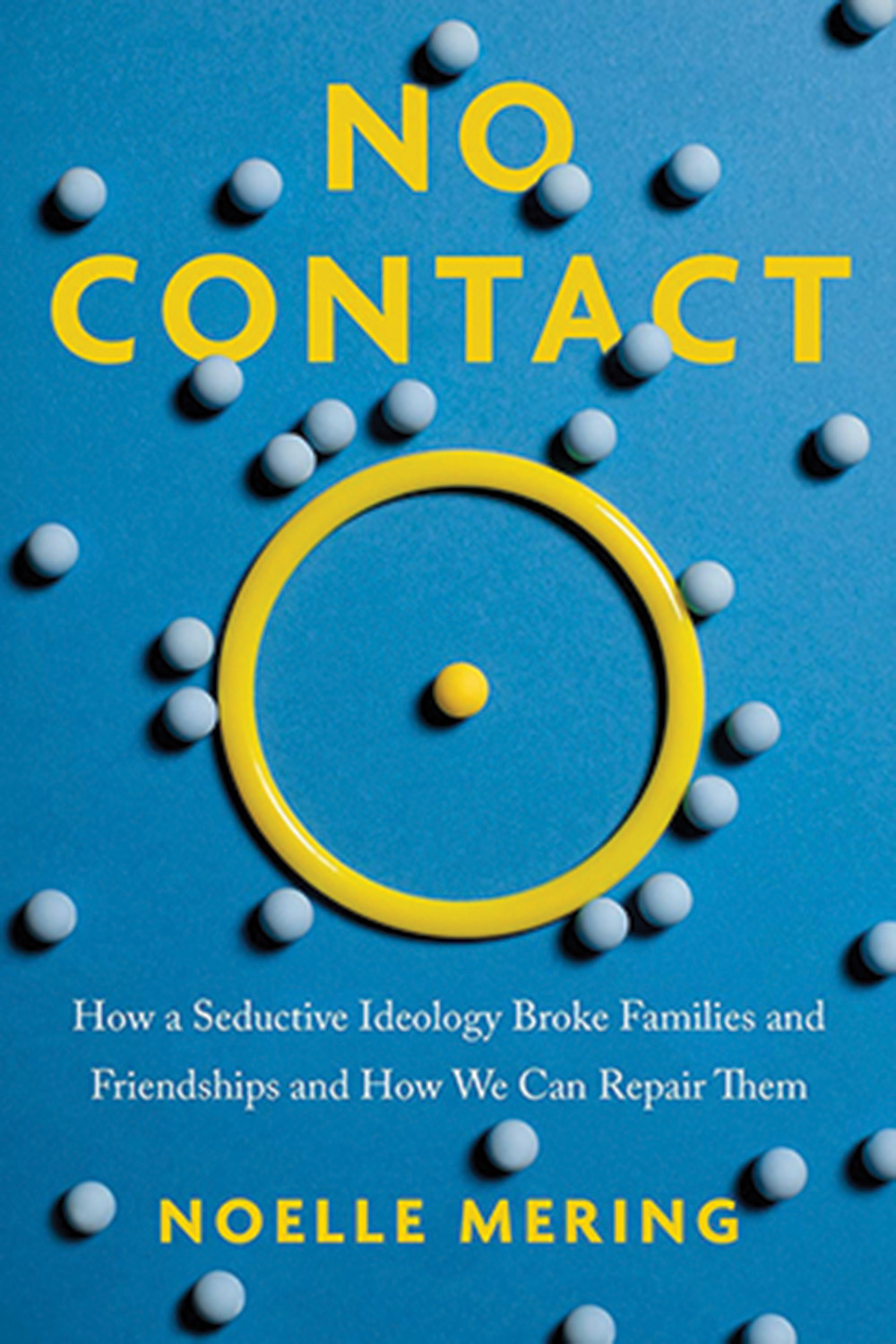
No Contact Noelle Mering
In No Contact, Mering sets out to prove that the “no contact” movement is real and significant. Mering details intentional family destabilization in Nazi Germany and Mao’s China that paved the way for those societies to be completely reconstructed. “The dynamics look different in our culture, but the principle remains eerily similar,” she writes. “Ideology, once internalized, can turn children into moral enforcers against their parents.”
Mering also offers a path forward for individuals who lost contact over ideological differences. She interviews many parents whose children went “no contact” and learns about their regrets. Readers meet Jack and Genevieve, who were excluded from their son’s wedding after refusing to get the COVID vaccine, and Roger, a widower whose daughter temporarily went no contact over ideological differences. The interviewees’ stories are still raw.
Mering makes clear that going no contact in situations of parental abuse is not a society-threatening act. She acknowledges that the line between necessary and unnecessary no contact is blurry, but she doesn’t fully explore the possibility that some adult children who cut off or threaten to cut off their parents are themselves abusive. Christians have plenty of reason to doubt mental health influencers who disguise vapidity with therapy speak, but they shouldn’t abandon the field of psychology, because certain resources can help them understand a family member’s extreme behavior.
A Catholic mother of six, Mering didn’t set out to write an explicitly faith-based book. But she’s clear about the origin of some of her interviewees’ hopefulness in the face of devastation: “This meaning [of suffering] need not be tidy or transactional. It doesn’t require some sort of facile understanding such as ‘Now I understand why my child left, because it led to x, y, or z.’ Often it’s something more mysterious and open-ended: ‘I don’t know exactly what God is doing with this loss, but I do know that it is drawing me closer to him and to the Cross. And that is enough.’”

Please wait while we load the latest comments...
Comments
Please register, subscribe, or log in to comment on this article.