
Exposing China’s religious crackdowns
BOOKS | Former senator champions freedom for the faithful
Full access isn’t far.
We can’t release more of our sound journalism without a subscription, but we can make it easy for you to come aboard.
Get started for as low as $3.99 per month.
Current WORLD subscribers can log in to access content. Just go to "SIGN IN" at the top right.
LET'S GOAlready a member? Sign in.
The U.S. waged a cold war for three decades against the Soviet Union before the tide finally turned when at a meeting of pastors Ronald Reagan called it “the Evil Empire.” Pope John Paul II spoke out for freedom in Poland.
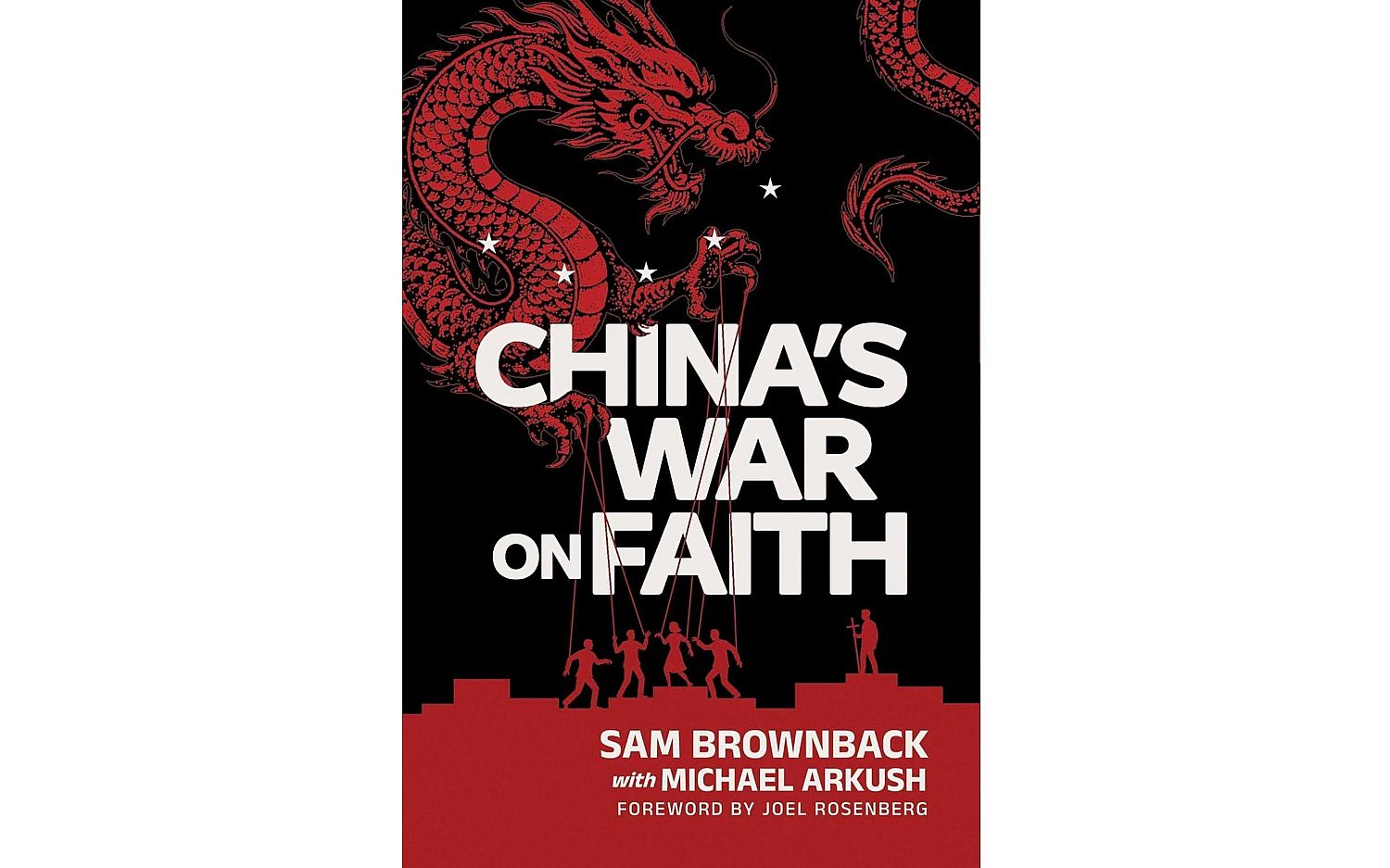
Sam Brownback is hoping that a similar awakening among people of faith in the United States might change the dynamic of our strategic competition with the Communist Chinese Party. His new book China’s War on Faith (Republic Book Publishers, 256 pp.), co-authored with Michael Arkush, aims to inspire Americans of all faith backgrounds to address the CCP’s troubling record of religious persecution.
In 11 chapters, Brownback introduces readers to different people on the front lines of the fight for religious liberty in China: a house church pastor, a young Hong Kong activist, a Falun Gong practitioner, a Tibetan Buddhist monk, a former congressman, retired NBA player Enes Kanter, and others. Across their individual stories, he narrates the broader reality of faith in China. Whether for evangelical or Catholic Christians refusing to participate in the state-controlled church, Tibetan Buddhists loyal to the Dalai Lama, practitioners of Falun Gong, or Uyghur Muslims, persecution is a fact of life. Bishops are placed under house arrest, pastors are thrown in prison, and people in the pews are disappeared to reeducation camps or worse.
Individual chapters are written in an accessible, sympathetic style meant for everyday readers—this is not a heavy foreign policy tome. But the topic is weighty. Prison and persecution are often followed by execution and organ harvesting.
Brownback knows what he’s talking about. As a U.S. senator, he was a champion for religious liberty at home and abroad. During the first Trump administration, he served at the State Department as the ambassador-at-large for international religious freedom. With the backing of Secretary of State Mike Pompeo, Brownback convened the 2018 and 2019 Ministerials to Advance Religious Freedom, a pair of meetings of high-level diplomats focused specifically on this issue. Regrettably, Brownback’s former position as ambassador has languished unfilled due to an expired nomination, though its duties have been delegated to the highly regarded Riley Barnes, a former Brownback adviser now serving as assistant secretary of state for democracy and human rights.
Core to any totalitarian government is an intolerance for competing loyalties. A totalitarian ideology is necessarily total in its demands—it brooks no other aspect of life that could distract or compromise the single-minded pursuit of the state’s glory. That is why the CCP expects minority ethnic identities like Tibetans and Uyghurs and minority religious faiths like Christians to adopt a posture of dependence and submission—because the state always comes first. But that demand is inherently incompatible with faith in a higher power. So the CCP will continue to wage its war on faith, and Americans like Brownback will continue to stand up for human rights as we seek to spread the blessings of liberty abroad.

Please wait while we load the latest comments...
Comments
Please register, subscribe, or log in to comment on this article.