
East of Eden
TELEVISION | A violent, moral, and redemptive miniseries that captures the essence of Steinbeck’s epic story
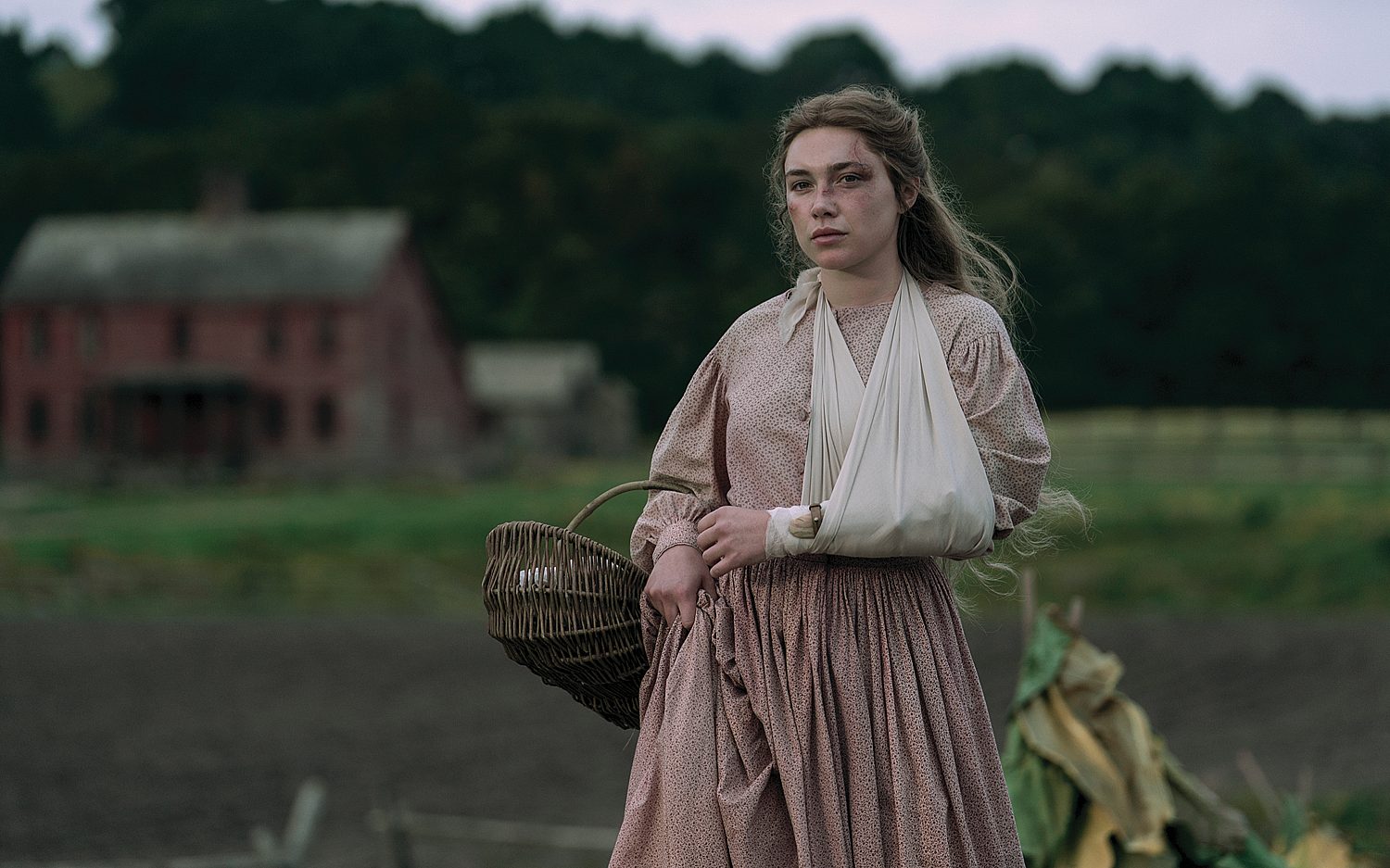
Geoffrey Short / Netflix
Full access isn’t far.
We can’t release more of our sound journalism without a subscription, but we can make it easy for you to come aboard.
Get started for as low as $3.99 per month.
Current WORLD subscribers can log in to access content. Just go to "SIGN IN" at the top right.
LET'S GOAlready a member? Sign in.
Rated TV-MA • Netflix
John Steinbeck needed 601 pages to convey the sprawling Trask family saga in his magnum opus, East of Eden. In 1955 when the book was still new, director Elia Kazan’s 117-minute film adapted only the book’s final act for the screen. Now Kazan’s granddaughter Zoe Kazan has taken a bigger bite of the great American novel, breaking the Trask story into seven Netflix episodes that run about an hour each. The result is breathtaking—and controversial. Both mostly because of the central villain, Cathy Ames.
Reviewers have praised Florence Pugh’s stunning performance of Cathy while debating the script’s handling of the character. In the book, Cathy is morally handicapped from childhood, hacking her way through life, damaging everyone in her path, incapable of love, and without conscience. Steinbeck doesn’t call Cathy a sociopath, a term not really used until 1952, the same year East of Eden was published. But it’s hard to read her character any other way, and Steinbeck did call her “a monster.”
Not that Zoe Kazan paints Cathy as a hero. “I love in solitude to shed the penitential tear,” sings the Ames family in their church pew during the second episode. This is intentional irony: Cathy cannot repent. In subsequent scenes Cathy burns down her family home, murdering both her parents, just after hand-embroidering a question that pervades the remainder of the story: “What’s a home without a mother?” Cathy’s mother dies, and Cathy will grow up to abandon her own babies.
Though this version of Cathy is as compulsively watchable as Steinbeck’s was readable, the miniseries searches for a redemptive arc for the villain that doesn’t quite fit. Among works of modern American literature, East of Eden is uniquely redemptive, but the redemption isn’t for Cathy. It’s for the people she hurts—especially her son, Cal. The film softens Cathy’s evil while leaving out much of the good Steinbeck includes in the story of a healthy neighboring family, the Hamiltons.
Steinbeck’s book moves through generations of the Trask family, which Cathy marries into, but also parallels Genesis. It begins with Adam and Charles as Cain and Abel analogs, each offering gifts to their flawed father. (The parallel breaks here: Unlike Mr. Trask, God perfectly judged Cain and Abel.) One gift is accepted and one spurned, producing a rivalry that will poison the family’s future. Cathy turns up beaten on the brothers’ doorstep. Adam marries her, and they have twins. The brotherhood rivalry replays in the next generation after Cathy leaves her husband and boys to run a brothel.
Both book and miniseries spend considerable time in Cathy’s whorehouse. This adaptation is loaded with gratuitous sexual nudity, but the book never feels voyeuristic—evidence that in art, suggestion often carries more power than explicitness. The miniseries is necessarily violent, but it’s also necessarily moral. In the excellent finale, the redemptive note rings clear as Zoe Kazan treads the same ground her grandfather did.
Still, Steinbeck’s book—a real contender for greatest American novel ever—has far more to give, especially to serious students of the Bible who will recognize its Genesis themes. The 601 pages go fast. The story twists and turns, horrifying and delighting and finally leaving the reader in tears. Granted, the miniseries might make you cry too—but that’s because it contains the essence of the book. The book is that good.

Please wait while we load the latest comments...
Comments
Please register, subscribe, or log in to comment on this article.