
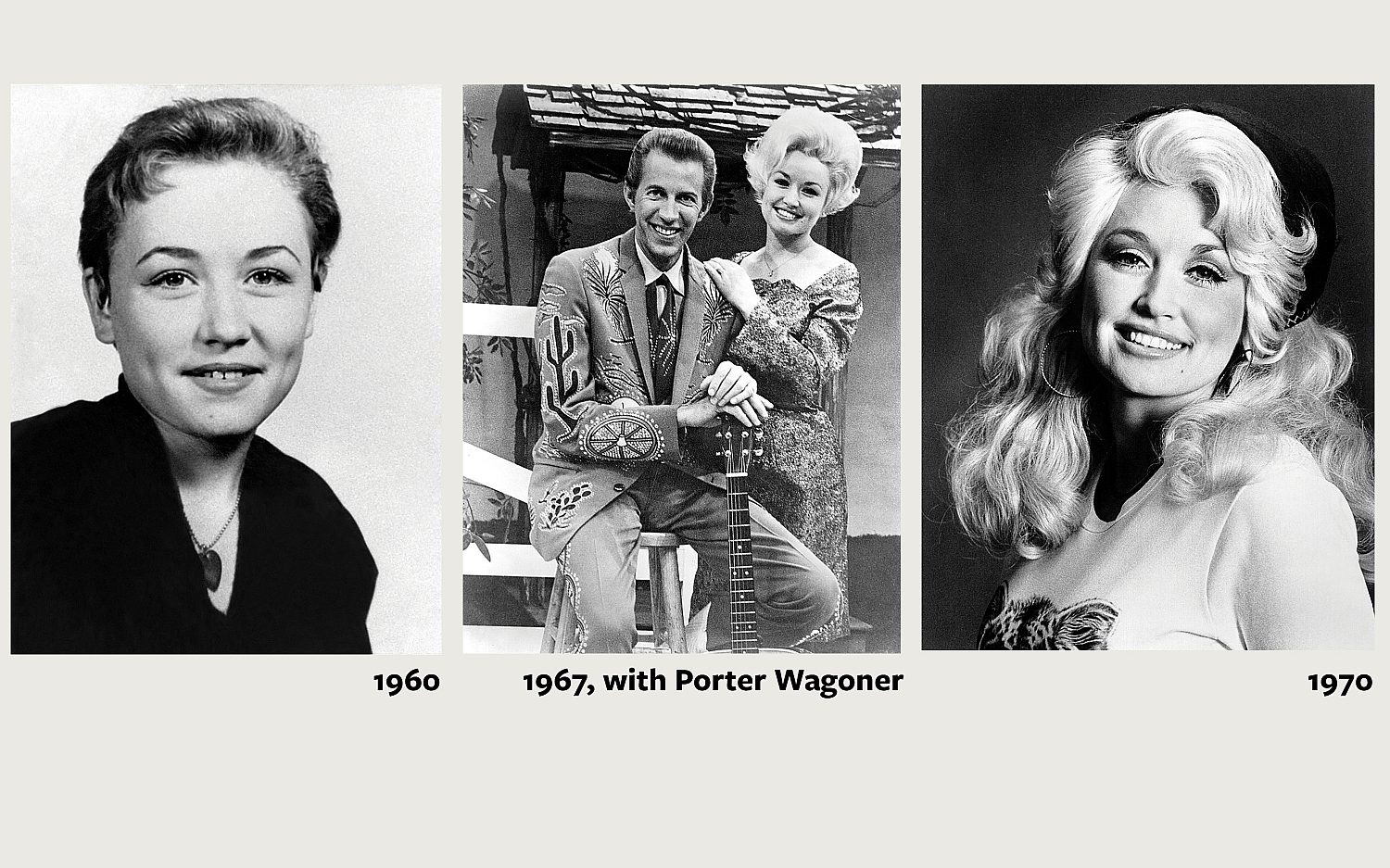
Dolly before she was Dolly
MUSIC | Remembering an icon’s younger years
Left: Nancy Barr / Mediapunch / Alamy; center and right: Michael Ochs Archives / Getty Images
Full access isn’t far.
We can’t release more of our sound journalism without a subscription, but we can make it easy for you to come aboard.
Get started for as low as $3.99 per month.
Current WORLD subscribers can log in to access content. Just go to "SIGN IN" at the top right.
LET'S GOAlready a member? Sign in.
“By now,” wrote the critic Robert Christgau of Dolly Parton in 2022, “[she’s] more inspirational as a public figure than an artist.”
He was right. Driven from childhood to be a star, Parton, who died in August, began letting the music that made her famous take a back seat to her image (originally patterned after a prostitute in her Tennessee hometown) once Hollywood came a-calling in 1980. She kept making albums and touring, but from Dollywood and her stage bio Dolly: A True Original Musical to her well-publicized philanthropy and her never having met a plastic-surgery procedure that she didn’t like, she often did indeed seem more symbol than singer. Still, she insisted to the end that nothing brought her more joy than writing songs, and nowhere does that joy come through more clearly than in her early compositions.
I don’t mean “Coat of Many Colors,” “Jolene,” “I Will Always Love You” (her parting gift to Porter Wagoner), “Love Is Like a Butterfly,” or “The Bargain Store,” the string of self-composed hits from 1971 to 1975 with which Parton proved to anyone still in doubt that she was no “dumb blonde” (the title of the opening number, incidentally, of her first solo album, 1966’s Hello, I’m Dolly, and her first solo hit). I mean her early early self-composed recordings.
In 1959, for instance, Parton co-wrote both sides of her first 45, “Puppy Love” backed with “Girl Left Alone”—the former with her uncle Bill Owens, the latter with Owens and his wife Dorothy Jo. The record didn’t chart: The instrumentation was sparse and Parton’s singing shrill. But she’d beaten Paul Anka to the title “Puppy Love” by a year. And the fact that at 13 she was contributing lyrics to songs and displaying a voice that Goldband Records’ Eddie Shuler thought worth recording speaks volumes about the impression she was making from the start.
Three years later, backed by the countrypolitan Merry Melody Singers, she made her Mercury Records debut with “It’s Sure Gonna Hurt,” another co-write with Uncle Bill. The maturation, if not quite dramatic, was clear. The voice was easier on the ears, and though the arrangement was more teenybopper than Nashville, the couplet “It hurts to lose everything to such a little flirt. / It may not kill me, but it’s sure gonna hurt” was classic country concision.
Parton would revisit the losing-everything-to-a-flirt trope most famously in “Jolene.” Meanwhile, during her years as Porter Wagoner’s musical partner, a period that overlapped with the start of her solo career proper, she proved adept at several other tropes, largely without Owens’ help.
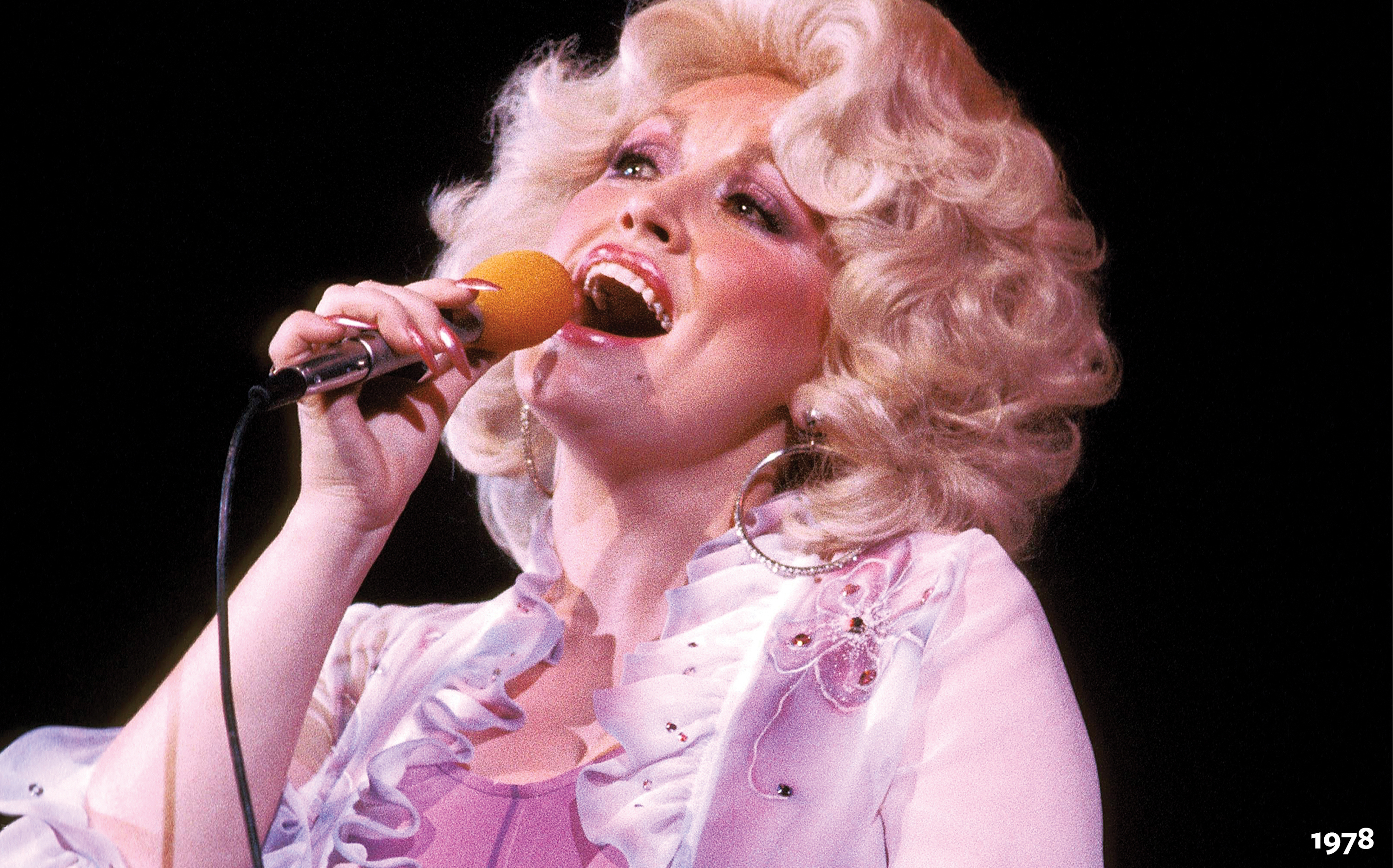
Richard E. Aaron / Redferns / Getty mages
The trope that she approached with the tersest eloquence was loveless marriages (“No Reason to Hurry Home,” “It Might As Well Be Me,” “I’m Wasting Your Time and You’re Wasting Mine”). Not far behind was cheatin’ (“Two Sides to Every Story,” “My Hands Are Tied”). Her bickering-husband-wife songs, meanwhile, were part Hee Haw, part The Honeymooners (“Run That by Me One More Time,” “Fight and Scratch”), and her doomed-children songs were master classes in mawkishness right down to the melodramatic recitations (usually by Wagoner) meant to help the sentimental dissolve into tears (“Jeannie’s Afraid of the Dark,” “The Party,” “Malena,” “Silver Sandals,” “Ragged Angel”).
The point isn’t that all or even the majority of these songs, each of which Parton wrote between 1968 and 1970, are overlooked classics. It’s that they demonstrate a precocious understanding of an audience and the stamina necessary to write competently on demand about whatever that audience feels like thinking about for two or three minutes at a time. It’s an accomplishment that stops short of genius—genius is giving your fans something they don’t know they need and making them realize they can’t live without it. Parton wouldn’t arrive at that level until she wrote the songs that ended up on RCA’s 1975 Best of Dolly Parton. But that level was foreshadowed five years earlier on Parton’s first solo compilation: the nearly identically titled The Best of Dolly Parton.
The Best of Dolly Parton (imagine someone’s thinking she’d already done her “best” by age 24!) combined the title cuts of Just Because I’m a Woman, In the Good Old Days (When Times Were Bad), and My Blue Ridge Mountain Boy with three songs from The Fairest of Them All and two more from My Blue Ridge Mountain Boy. The newly recorded Jimmie Rodgers cover “Mule Skinner Blues (Blue Yodel No. 8)” and “How Great Thou Art” brought the total to 10. Parton wrote the six best as well as the one sung from the point of view of a (probably) wrongly incarcerated lovesick mental patient, “Daddy Come and Get Me.” “Mule Skinner Blues,” which RCA had released as a single four months before the album, was the only major hit.
Still, the best songs on The Best are as faithful to Parton’s musical gifts as the classics on Best. In “Down From Dover,” she evokes pathos as skillfully as whoever wrote “Barbara Allen.” The splintery realism of The Best’s “My Blue Ridge Mountain Boy” and “In the Good Old Days (When Times Were Bad)” makes the rose-colored vision of Best’s “My Tennessee Mountain Home” sound like so much guff.
Given her personality, it was probably inevitable that Parton wouldn’t be satisfied with mere songwriting forever. But the more you listen to the music she came up with when coming up with music was her only goal, the more you wish she’d just told Hollywood to take a hike.

Please wait while we load the latest comments...
Comments
Please register, subscribe, or log in to comment on this article.