
Departures: Second-wave feminist champion dead at 92
Gloria Steinem was synonymous with second-wave feminism
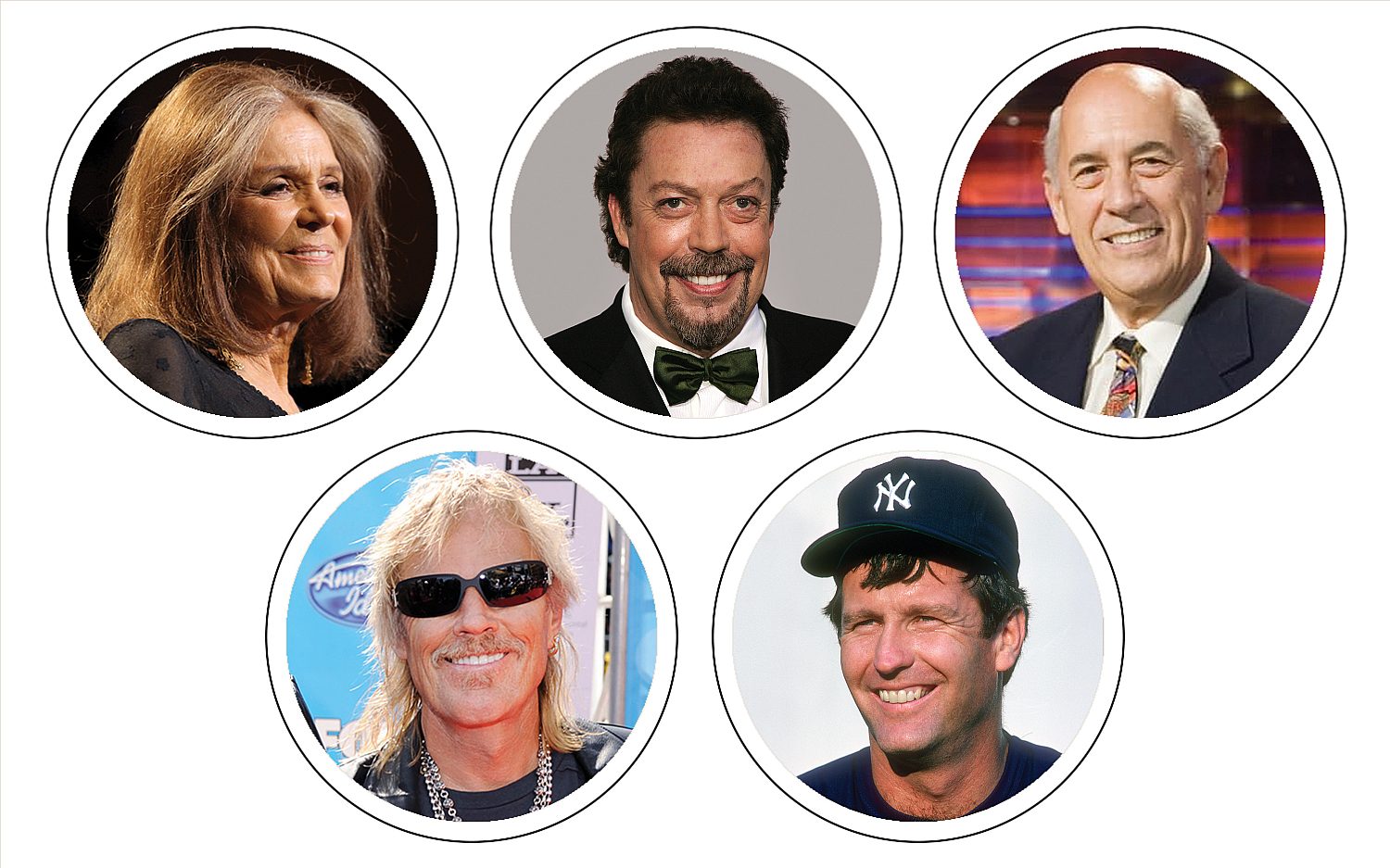
Clockwise from top left: Gloria Steinem, Tim Curry, Bill Rasmussen, Tommy John, and Frank Beard. Steinem: Mike Windle / Getty Images for Equality Now; Curry: Evan Agostini / Getty Images; Rasmussen: IMDB / ESPN; John: Focus on Sport / Getty Images; and Beard: Associated Press / Photo by Chris Pizzello
Full access isn’t far.
We can’t release more of our sound journalism without a subscription, but we can make it easy for you to come aboard.
Get started for as low as $3.99 per month.
Current WORLD subscribers can log in to access content. Just go to "SIGN IN" at the top right.
LET'S GOAlready a member? Sign in.
Gloria Steinem
A self-described entrepreneur of social change whose left-wing advocacy made her synonymous with second-wave feminism, Steinem died Sept. 2. She was 92. Steinem began her career as a muckraking magazine journalist uncovering chauvinism before co-founding Ms. magazine in 1972. It became a beacon of second-wave feminism—the movement that pushed for social equality and so-called sexual liberation for women. The magazine encouraged women to write about their abortions before the 1973 Supreme Court decision in Roe v. Wade broadly legalized the practice. Steinem later championed a variety of other left-wing causes, from protesting South African apartheid to opposition to the first Gulf War.
Tim Curry
An English actor who starred in several hits of the 1970s and ’80s and sidelined as a prolific voice actor, Curry died Aug. 25. He was 80. Curry earned casting in the original stage run of The Rocky Horror Show, a campy send-up of old monster movies. He played a starring role as the mad cross-dressing scientist, earning him plaudits for his capacity to portray cartoonish and garish characters. He reprised the role in the cult-classic film The Rocky Horror Picture Show in 1975. In the 1980s, he earned prominent parts in Annie and Clue. He also played the concierge in Home Alone 2 and voiced Captain Hook in the Fox animated series Peter Pan and the Pirates, garnering him a Daytime Emmy.
Bill Rasmussen
A cable television visionary who co-founded ESPN, Rasmussen died Aug. 18. He was 93. An out-of-work sports broadcaster, Rasmussen came up with the idea for a 24-hour sports cable channel while sitting in traffic in 1978. With access secured to an RCA satellite transponder, Rasmussen began making a plan. By 1979, ESPN made its first telecasts, and presented a slow-pitch softball game as its first live event. In 1980, the network covered its first NFL draft. Officials with financial backer Getty Oil pushed Rasmussen out at ESPN about a year after the network began telecasts. Rasmussen wouldn’t return to the company he founded until officials invited him to the network’s 20th anniversary celebration in 1999.
Frank Beard
A drummer whose clockwork backbeat drove one of the most successful blues-rock acts of the 20th century, Beard died Aug. 17. He was 77. Beard met future bandmate Dusty Hill while both were still teenage musicians in Texas. They would later join guitarist Billy Gibbons’ nascent ZZ Top. The band’s 1973 album Tres Hombres made them stars, and Beard earned a co-writing credit on some of the band’s earliest hits including “La Grange,” a song featuring a metronomic Beard holding together the fast-paced blues jam that made the group famous. While Hill and Gibbons developed a hirsute persona with chest-length beards, Beard remained ironically beardless. The trio earned induction into the Rock & Roll Hall of Fame in 2004.
Tommy John
A star pitcher for the Los Angeles Dodgers and New York Yankees whose 1974 elbow injury and subsequent surgery revolutionized sports medicine, John died Aug. 15. He was 83. An above-average starting pitcher, John played nine seasons before landing with the Dodgers in 1972. Two years later, John tore an ulnar collateral ligament in his pitching elbow, once a death knell for pitchers’ careers. He underwent an experimental elbow reconstruction surgery by a team doctor who harvested a replacement tendon from elsewhere in John’s body. He came back better than before. He finished second in Cy Young Award voting in 1977 with the Dodgers and second for the Yankees in 1979. He finished his 26-year major league career in 1989 with 288 wins.
Please wait while we load the latest comments...
Comments
Please register, subscribe, or log in to comment on this article.