
Democracy in the back seat
INTERNATIONAL | Is the oil deal leaving Venezuelans in the lurch?
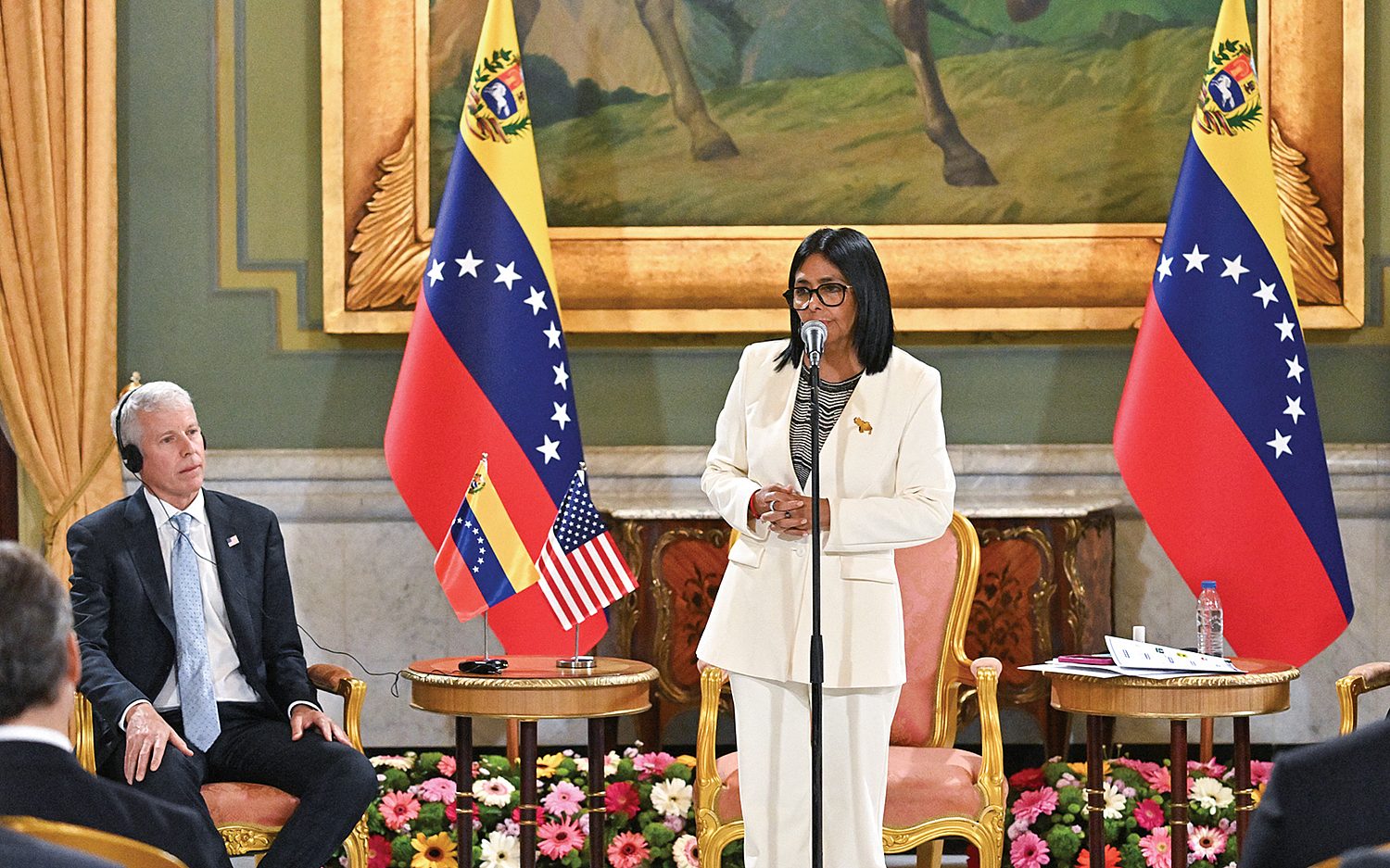
U.S. Energy Secretary Chris Wright (left) listens to a speech by Delcy Rodriguez during the signing of an oil agreement in September. Juan Barreto / AFP via Getty Images
Full access isn’t far.
We can’t release more of our sound journalism without a subscription, but we can make it easy for you to come aboard.
Get started for as low as $3.99 per month.
Current WORLD subscribers can log in to access content. Just go to "SIGN IN" at the top right.
LET'S GOAlready a member? Sign in.
Nearly one year after dictator Nicolás Maduro was captured by U.S. military forces, many in Venezuela wonder when real change will finally happen. Since the announcement of a deal granting the U.S. government preferential access to one-fifth of Venezuela’s vast oil reserves, many in the Trump administration have implied that an end to the Venezuelan socialist ordeal is in sight. Secretary of State Marco Rubio hailed the deal as a “huge win for both the American and Venezuelan people” that promises to generate over $200 billion in revenue for the Venezuelan economy. But while the deal may secure America’s energy supply, many Venezuelans worry about its long-term success under the current regime, led by Maduro’s former vice president, Delcy Rodríguez. And they wonder whether the U.S. will turn a blind eye to the ongoing need for political reforms once its own needs are met.
“Nobody’s going to invest big quantities of money while Rodríguez is still in power because she doesn’t respect property rights,” said Venezuelan opposition leader Jesús Armas. He’s skeptical the oil deal will be enough to reassure private investors—both within and outside the country.
Armas runs an NGO called Ciudadanía Sin Límites (Citizenship Without Limits) that monitors public infrastructure in Venezuela, and he previously served on the Caracas city council. Since the earthquakes in June, his organization has gone door to door to check damaged buildings, many of them public housing. He has repeatedly found buildings not to code or suffering from years of neglect.
“This is not because of the earthquake,” Armas said. “This is because of years of corruption, of mismanagement of public services, of the electricity and water system in Venezuela.” And dysfunctional infrastructure will hinder any oil deal put into place.
“It’s impossible to increase oil production without electricity, and she has been mismanaging the energy system for many, many years,” he said, referring to Rodríguez.
Armas knows the repression of Venezuela’s socialist system firsthand. After he worked to safeguard and report vote tallies in the 2024 presidential election, secret police arrested him on charges of treason. He was only released on Feb. 8 following Maduro’s capture.
Citizenship Without Limits also collects data to monitor government overreach and offer democratic solutions to the nation’s problems. Armas said the best path to economic recovery and business growth is for the country to have free and fair elections as soon as possible, an opinion shared across the political spectrum. At a Caracas protest Sept. 28, Carlos Salazar, head of the Venezuelan Workers’ Union, said, “We want presidential elections this December and the liberation of all remaining political prisoners.” Human rights organizations estimate more than 300 political prisoners remain in jail.
Meanwhile the Trump administration has not explained its reluctance to let opposition leader and Nobel Prize laureate Maria Corina Machado return home. Some analysts surmise the U.S. prefers the apparent stability of working with Rodríguez over the potential civic unrest brought about by a regime change.
Still, Armas is hopeful, but he warns against pushing development without a framework of democracy. Venezuelans agree. According to a Bloomberg poll, only a third think the oil deal will improve their standard of living. And more than half deem it illegitimate.
During her Sept. 23 speech at the United Nations, Delcy Rodríguez pledged to hold elections “at the right moment,” but failed to set a specific date.

Please wait while we load the latest comments...
Comments
Please register, subscribe, or log in to comment on this article.