
Christ’s beauty in the midst of ugliness
MASTERWORKS | James Ensor’s biblically inspired critique of the world
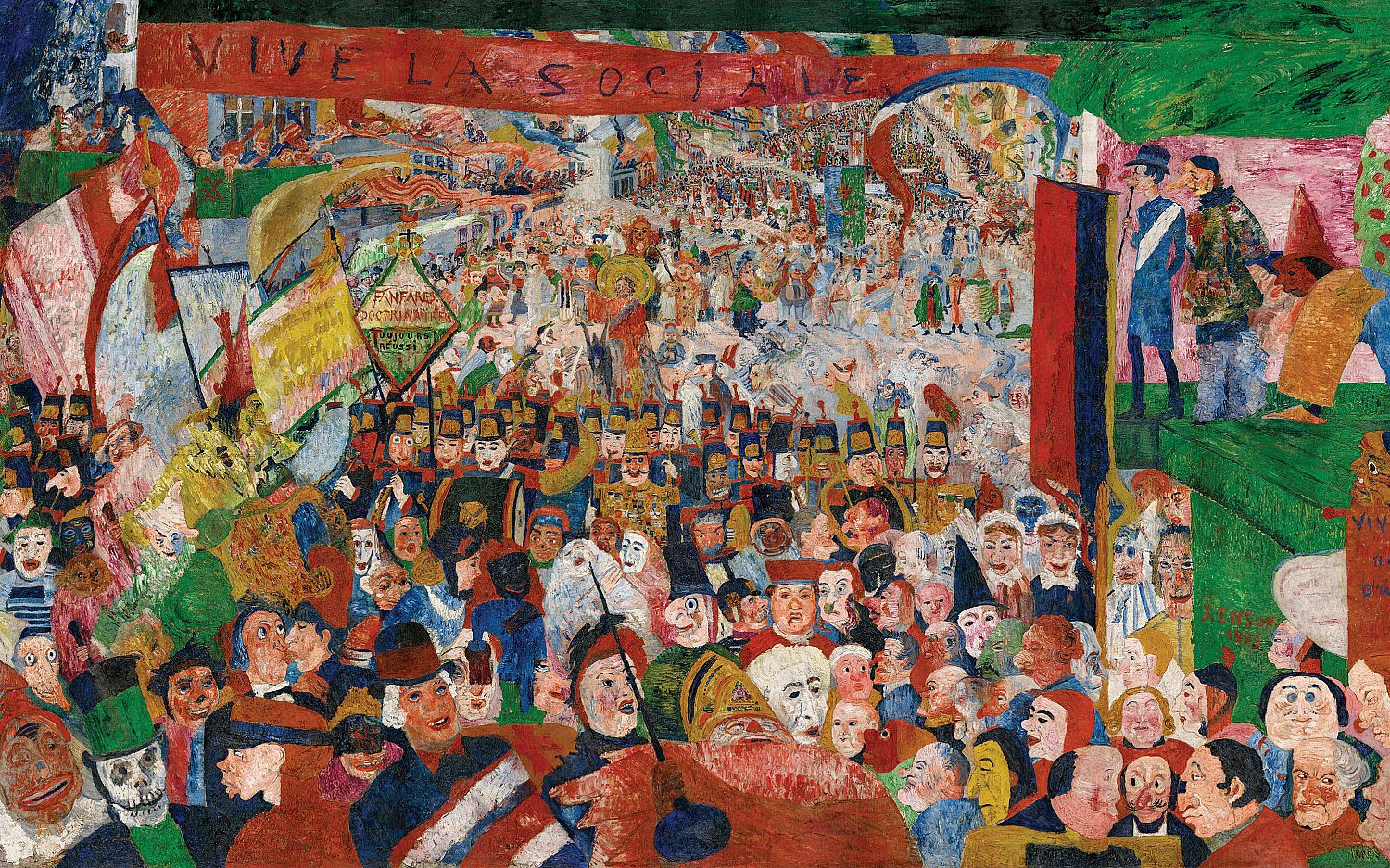
Christ’s Entry Into Brussels in 1889 Fine Art Images / Heritage Images / Getty Images
Full access isn’t far.
We can’t release more of our sound journalism without a subscription, but we can make it easy for you to come aboard.
Get started for as low as $3.99 per month.
Current WORLD subscribers can log in to access content. Just go to "SIGN IN" at the top right.
LET'S GOAlready a member? Sign in.
One of the greatest ironies in the biblical account of Jesus’ ministry is how His own disciples—the people closest to Him, who would presumably have known better than anyone else what their teacher’s ministry was meant to be—were unable to grasp that His time on earth was not intended as the prelude to an earthly reign. Time and again the Gospel writers mention instances in which Christ’s disciples simply can’t grasp that His kingdom would not be of this world. With our access to the entire New Testament, we could easily condemn the disciples for their cluelessness. But if we had been in their place, would we have been any better at perceiving the spiritual reality of Christ’s ministry—especially since they had not yet been given the Holy Spirit, a gift that we have?
James Ensor’s 1888 canvas Christ’s Entry Into Brussels in 1889 attempts to illustrate the reaction of Christ’s contemporaries on Palm Sunday by reimagining this triumphal entry as taking place in the Brussels of his own day. In this painting, Ensor asks what our own reaction might have been to the event, hinting that we too could have easily misunderstood Christ’s mission.
A parade of hundreds progresses across Ensor’s canvas. Marching bands raise a din, and the crowd cheers wildly. The blurry, jumbled composition suits the unruly chaos of the event. It is easy to imagine the Pharisees regarding the thronged multitude with disgust and reprimanding the disciples. Christ Himself is difficult to see. Although He occupies the center of the painting, the composition does not draw attention to His presence. Much more prominent is the raised dais to the right with notable public figures awaiting Christ’s arrival.
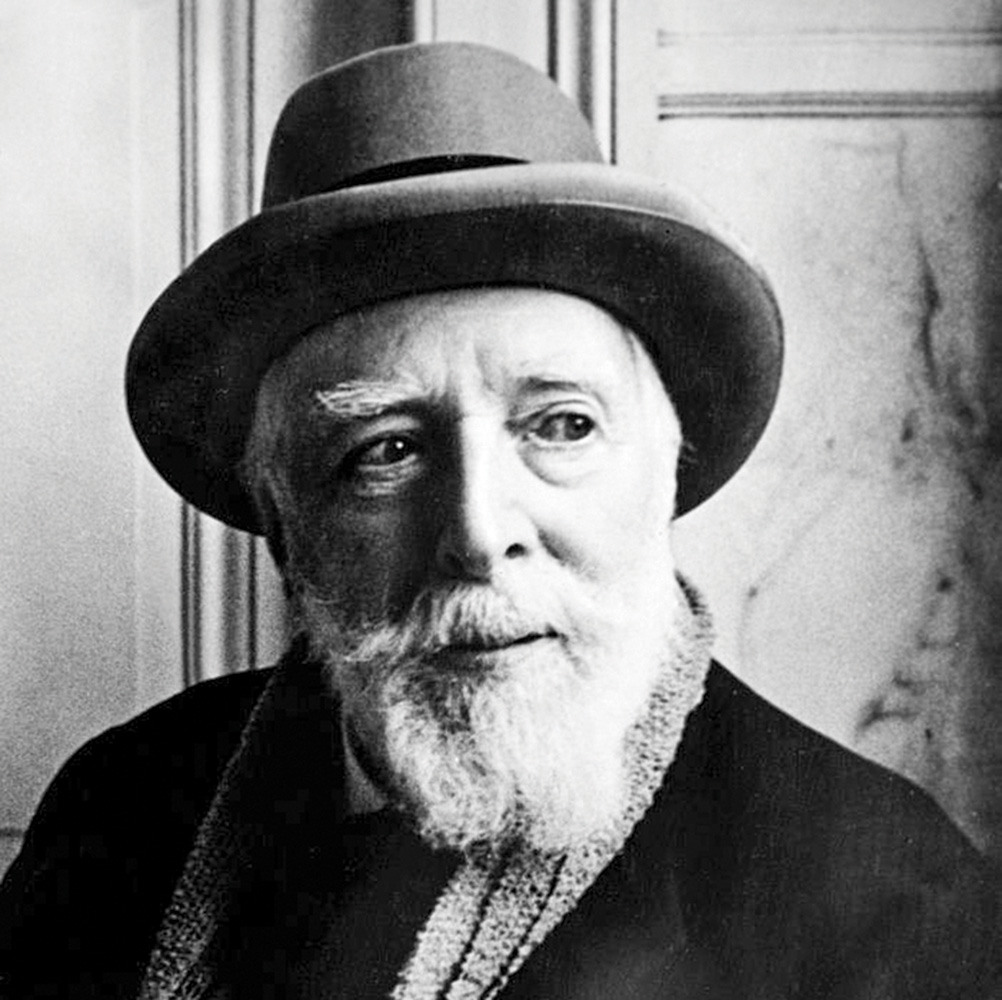
James Ensor in 1942 Ullstein Bild via Getty Images
It’s a startling image, especially when one considers that Ensor himself was an atheist. But despite his lack of faith, Ensor was captivated by the idea of Christ and used biblical imagery to comment on the ugliness and injustices of his own day.
If Christ had engaged in His earthly ministry during our day—a time filled with corporate sponsorships, speaking tours, and book deals—would He have been the target of profit-hungry forces seeking to gain from His influence? It isn’t too much of a stretch to imagine Jesus in a contemporary setting being invited onto influential podcasts or offered partnerships with brand sponsors. Of course Christ wouldn’t have fallen for these corruptions of His ministry, any more than He was in danger of accepting the Devil’s offer of all the kingdoms of the world in the wilderness temptation. But many prominent Christian leaders have, unfortunately, taken the bait and given in to the desire for fame and worldly success.
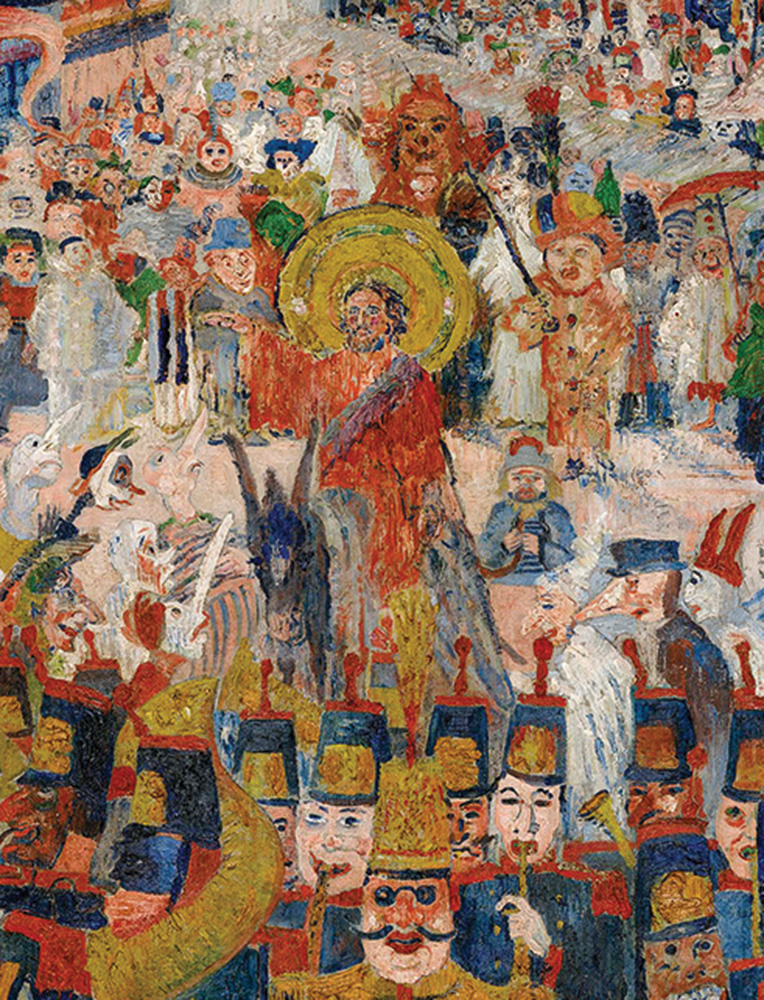
Christ is radiant in the center of the canvas Fine Art Images / Heritage Images / Getty Images
If the scribes and Pharisees had not been so opposed to Jesus’ teaching, I can imagine them up on Ensor’s dais, trying to twist His ministry to their own advantage. Another group of people who misunderstood Christ’s ministry were the throngs who followed Him around first-century Judaea waiting for an amazing miracle or perhaps a free meal. This group is also invoked in Ensor’s painting, with its carnivalesque atmosphere. Yet Christ did not come to earth to give the Jews an entertaining spectacle any more than He came to throw off their oppressors, the Romans. His kingdom was, as He said, “not of this world.”
Ensor’s painting is somewhat difficult to look at. It’s full of clowns, buffoons, weird masks, and a general ugliness. Ensor is an adept symbolist, a master at painting a distorted and warped humanity; the true sinfulness lurking deep in the hearts of all people can render them hideous and even unlovable. But Christ loved humanity enough to die on the cross for their sins. Even while He was riding into Jerusalem through crowds singing His praise, He knew they would misunderstand His message and would, less than a week later, drag Him to the cross. Yet He loved them anyway. Perhaps this is why Ensor’s Christ is the only figure in his painting whose face isn’t distorted into an ugly caricature. Jesus’ face radiates calm and peace. His right hand is even extended in blessing. His sinlessness transcends the sinful state of humanity.
—William Collen is an independent researcher who writes RUINS, a Substack blog discussing art and aesthetics from a Christian perspective

Please wait while we load the latest comments...
Comments
Please register, subscribe, or log in to comment on this article.