
Care for the caregivers
HEALTH | Community support groups offer help to families dealing with an Alzheimer’s diagnosis
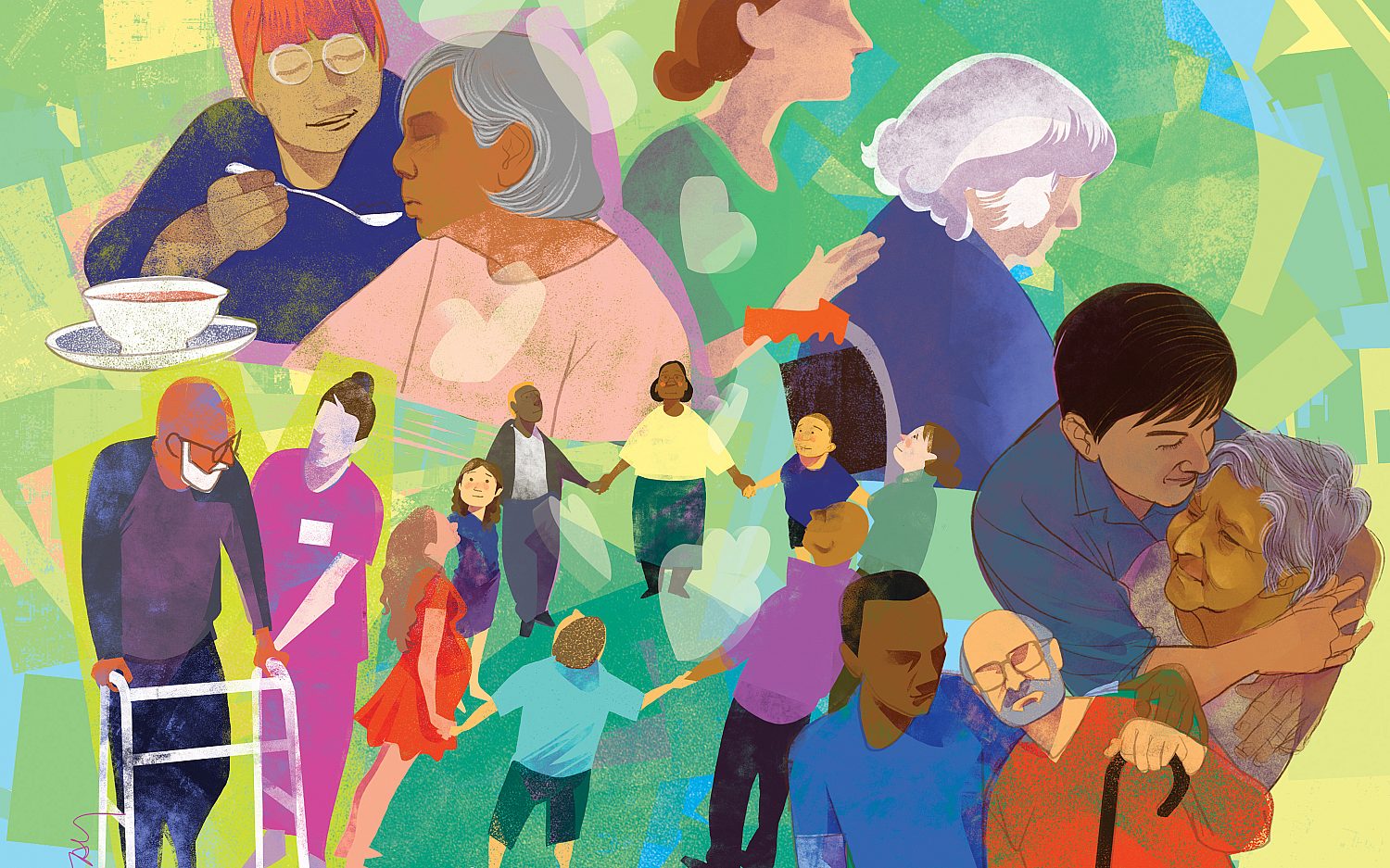
Illustration by John Jay Cabuay
Full access isn’t far.
We can’t release more of our sound journalism without a subscription, but we can make it easy for you to come aboard.
Get started for as low as $3.99 per month.
Current WORLD subscribers can log in to access content. Just go to "SIGN IN" at the top right.
LET'S GOAlready a member? Sign in.
On an overcast May morning, Debbi Pierre perches on a floral couch in the library of the Sky High Adventure Center (SHAC) in Averill Park, N.Y. About 10 men and women surround her in a mismatched collection of loveseats and chairs. A woman to Pierre’s left, face haggard, shares her struggles with moving a family member to assisted living.
“He thinks he’s going to bring his drum set,” she says, and she can’t convince him otherwise. Pierre listens with a soft expression, interjecting only to ask questions and explain that, hard as it is, the man’s behavior isn’t unusual. Other group members have faced—or are facing—similar challenges.
Though their exact situations differ, they all have one thing in common: They’re caregivers for someone who has Alzheimer’s disease or another form of dementia.
Pierre, a slight, blonde woman in her 60s, wears a purple “Walk to End Alzheimer’s” T-shirt. She’s been involved with the Alzheimer’s Association for 10 years, but began facilitating the SHAC support group only in August.
“It’s someplace they can come, and everybody’s in the same boat,” she says. “Different stages, but you’re all on the same journey.”
A nationwide surge in the number of adults over age 65 means that cases of Alzheimer’s and other types of dementia could grow exponentially in the coming decades, and many say America’s healthcare system isn’t prepared for the increased need. Private care is expensive and limited, and Medicaid options already have monthslong waitlists. That puts the bulk of caregiving responsibility on family members. For many, community support groups have become an indispensable source of help and support.
About 1 in 9 Americans aged 65 and older—7.4 million people—currently has Alzheimer’s, according to data from the Alzheimer’s Association. Census data suggests that new cases of all types of dementia in the U.S. alone could nearly double to 1 million in 2060.
Although many avenues for support and services exist, caregivers don’t always know what’s available or how to navigate the options. Beth Smith-Boivin, an Alzheimer’s Association’s senior director in New York state, wants to see that change.
“My goal for people living with Alzheimer’s is that they are fully informed of all the options available for care and support, and that they choose the things that make them most content and comfortable through this journey,” Smith-Boivin says.
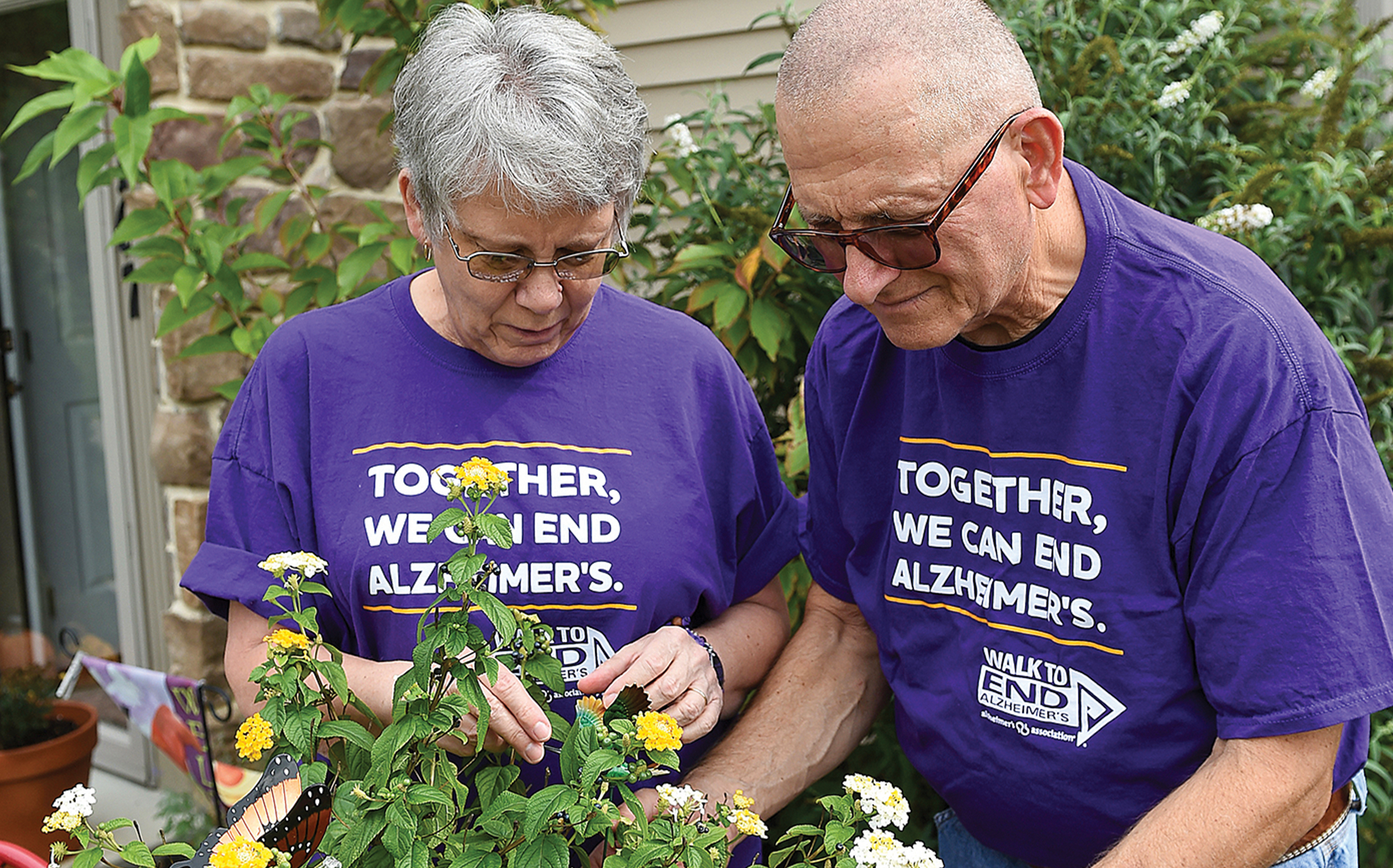
A husband—and caregiver—supports his wife through Alzheimer’s. Tim Leedy / MediaNews Group / Reading Eagle via Getty Images
Down the hall from where Pierre is meeting with caregivers, about half a dozen elderly men and women are gathering for a Memory Café. While caregivers meet to discuss their experiences, loved ones get a chance to converse, snack, and participate in activities.
They settle themselves in chairs around a table. The warm scent of cinnamon fills the air as two volunteers in blue shirts pass out slices of banana bread and plates of fruit.
Games are next, starting with an old classic, Pokeno. Everyone gets a pile of red plastic chips and a cardboard rectangle printed with images of playing cards arranged in rows. “Like bingo, but with cards,” one of the volunteers explains before she begins drawing one at a time from the deck, calling out the number or face and suit.
A man in a blue U.S. Navy cap and overalls banters with the woman next to him above the clinking of chips and murmur of guiding voices.
“He’s cheating!” she teases.
“I don’t want her to win,” he retorts, good-naturedly.
About 600 Memory Cafés are available across the country. Other programs offer their own version of social support. Donna Smith, franchise owner of the in-home care provider Home Instead in Western Massachusetts, calls her group Friends Club. Caregivers drop off loved ones at the club during work hours Monday through Friday to take part in activities like games, arts and crafts, or helping prepare lunch.
Smith designed Friends Club to emphasize socialization rather than dementia care because she wants each “friend” to feel empowered. No matter what stage of dementia they’re in, she says “there will be something according to their abilities so that they’re successful and they have fun.”
For caregivers, support groups are a place to share questions, fears, and struggles as well as ideas and information. But emotional support may be the most valuable part. Pierre has watched people go from lost and overwhelmed to encouraged and equipped.
“I’ve seen a lot of people getting their stuff together, getting organized, getting ready for the rest of this journey,” she says.
The Mayo Clinic estimates caregivers spend from three to 20 years supporting a family member following an Alzheimer’s diagnosis. This includes everything from managing finances and medical care to making meals and helping with activities of daily life like feeding and bathing. At the same time, many caregivers also work either part- or full-time jobs, care for children under age 18, or both.
Pierre supported both her parents through Alzheimer’s and knows firsthand the challenges. When a family member is diagnosed, “people don’t know what to do. And everything’s on their lap,” she says.
At the end of the afternoon, caregivers emerge with mixed emotions on their faces. As they reunite with their loved ones, Pierre stays behind.
“I do what I do to spread awareness, to relieve some stress off their mind and point them in the right direction,” she says. “That’s all I can do.”

Please wait while we load the latest comments...
Comments
Please register, subscribe, or log in to comment on this article.