
Answers from Alito
BOOKS | The justice champions constitutional principles
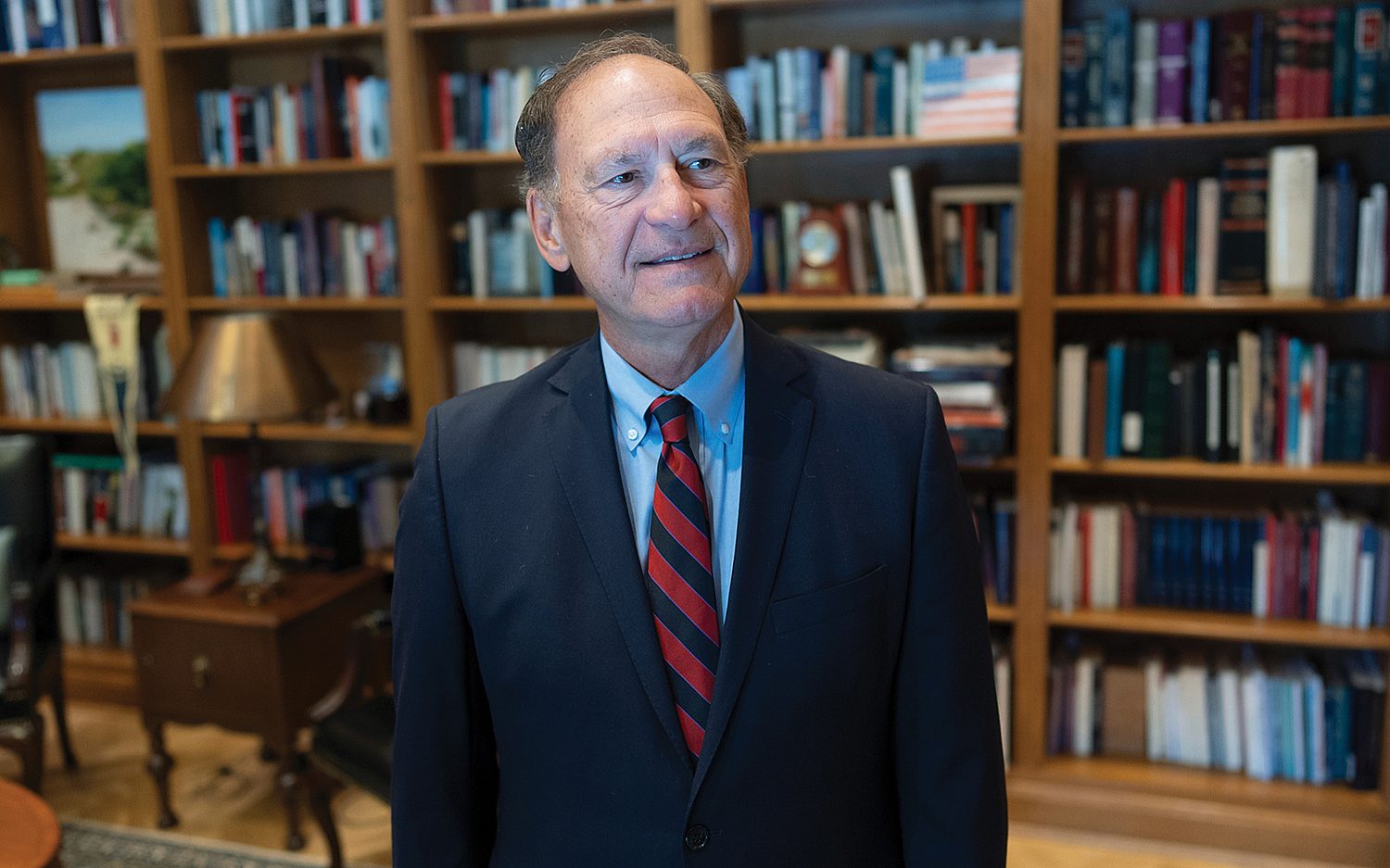
Samuel Alito Associated Press / Photo by J. Scott Applewhite
Full access isn’t far.
We can’t release more of our sound journalism without a subscription, but we can make it easy for you to come aboard.
Get started for as low as $3.99 per month.
Current WORLD subscribers can log in to access content. Just go to "SIGN IN" at the top right.
LET'S GOAlready a member? Sign in.
The liberal lion of the Supreme Court, Justice William Brennan, would ask incoming law clerks, “What is the most important rule of constitutional law?” The separation of powers, one might venture. The First Amendment, another would suggest hopefully. “The rule of five,” the justice would answer—who could get five votes on the nine-member high court would decide all the other issues.
When the history of this era of the Supreme Court is written, scholars should call it the Alito Court. Samuel Alito might not be chief justice. And he might not be a generational genius like Antonin Scalia or a principled pathblazer like Clarence Thomas. But he is the central actor on the court because more than any other justice he knows how to count to five.
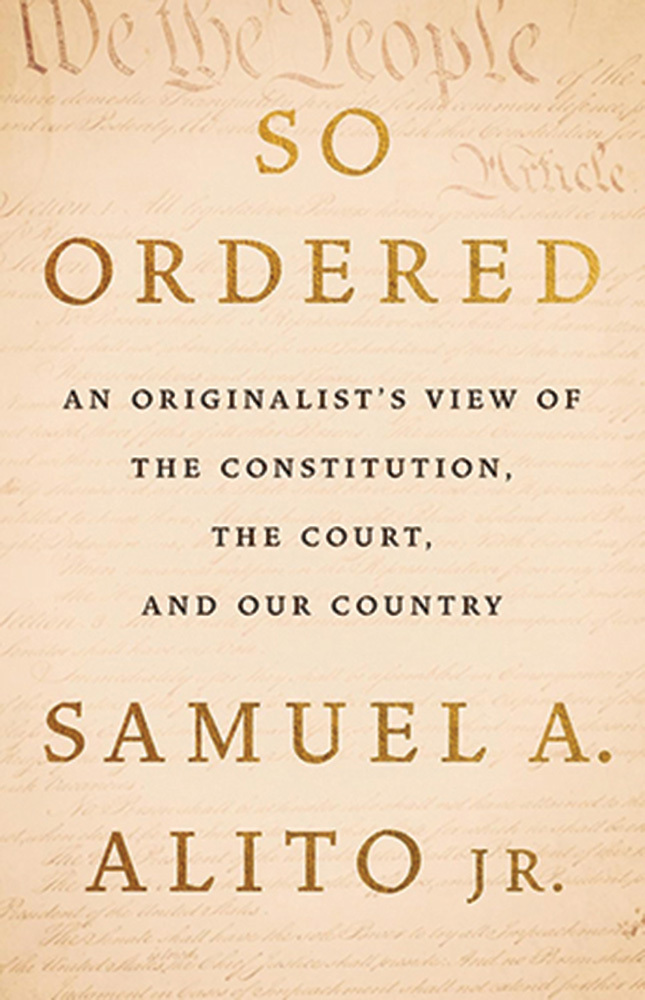
So Ordered Samuel A. Alito jr.
One key to his effectiveness is his philosophy of practical originalism, which he explains in his new book So Ordered: An Originalist’s View of the Constitution, the Court, and Our Country (Basic Liberty, 320 pp.). It’s a collection of speeches he’s given over the years, addressing not only judicial interpretation but topics ranging from baseball to the Gettysburg Address.
People of faith find a steady friend in Alito. After sitting on numerous religious liberty cases, he decries “something new in our society: mounting hostility to anyone who holds traditional Judeo-Christian beliefs.” This hostility manifests, he says, in “a refusal to live in peace with those who violate the new moral code.” The new intolerance is contrary to the democratic design of our legal and political system, which Alito summarizes by reference to Isaiah 1:18: “Come now, let us reason together.”
Several speeches draw on his deep Catholic faith, like his critique of secular Europeans who can adopt stirring explications of “human rights” but “could not explain where the rights came from.”
A graduate of Princeton and Yale, he laments the elitism that marks much of contemporary society: “Of all our presidents, the one with the least formal education, Abraham Lincoln, was the one who best understood our Constitution, who grasped the core of its meaning. And [Woodrow] Wilson, the president with the most formal education, was the most openly hostile.”
As much as Alito catalogs the cracks in our Constitution, he maintains a hopeful outlook. In spite of polls showing a lack of civics education, he writes, “I am convinced that the spirit of the Constitution—of limited but effective government, individual rights, and equal justice under law—is alive and well in the hearts of the American people.”
Citizens looking to renew their affection for the spirit of the Constitution—and to learn a few facts about our history, traditions, and laws along the way—would do well to pick up this engaging and accessible volume from the Supreme Court’s most influential justice.

Please wait while we load the latest comments...
Comments
Please register, subscribe, or log in to comment on this article.