
Reports split over whether forced contraception in Greenland amounted to genocide
An Inuit woman holds her child. AP Photo/Evgeniy Maloletka
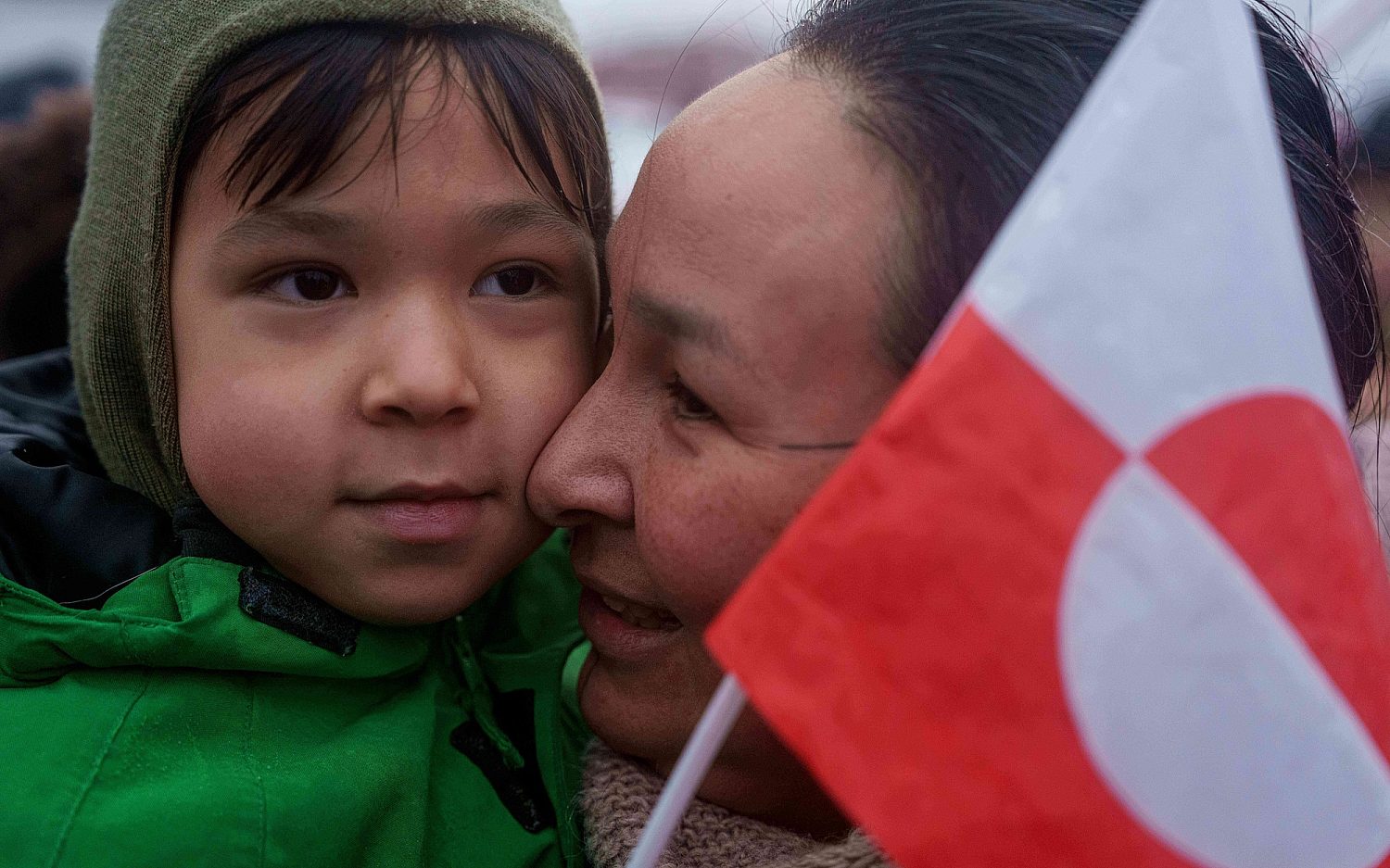
Greenland’s government published two reports Friday examining whether Denmark committed genocide during the 20th century through harmful forced contraception practices targeting the Inuit community.
What kind of forced contraception took place? A previous report published in September 2025 revealed that Danish doctors gave indigenous Inuit women and girls as young as 12 various forms of contraception devices without their informed consent. The intrauterine contraceptive devices, or IUDs, were often given during regular checkups. The authors found that of the 488 incidents reported, nearly one-third of the women had been under the age of 14 when the IUDs were implanted, and more than half were under 18. Many of the women never bore children following the forced contraception or had permanent damage to their fallopian tubes, and a large number reported experiencing heavy bleeding, severe pain, and infections following the nonconsensual procedures.
How did the authorities investigate the genocide claims? The government of Greenland commissioned a report to determine Denmark’s responsibility, asking experts to determine whether Denmark was guilty of genocide or other violations of international law. The research team broke in half and delivered two reports, one of which definitively said a genocide did not take place, but was ultimately rejected for failing to meet recognized scientific standards. The accepted report concluded that there was reasonable basis to believe that Denmark failed in its responsibility to prevent genocide, but that the question of whether Denmark committed genocide remained complex and required a thorough determination by a higher court. That court would have to take into account not only the forced contraception, but also the removal of Inuit children to Danish families without the Inuit parents’ consent. Additionally, it would also have to consider the removal of Inuit language from school and working life, the systematic underpayment of Inuit workers, forced removal of Inuits from rural settlements, and additional violations, the report said.
What else did the second report find in terms of forced contraception? The 2026 report found that there was a stated preference to fit the Inuit women and girls with an IUD, rather than provide them with alternative contraceptive methods. This belief was based in part upon a prejudice of the practicing doctors that Inuit women were unable to take the contraceptive pill as prescribed. Though oral contraceptives were available in Greenland from 1966, they were inaccessible to the Inuit community, the report shared. The report found that there was a reasonable basis to believe that the doctors had classed an entire group of people as less capable along ethnic lines rather than assessing each individual patient, and therefore had acted discriminately, adding that benevolent intentions are not lawful excuses for ill treatment. The August 2026 report also shared that by 1975, only 1% of doctors could speak any of the Inuit languages and only 25% of the Inuit population could speak Danish at a conversational level, which placed the Inuit women and girls in an exceptionally vulnerable position.
In Denmark in the late 1960s and early 1970s, contraception of any kind was only offered after the woman herself made an inquiry. Yet in Greenland, it was widely acknowledged that Inuit women were being forced to accept the contraceptive devices, with girls sent to the doctors specifically to receive them, or pressured into it while there for another reason. Doctors across the island noted that few fertile women who came into contact with the health service walked away without an IUD, even directly following an induced abortion, the 2026 report said. Some doctors additionally refused to take the IUDs out when the women requested, including when girls who had received the devices were accompanied by their parents, the report continued. Doctors today shared that they are still discovering IUDs in women who had no idea they had one. The European Court of Human Rights holds that practices likely to result in sterilization represent one of the gravest violations of a person’s integrity, the report added.
Why did Denmark have such an intense focus on contraception? In a commentary published by Native News Online, Professor Victoria Sutton, a law professor on the faculty of Texas Tech University, reported that the Greenland population is 88.9% Inuit, made up of the Kalaallit, the Tunumiit, and the Inughuit. Greenland formally became a part of the Kingdom of Denmark in 1953, and by the 1960s Denmark determined its implementation of healthcare, housing, and schools on the island had been too successful, increasing the birth survival rate. To reduce costs, Denmark decided to reverse the trend by engaging in an involuntary forced sterilization program, Sutton wrote. The 2026 report showed that by the end of 1972, more than 5,700 Inuit women had received intrauterine contraceptive devices, or IUDs, a number representing roughly half of the Inuit female population of fertile age at the time. The authors also noted that this number should be considered a conservative estimate, as there were gaps in the accurate registration of all IUD insertions.
What did the report ultimately conclude? The authors of the 2026 report found that there was a reasonable basis to believe that the forced contraception without valid consent formed some part of medical practice in Greenland since at least 1966 and has caused physical and psychological harm that constituted inhuman and degrading treatment contrary to international law. The authors also found that there was a reasonable basis to believe that Denmark violated its obligation to refrain from conduct that might be inhuman or degrading and its obligation to prevent such conduct. The insertion of the largest IUD, Lippes Loop D, into children’s uterine cavities without valid consent leading to permanent infertility or chronic pain could also constitute a gross violation contrary to the prohibition of torture under state and international laws.
The Danish administration was fully aware of the systematic forced contraception yet took no means to prevent it from happening, the report found, adding that some doctors continued to engage in the practice even following its express forbiddance in 2001. That the practice continued, even rarely, remains a serious contravention of human rights and proved that Denmark had not taken sufficient steps to address the discrimination embedded in its law and policy, the report continued.
The report found that there was a reasonable basis to believe that the Inuit women’s rights were violated, family life and privacy intruded, sexual and reproductive health sabotaged, and freedom from cruel and inhumane treatment infringed upon. The report also concluded that Denmark failed to meet its binding treaty obligations to both investigate allegations of ill-treatment and to prevent genocide.


An actual newsletter worth subscribing to instead of just a collection of links. —Adam
Sign up to receive The Sift email newsletter each weekday morning for the latest headlines from WORLD’s breaking news team.


Please wait while we load the latest comments...
Comments
Please register, subscribe, or log in to comment on this article.