
World Tour: The old war, rearranged
Renewed fighting between federal troops and Tigrayan rebels is stirring fears of another civil war less than four years after the last one ended. But the old lines have shifted: the rebels have expanded their coalition, neighboring Eritrea has switched sides to back them, even as the Tigrayan rebels themselves have lost public support. WORLD’s Onize Oduah reports.
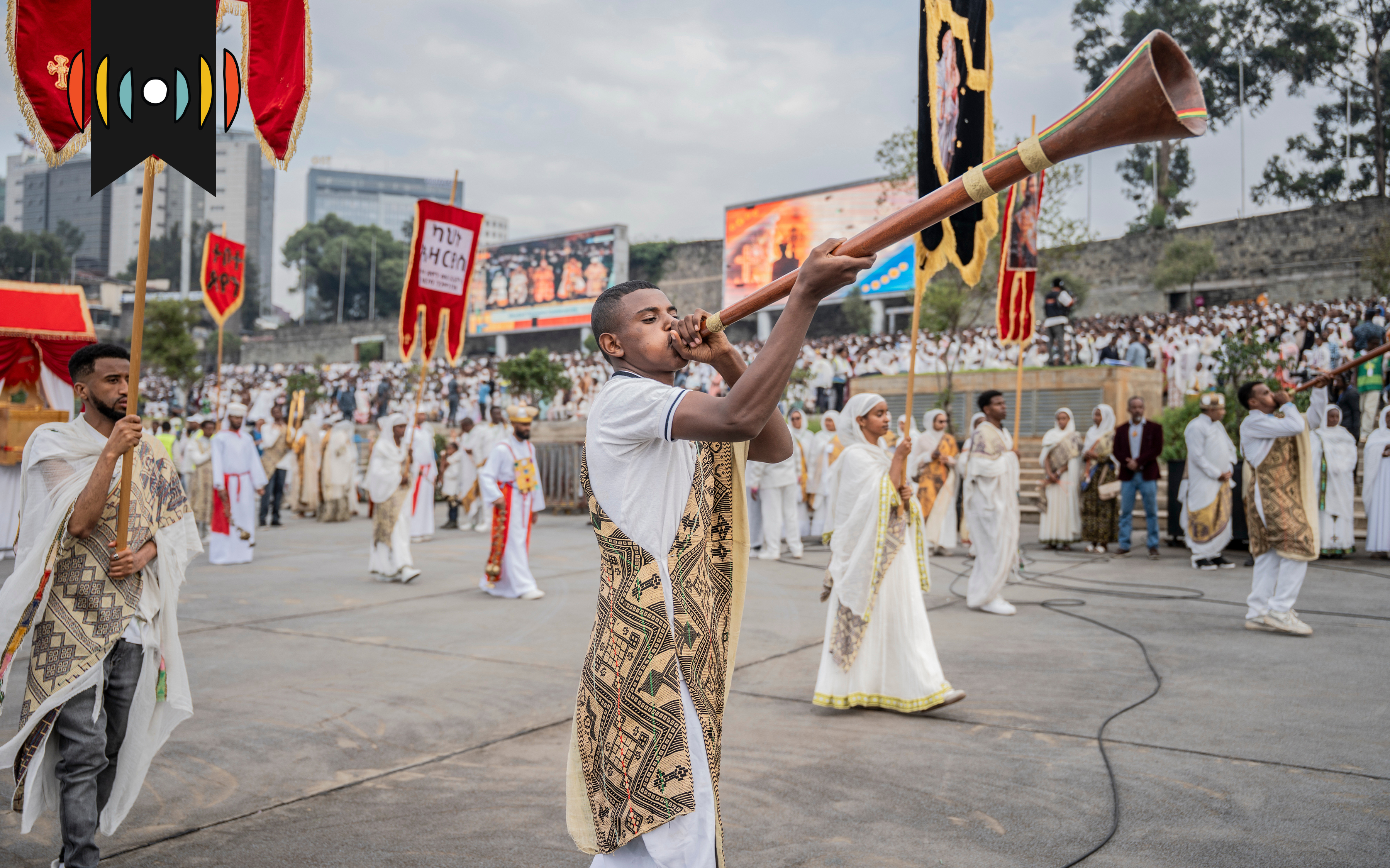
Celebrations for the Orthodox holiday of Meskel in Addis Ababa, Ethiopia, Saturday Associated Press / Photo by Amanuel Sileshi
Editor's note: The following text is a transcript of a podcast story. To listen to the story, click on the arrow beneath the headline above.
LINDSAY MAST, HOST: Coming up next on The World and Everything in It: World Tour.
Many in Ethiopia’s northern Tigray region fear a return to war after recent fighting between federal troops and rebels.
NICK EICHER, HOST: The current conflict comes less than four years after the last civil war ended. WORLD’s Africa reporter Onize Oduah has the story.
AUDIO: [Worshippers singing]
ONIZE ODUAH: Over the weekend, thousands of Ethiopian Orthodox Christians walked, sang, and prayed in the capital city of Addis Ababa.
The annual celebration of Meskel marks the tradition of the finding of the Cross on which Jesus was crucified. This year, prayers focused on the renewed fighting.
Sara Dinkayehu joined the prayers.
SARA DINKAYEHU: [AMHARIC] I, too, have come here today to pray and ask God for peace to reign over our nation.
She says she came out to ask God for peace to reign over the country.
The fighting is mainly between federal troops and fighters loyal to the Tigray People’s Liberation Front, or TPL,Fa political party that started as a guerilla movement.
Just before the latest skirmishes escalated, the Tigrayan rebels joined with six other rebel groups to announce a new alliance to overthrow the federal government. The groups have accused the government of fueling war and poverty.
Residents in the Tigrayan capital of Mekelle began stocking up on food and cash after internet and phone services were reportedly cut by rebel forces.
TPLF forces last week also reportedly seized control of airports in the region and squared off against federal troops.
A day later, Ethiopia’s military said it had killed several rebels and seized a cache of weapons.
The last civil war left an estimated 600,000 people dead and fueled fears of famine. A peace deal halted the fighting in 2022 but both sides accused each other of violating the deal in recent months.
Jalale Gettachew Birru is a senior East Africa analyst with the nonprofit group Armed Conflict Location and Event Data Project.
JALALE BIRRU: The root cause of the conflict is that TPLF used to be one of the ruling parties from 1991 until 2018, and they wish to regain that status and control the country.
But she says signs of strain in the rebel alliance may keep this conflict from spreading.
BIRRU: It seems like the government might not be overextended in multiple regions, and for now, the violence is concentrated in northern Ethiopia.
She says two of the member rebel groups have already denied any involvement as they battle internal disputes and factions.
World leaders are responding to the fighting. The African Union has called for restraint and a resumption of talks. The United States also called for dialogue, and threatened to impose sanctions.
But Ethiopian President Taye Atske Selassie has blamed what he called habitual external actors for stoking the country’s conflict.
Here’s Selassie speaking last week at the United Nations General Assembly in New York.
TAYE SELASSIE: Our message to forces of destruction and mayhem is loud and clear. We urge them to respect the sacred right of the people of the Horn of Africa to live in peace and prosperity.
Countries like Eritrea and the United Arab Emirates took sides in the last civil war. But Birru says the playing field has changed. She says the TPLF now enjoys less public support, though Eritrea has shifted sides to back the TPLF. She predicts the government’s next steps might include plans for a transitional government and establishing legitimate rule of law in Mekelle.
BIRRU: If the government doesn’t manage to control the capital city, the regional capital city Mekelle, and manage to remove TPLF, the conflict will drag for a long time.
Federal forces have increased their drone capabilities, and a pro-government militia said that Ethiopia’s military and an allied militia had taken back control of a strategic city near Tigray’s regional capital Monday.
That’s this week’s World Tour. I’m Onize Oduah, in Abuja, Nigeria.
WORLD Radio transcripts are created on a rush deadline. This text may not be in its final form and may be updated or revised in the future. Accuracy and availability may vary. The authoritative record of WORLD Radio programming is the audio record.
Please wait while we load the latest comments...
Comments
Please register, subscribe, or log in to comment on this article.