
What to remember
Twenty-five years after watching smoke rise from the Pentagon, WORLD commentator Cal Thomas revisits the lessons he drew from 9/11. He argues that “never forget” means teaching a new generation what happened, who did it, what they believed, and what history should have taught us.
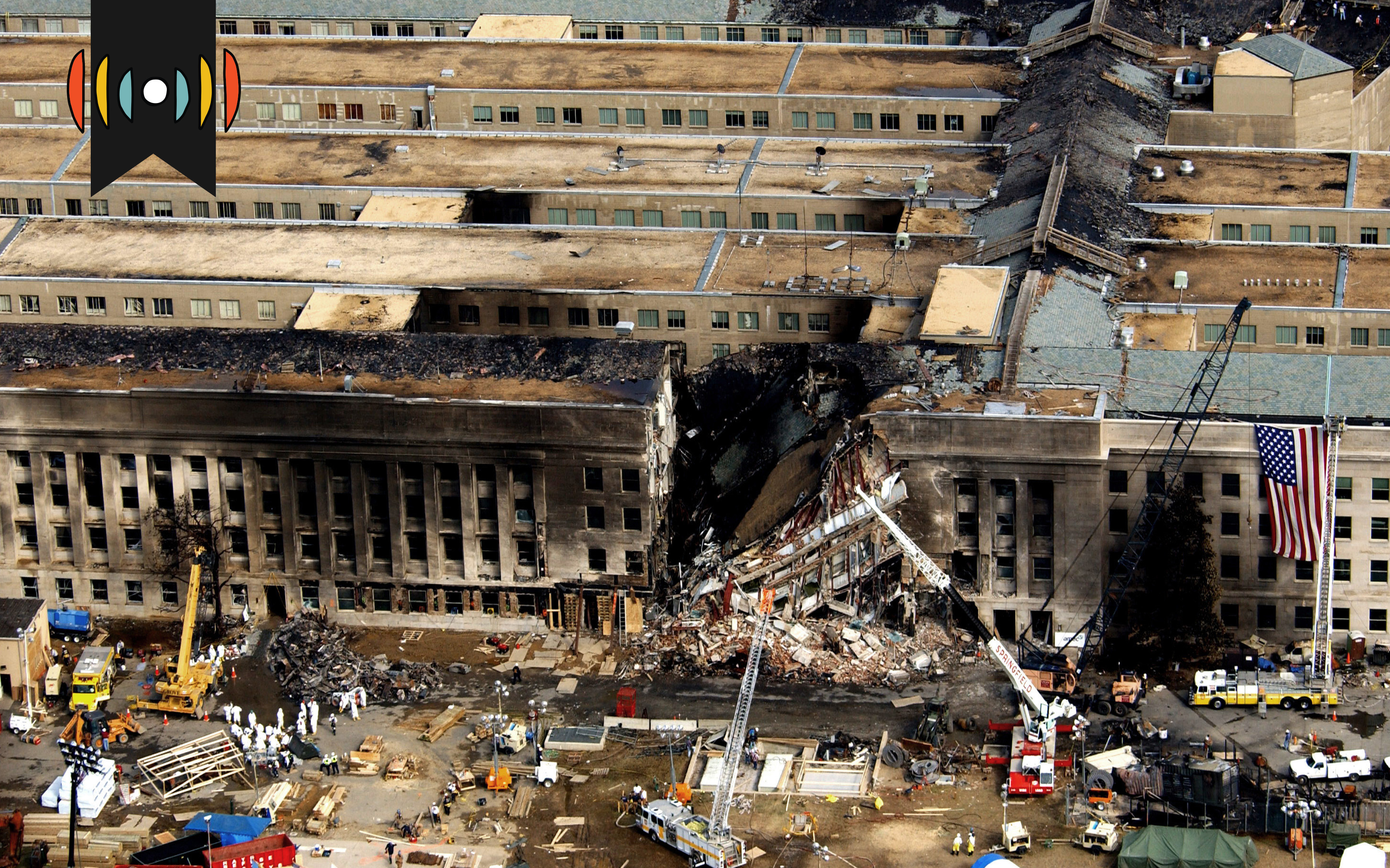
Aerial view of the Pentagon Building located in Arlington, Virginia showing emergency crews responding to the destruction caused when a hijacked jetliner crashed into the southwest corner of the building, during the 9/11 terrorists attacks. Wikimedia Commons / Photo by TSGT Cedric H. Rudisill, USAF / The United States Air Force
Editor's note: The following text is a transcript of a podcast story. To listen to the story, click on the arrow beneath the headline above.
MARY REICHARD, HOST: Grace has much more of Dana and Mike’s story in the September issue of WORLD Magazine: including who Mike was before he became one of the names at the memorial. And why Dana now spends so much time helping a generation born after 9/11 understand what really happened.
We have a link for you in the show notes.
NICK EICHER, HOST: WORLD commentator Cal Thomas remembers that day from another vantage point. He was near the Pentagon—and twenty-five years later, he’s looking back not only at what happened, but at what it meant.
CAL THOMAS: On September 11th, I was sitting in my home office, not far from the Pentagon.
The television behind me was turned down. Something caught my attention, so I reached for the remote and turned up the sound.
One of the World Trade Center towers was burning. Then a second plane struck the other tower.
It was clear America was under attack.
Not long after, I saw smoke rising from the Pentagon. I went up on the roof for a better look.
My son was a firefighter. He later told me he pulled bodies from the wreckage. Even now, he doesn’t like to talk about it.
In the days that followed, I wrote six columns in succession—and many more in the months and years afterward.
On the day of the attacks, I wrote: “It brings into clear focus the state of war that has existed for some time between America and those who oppose our values and way of life.”
I called for the expulsion of people and organizations with ties to radical terrorist groups. That did not happen. I believe the threat from within remains.
The argument over what the attacks meant began almost immediately.
Six days after 9/11, President George W. Bush visited the Islamic Center of Washington.
BUSH: The face of terror is not the true faith of Islam. That’s not what Islam is all about. Islam is peace. These terrorists don’t represent peace. They represent evil and war.
I disagreed with that, as I did other political and media figures vouching for the peaceful nature of Islam.
I pointed to what was being taught in some Muslim schools. One seventh-grade Palestinian textbook said Islam “will defeat all other religions” and would be spread through Muslim jihad fighters.
And the anti-Semitism behind much of this has not disappeared. In fact, we have seen it grow more open.
It didn’t take long after 9/11 for the “blame America first” crowd to make itself heard, either. That instinct is still with us—the tendency to look first for what America supposedly did to provoke those who hate us.
That gets to another thing I wrote in those days.
Something besides human lives died on September 11th—or so I hoped.
It was the doctrine of moral equivalency: the idea that people everywhere are basically like us, or can be made so if we accommodate enough of their demands.
Twenty-five years later, that way of thinking is still alive.
There are times when moral clarity requires distinctions: between aggressor and victim, freedom and tyranny, good and evil.
I also argued then that America needed to reduce its strategic dependence on Middle Eastern oil. Energy policy has changed enormously since 2001, but the larger lesson remains: a nation should think carefully about the vulnerabilities on which its enemies can capitalize.
Later, I was fortunate enough to visit Ground Zero while access was still restricted. A friend knew the fire chief, who let us into a roped-off area.
Three images have never left me.
Blocks of store windows covered with pictures of the missing—and pleas for help finding them.
Parked cars filled inside with dust from the collapsing towers.
And an unopened soft-drink bottle lying in the debris.
They made us wear hard hats. I kept mine. On it I wrote: “NYC 9/11/2001.”
It is easy to say “never forget.”
But every generation must be taught what there is to remember.
An entire generation has now been born since September 11th. Others were too young at the time to understand it.
And that means it matters who teaches the history—whether the story is grounded in facts, or filtered through whatever political biases happen to be fashionable.
Twenty-five years later, remembering September 11th should mean more than remembering where we were.
It should mean remembering what happened, who did it, what they believed—and what history ought to have taught us.
For WORLD, I’m Cal Thomas.
WORLD Radio transcripts are created on a rush deadline. This text may not be in its final form and may be updated or revised in the future. Accuracy and availability may vary. The authoritative record of WORLD Radio programming is the audio record.
Please wait while we load the latest comments...
Comments
Please register, subscribe, or log in to comment on this article.